Wales is known all over the world for its castles. Did you know that there are over 600 castles in Wales, which is more per square mile than anywhere else in the world?
Some castles are still standing after a thousand years, while others are now in ruins. Many are native Welsh castles built by members of the Welsh Members of the royal family in order of their reign. in important areas.
However, the largest castles were built by the Normans after the Norman conquest in 1066.
Video - Castles
Welcome to 13th century Wales where the way to win land and power was to fight in bloody battles. So if you were an English king or a Welsh prince what you really needed was a castle.
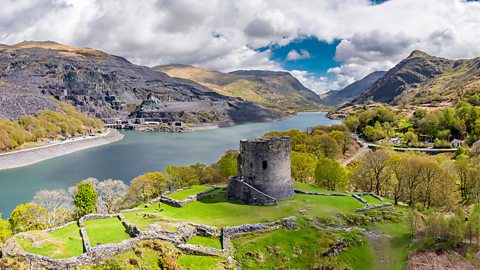
In the middle of Snowdonia sits a perfect example of a Welsh fortress, Dolwyddelan Castle and it certainly would have witnessed lots of fighting. It may not look like much today but this great fortification was built in the early 13th century around 1210 - that’s over 800 years ago.It was built by Llywelyn the Great so he could control who came through his mountainous kingdom. This is just one example of his castles. He built Castell y Bere, Castell Dolbadarn and Criccieth and several others as well.
Llywelyn the Great was considered to be quite a visionary when it came to building castles. His circular towers and D-shaped keeps, which combined circular and square designs, showed his ingenuity, and set them apart from those built by Edward I.If those walls could talk, the stories they could tell.
Castles changed over the centuries, but their purpose remained the same - to keep the good people safe and protected on the inside, apart from those in the dungeons of course, and to keep the enemy at bay.
Castles were multi-functional, they were far more than a fort. They were a home, a market and a symbol of power. There were chapels within the walls, people could worship and even get married in them too.
Did you know that Wales has more castles per square mile than any other country in the world? But they weren’t all built by the Welsh, some were built by Edward I who wanted to control the Welsh people. This as you can imagine caused lots of trouble. Welsh people weren’t welcome inside the walls of Edward I’s castles. Llywelyn the Great would be turning in his grave.
Early Welsh castles
A number of fortified sites, such as A site on top of a hill fortified by banks and slopes., were built in Wales during the Iron Age between 800 BC and 74 AD. These were built as defensive sites against warlike tribes of invaders. They often stood on high ground with clear views over the surrounding countryside to spot any invaders, and included High walls that defend and surround a castle. and ditches.
After the Roman invasion of Britain, some hill forts were occupied while others were destroyed.
The Norman conquest in 1066 led to a new era of castle building. To start with, they built new castles in towns to be in the middle of the population. But their later castles often reused the sites of ancient hill forts from the Iron Age.
The Normans were keen to control the Roman road network which were still the main routes through the countryside. Therefore, some castles were built at strategic points such as river crossings and crossroads.
The first Norman castles were motte and bailey. They consisted of a tower of wood or stone built on an artificial mound called a motte, surrounded by a large enclosed area called a bailey. A defensive ditch and Timber fencing for defence. became part of the castle’s construction in later years.
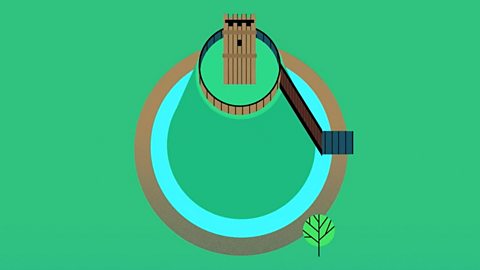
Advantages and disadvantages of motte and bailey castles
Advantages:
- The motte was high to be able to see nearby attackers
- The ditch slowed down attackers
- There was plenty of timber available to build cheaply and quickly
Disadvantages:
- The timber rotted after time
- There was a danger that the castle could be burned by fire
- The walls were not very strong
By the 12th century, some earth and timber castles were rebuilt with a stone tower instead of a timber tower on the motte, stone walls in place of the wooden palisade, and a stone tower instead of the bailey gatehouse.
A good example of this type of castle that still exists today is Ogmore Castle.
The castles of the Welsh Princes
Welsh princes built their own castles to defend their land from invasion and to protect important routes.
They began building their castles in stone during the 13th century. They were built on sites that gave them strong natural protection, eg on a hill or by a river. The shape of castles would vary in order to make the most of the advantages that their position gave them. The towers, often D-shaped, were the main feature of these types of castles, with walls connecting them.
Llywelyn the Great built two well-known castles of this kind – Dolwyddelan castle and Dolbadarn castle.
Conquest of Wales and 1282
This was a campaign by Edward I to conquer the Welsh A country controlled by a prince. and unite Wales with the English crown. Llywelyn ap Gruffydd, or Llywelyn ein Llyw Olaf, controlled much of the land in Wales and was murdered by Edward I’s army at Cilmeri, Builth Wells, in 1282. Edward began to make Wales more Anglicised, creating new towns such as Flint, Aberystwyth and Rhuddlan and ensuring that only English people were allowed to live in boroughs.
Following his conquest of Wales between 1277 and 1283, Edward I built castles across the country as a way of controlling the Welsh people. An example of this is Kidwelly castle in Carmarthenshire.
As part of his aim to create defensive castles that were also royal palaces, Edward used a new design called the concentric castle, which had a lower exterior wall than the interior wall. Beaumaris, Caernarfon, Conwy and Harlech castles are examples of this type of castle, which are now world-renowned and designated World Heritage Sites.
This was Edward’s attempt to show his power over Wales and a symbol of the new regie, and it also showed that he was eager to rule Wales permanently.
Concentric castles
A concentric castle has at least two walls, one within another, to make it harder for the enemy to attack – the term ‘castle within a castle’ is often used to describe it.
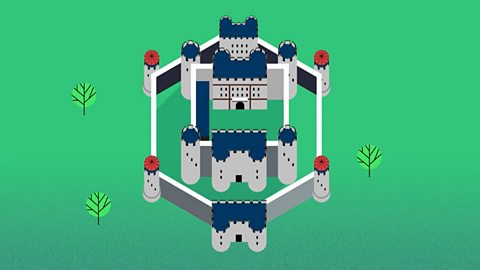
One reason why King Edward surrounded Eryri with a ring of concentric castles in coastal or riverside settings was to be able to transfer supplies easily to them by ships.
Advantages and disadvantages of concentric castles
Advantages:
- More layers to make them harder to attack
- Higher towers so guards could see enemies more easily
Disadvantages:
- Expensive to build
- Took a great deal of time to build
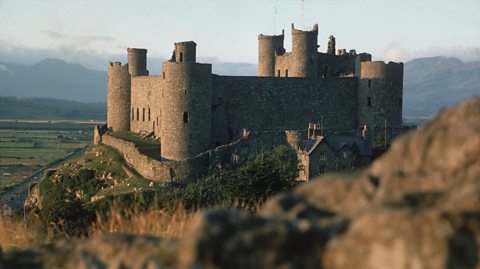
Harlech castle
- Built between 1282 and 1298
- Owain Glyndŵr gained control over the castle in 1404 and used it as his headquarters
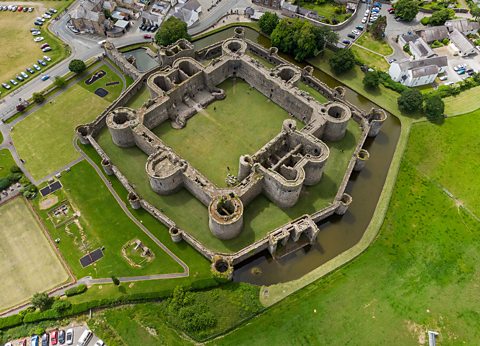
Beaumaris castle
- Built between 1282 and approximately 1330
- Although Edward I spent a huge sum of money on its construction, he was unable to complete it
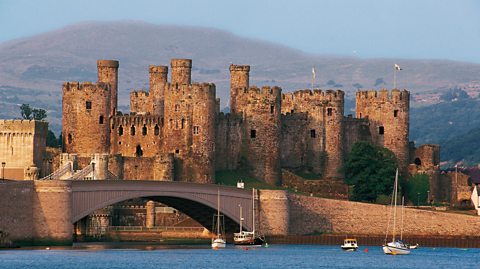
Conwy castle
- Built between 1282 and 1287
- The castle took four and a half years to complete and cost £15,000, which, in today’s money is over £6 million
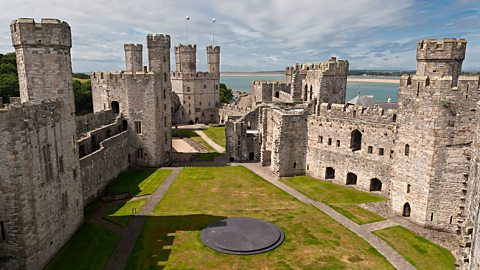
Caernarfon castle
- Building work on the castle to upgrade it from a motte and bailey castle started in 1283
- It included accommodation for the king’s court and this was the administrative centre for the area
The end of the castle age
Following Edward I’s successful conquest of Wales, castles gradually became less important from a military perspective. After gunpowder and cannons were invented, it was possible to destroy castles more easily. Battles started to take place on open ground rather than in castles.
Some castles began to be used as administrative centres where rent and taxes could be collected. Courts of law would be held in other castles, and some castle dungeons were used as prisons.
A new era for castles in the 19th century
At the end of the 18th century, there was an increase in the number of people interested in medieval architecture. Some wealthy people started remodelling their houses to look like castles or even built new ones!
These castles were not built to protect land and had no military purpose – they were status symbols that showed how rich the owners were. The most famous castle of this kind in Wales is Castell Coch near Cardiff. It was built by the architect William Burges in the late 19th century for Lord Bute who made his fortune from Cardiff docks. He already owned the ruins of a medieval castle and decided to rebuild a castle on the site.
Quiz - Castles
More on Conflict and peace
Find out more by working through a topic
- count4 of 4

- count1 of 4

- count2 of 4