
Understanding mathematical language, knowing what key terms such as multiplication and quarters mean, is vital for helping us learn maths and to explain our work.
Understanding the mathematical language will help us to correctly follow instructions, for example, knowing that divide means to cut something into equal parts.
In this video CAL is trying to make soup. But he is faced with a recipe which gives him instructions using mathematical language that he cannot understand.
How will CAL solve this problem?
AMELIA: Hey CAL, ready to do some cooking?
CAL: You betcha! Time to make a cracking soup. Let's have a look at the recipe. So it says the first thing I need to do is cut the parsnips into quarters. Hmmm, quarters?
AMELIA: Great. So you're dividing each parsnip into four parts.
CAL: I'm what?
AMELIA: I mean that by cutting the parsnip into four equal paces. you are dividing it into quarters.
CAL: Dividing it? That sounds tricky.
AMELIA: Not really. You can take a whole of something, like one whole parsnip, and cut it into equal parts. You could chop one whole parsnip into two equal parts, halves; or three equal parts, thirds; or four equal parts, quarters, or more. Remember though, all the parts need to be equal.
CAL: Hmm, did I do that right?
AMELIA: Yes.
CAL: Wow, that was simple. Now I need to add half an onion.
AMELIA: It's the same thing again, CAL. Let's take one onion and cut it equally into two parts.
CAL: So what I'm doing is dividing one onion into two halves.
AMELIA: Excellent maths, CAL.
CAL: Wahey! Check me out! Now it says to put everything that's left in the cooking pot, so I'm adding everything to the pot.
AMELIA: I don't think you need to add the recipe book too.
CAL: I'll just take that out, shall I?
AMELIA: Yes CAL. That's called subtraction!
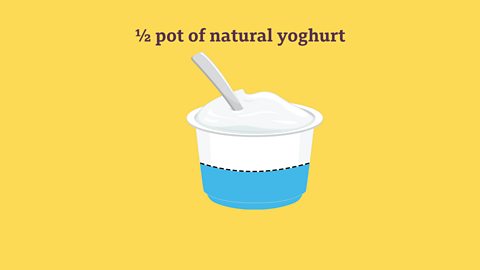
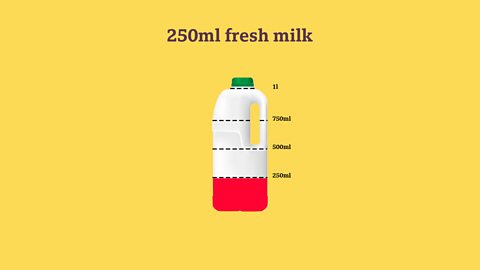
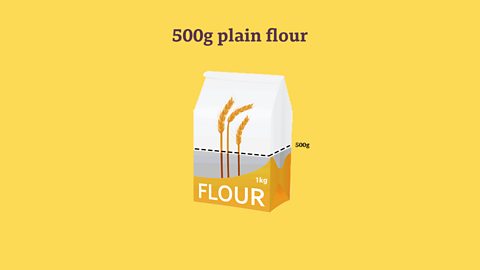
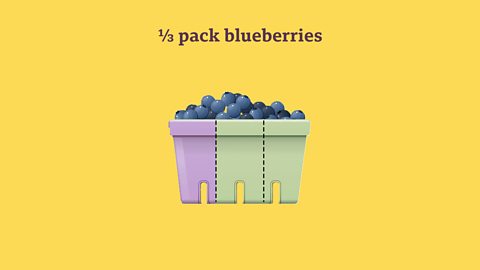
Find out about different weights and measures by looking at the ingredients in the blueberry muffins recipe below.
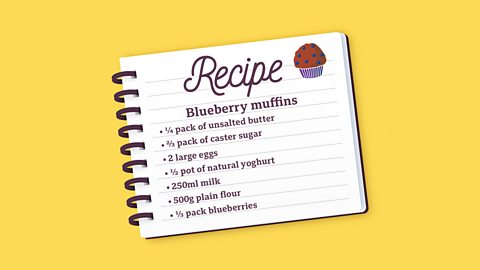
Image caption, Blueberry muffins recipe
Take a look at the recipe ingredients. Can you tell how much of each you will need?
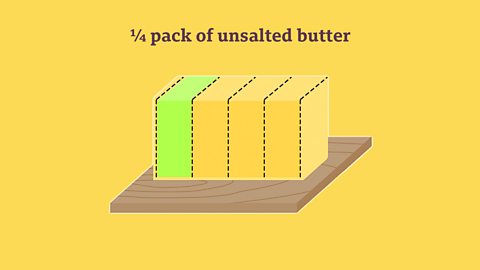
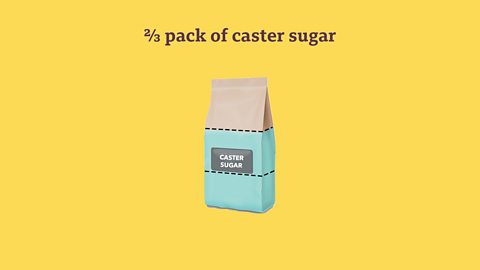
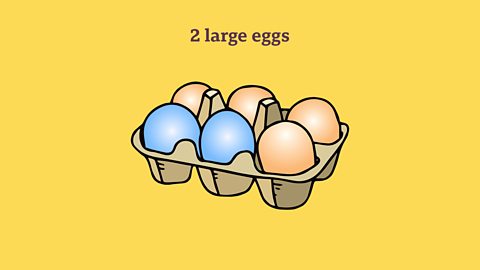
1 of 8
More on Handling data
Find out more by working through a topic
- count5 of 6

- count6 of 6

- count1 of 6

- count2 of 6