Classification
There are millions of different types of living things on Earth.
In order to keep track of them all, scientists put living things into groups based on characteristics that they have that are the same.
This is called classification.
Making links between characteristics and spotting what is the same and what is different about them, helps us to understand more about the animals and plants around us. It also helps scientists to identify and classify new species that are found.
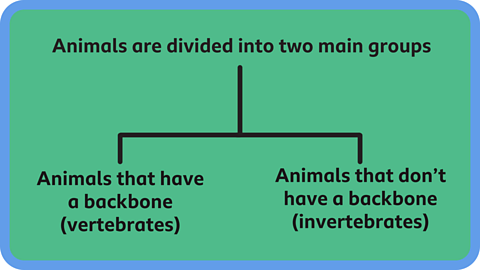
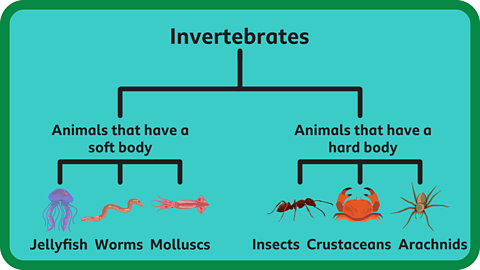
Image caption, Animals are divided into two main groups
Animals that have a backbone (spine) are called vertebrates. Animals that do not have a backbone are called invertebrates.
1 of 3
Watch: What is classification?
Fran: There are lots of different animals on a farm.
Some animals are vertebrates and others are invertebrates.
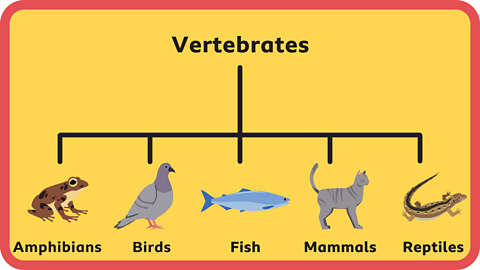
Animals which have a spine are vertebrates and they can be put into five different groups based on their features.
And this is called classification.
If you are a bird you have two wings, two feet, feathers and a hard beak.
And birds are warm-blooded, which means their body temperature stays the same, no matter how hot or cold theirsurroundings get.
Mammals are also warm-blooded. They have hair or fur, breathe air, give birth to live young and feed theiryoung with milk.
If you are a reptile you have dry, scaly skin and you are cold-blooded.
This means that your body temperature changes with the environment around you.
You can also lay eggs on land, and you have four legs or sometimes no legs at all.
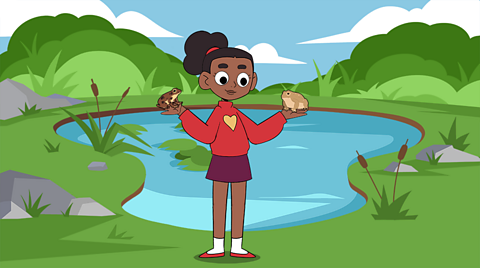
Amphibians are cold-blooded and live in water and on land.
They hatch from eggs in water and then grow into adults that can breathe air.
Most of them have soft, smooth skin that they can breathe through.
Fish are cold-blooded and live in the water.
Most of them have scales and they breathe through something called gills, which are like underwater lungs.
So let's see what my investigator has discovered about classifying animals by their features.
Child: The farm has lots of different animals, but what groups do they belong to?
Here is a chicken. It has two wings, two legs and a beak. It's a bird!
This is Nico the iguana. He has dry, scaly skin. He's a reptile!
This animal has been feeding its young. It's covered in fur and breathes air. It's a mammal.
And this human has hair, breathes air. I must be a mammal too!
Fran: That's right.
Humans are a type of mammal.
And classification keys help us make sure we know how look after the living things all around us.
Watch: Let’s find out more about classification
Follow the different branches of this classification tree!
Planet earth is quite an amazing place, because it’f full of life. From creatures that are so small we can’t even see them, to creatures that are so huge they could squash a whole house.
Each different type of animals is called a species. And all species are related to each other. It’s like a very strange sort of family. It’s also a confusing family because there are millions of species on Earth.
How can we work out who’s related? That’s what classification is all about. It allows us to put all different species in groups, and work out in what way they’re related to each other based on similar features.
For instance - a dog and a lion, are they closely related? They’re different, but not that different. They’ve both got the same sort of body shape. And each has fur and feeds milk to their young. They both belong to the group called mammals.
What about a duck and a fly? Are they closely related? They both have wings, and they both lays eggs. But they aren’t the same things. The fly has six legs, the duck has two, Ducks have feathers, flies don’t. They don’t belong to the same group.
Fascinating facts
Fascinating facts about classification!
- The majority of vertebratesreproduce by mating between males and females.
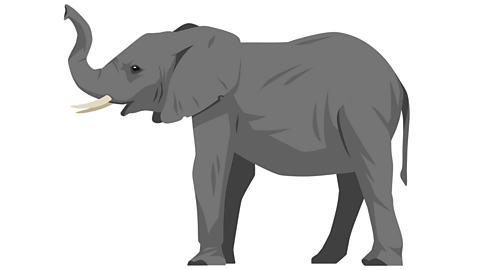
- The largest animals are vertebrates.
- Each different type of animals is called a species.
- A type of fish called the Greenland Shark has the longest recorded lifespan of any vertebrates - one is thought to be 400 years old!
- Classification is a system developed by a man called Carl Linnaeus.
- Invertebrates come in all shapes and sizes, from microscopic mites to the giant squid.
- Invertebrates make up around 97% of all the animal species on Earth.
What is classification?
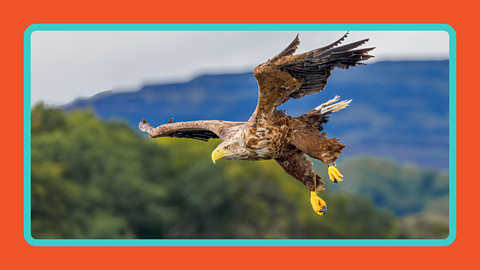
Image caption, Classification
Animals are divided into two main groups, invertebrates and invertebrates. Animals like this golden eagle that have a backbone (spine) are called vertebrates.
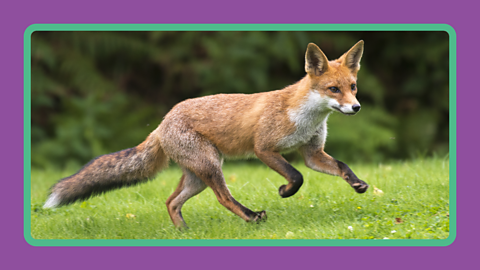
1 of 6
Did you know?
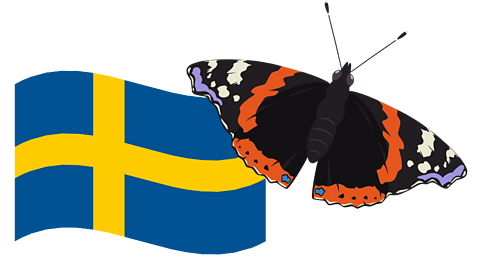
The way that scientists classify living things is all thanks to a man called Carl Linnaeus who was from Sweden.
He developed the Linnaean classification system that is named after him in the 1700s and classification systems that we use now are based on his ideas.
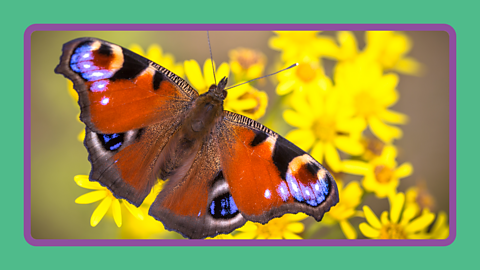
All animal species have a unique Latin name that allows scientists to see how animals are related to each other. Like this red admiral butterfly, which is known to scientists as a Vanessa atalanta!
Watch: Classifying animals
Here's what you need to know about classifying animals.
All living things are classified into groups according to their similarities and differences.
Over 90% of animals are invertebrates. That means they don't have a backbone.
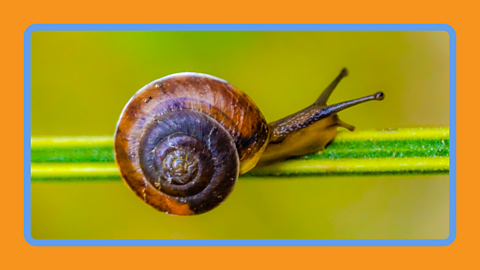
You can have invertebrates with soft bodies, like jellyfish, worms and slugs.
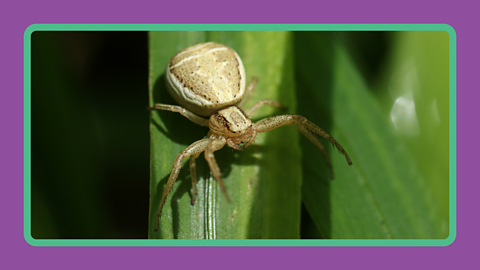
Or hard bodies, such as insects, crustaceans and spiders.
All the other animals with backbones are called vertebrates.
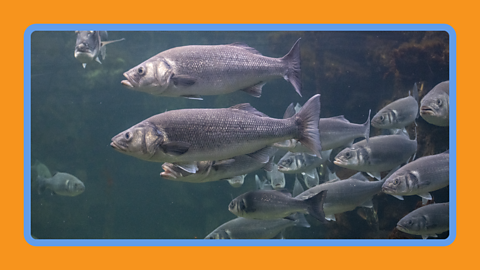
Vertebrates are grouped into five further categories. Fish, amphibians, reptiles, birds and mammals.
How many animals can you name?
Can you tell what group they belong in?
Did you know?
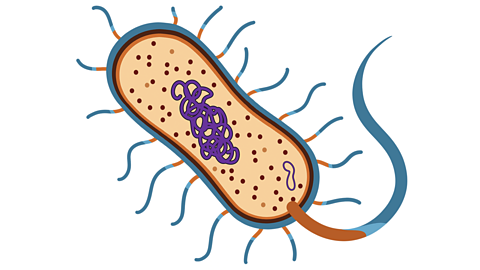
There are some living things that don’t fit into either the animals or the plants groups. Some things, such as bacteria, have a group all of their own.
Important words
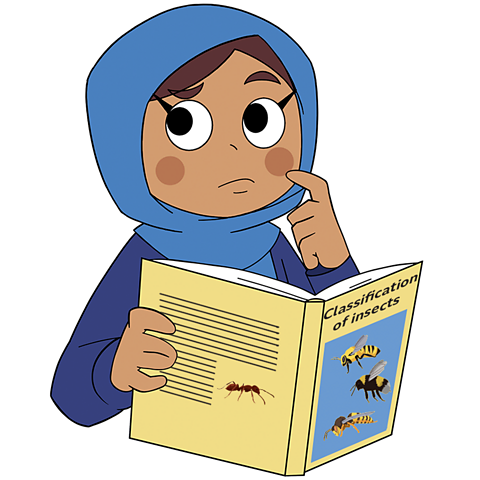
Bacteria – Tiny living things that are so small, you can't see them without a microscope. Bacteria are made up of just one cell.
Classify –To identify living things by placing them in groups based on shared characteristics.
Classification – Putting living things into groups based on shared characteristics.
Identify – To mark out one particular thing from a group.
Invertebrates – Animals that don't have a backbone.
Species – A population of a group of animals or plants.
Vertebrates – Animals that have a backbone (spine).
Activities
Activity 1 – Quiz
Activity 2 – Secondary sources
Take a walk to your local park and have a look at how many different animals you can spot.
- Write a list of all the animals or plants you can see.
- Time yourself as you classify these animals or plants into different groups.
Challenge: Let a friend question all your choices for the different groups. Why did you put that animal in that group?
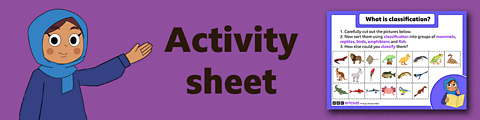
Activity 3 – Classify the animals
New game! Horrible Science: Stinky Space. game
Join Pipette on her epic mission and learn some revolting facts about space along the way.
More on Living things and their habitats
Find out more by working through a topic
- count2 of 10
- count3 of 10
- count4 of 10
- count5 of 10