What do you know?
You may have heard of first person or third person – but what is second person?
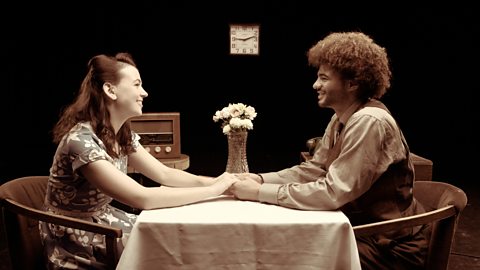
Second person narratives are very rarely used in fiction, as they are tricky to develop and tend to sound repetitive. In a second person narrative the reader is addressed directly as if they are involved in the story.
For example,
You see a light flicker and move towards it. You feel a growing sense of fear…
Introduction to writing in first or third person
Key learning points
When writing fiction, a writer carefully chooses the point of view. A point of view is the perspective of the story – the way the story is told.
The point of view a writer chooses to write in, in the first or third person, can shape the way readers engage with the story and the way characters are presented.
Video about writing in first or third person
A video explaining the differences between writing in first or third person and the different benefits of each method of narrative
When you write a story you need to decide on the point of view of the narrator. One approach is to write about the characters and events as an observer, like this:
Marcus loved sports of all kinds and he loved tennis most of all.
But tennis did not love him. Oops.
This perspective is called writing in the third person. It lets you describe what happens beyond the character’s experience and understanding. For example, I could go on to explain that the lost racquet had slipped through a gap in space and time.
Now let’s go back and write the story from a different point of view, the first person. This means writing it as if Marcus is narrating his own story.
I totally love all sports, tennis most of all. I’ve been training since I was a kid.
But, you know what, I’m starting to realise…
Tennis hates me!
Oh, where's the racquet gone?
Saying ‘I’ and ‘me’ can have the effect of making your reader feel closer to the character and gives us a clear idea of their voice.
It also means the reader wouldn’t know about the gap in space and time until Marcus discovered it for himself, but then his curiosity becomes our curiosity, and his adventures through space and time become ours too.
Anyone for tennis?
What is first and third person?
First person narrative
A first person narrative is told from the point of view of a character in the story. First person narratives use:
- personal pronouns such as ‘I’ and ‘me’
- collective pronouns such as ‘we’ and ‘us’
- possessive pronouns such as ‘mine’ and ‘ours’
Since the narrator is part of the events they describe, their accounts are often based around what they know. This narrative perspective can also use the second person narrative with pronouns such as ‘you’, ‘he’, ‘she’, ‘yours’ and ‘your’.
Third person narrative
When a story is told in the third person, the voice is not a character in the story. Writing that is in the third person can switch between characters. This is because the narrator is not part of the events and is simply reporting or observing them.
Third person narratives use pronouns such as ‘he’, ‘she’, ‘they’, ‘them’, and ‘themselves’, as well as the names of characters in the story.

Read this excerpt from The Social Contract by Jean-Jacques Rousseau:
Man is born free; and everywhere he is in chains. One thinks himself the master of others, and remains a greater slave than they.
Is the excerpt in the first or third person narrative?
A. First person
B. Third person
Answer: B. Third person.
Rousseau is talking universally from the perspective of every person. By using the third person, he is ensuring the observation is not just a personal experience and opinion.
Point of view limitations and benefits
Writing in the first or third person produces different types of relationships between the narrator, the characters and the reader. There are limitations and benefits to both points of view.
First person
- The first person narrative is often based around one character. The reader bases their understanding of what is described through the character’s perspective, experiences and feelings.
- Benefits: This approach can build a closer relationship between the character and the reader.
- Limitations: As one character is the sole narrator, the reader might have a limited view of this fictional world.
Third person
- The third person narrative can have a broader point of view, so the reader can see beyond one character’s perspective.
- Benefits: Third person can have access to the thoughts, feelings and experiences of several characters. If the narrator is all-knowing this is known as omniscient. This can help the writer give a broader view of the fictional world.
- Limitations: Omniscient third person narrators that know all the facts can sometimes feel detached as they may not share their thoughts with the reader. A writer may choose a third person narrator with a limited point of view, so that they can focus on just one character’s thoughts, feelings and experiences.
Immediacy of first person narratives
Writing in first person can be powerful. The Bringing someone into quick and direct involvement with something. of first person can reduce the distance between the reader/audience and the narrator/character. Narrators can sometimes even speak directly to the reader/audience. For example, in Charlotte Brontë's novel Jane Eyre the narrator says:
Reader, I married him.
By directly addressing and acknowledging the presence of the reader, the writer establishes a deeper connection with us.
Seeing the world with and through the eyes of the narrator creates The ability to understand and share other people's feelings. which in turn increases the likelihood of the reader/audience rooting for the first person narrator.
Distance of third person narratives
The distance of third person narratives allows the writer to create setting more easily, as they can give sweeping descriptions of the wider environment. These descriptions of setting are often important in establishing the mood or atmosphere of a piece of fiction.
In third person narratives, readers often feel they are hearing the voice of the writer. This allows readers to share in their viewpoint of this fictional world. For example, when reading a Jane Austen novel, readers feel as if they are learning something about the narrator’s sharp insights into Characteristic of the reigns of the British Kings George I–IV (1714–1830). society.
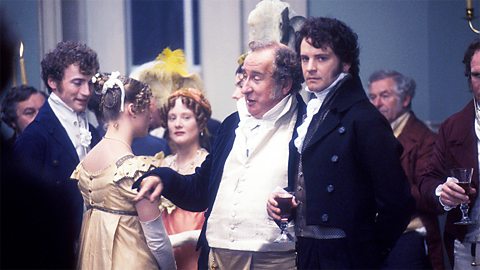
Third person narratives are also effective at creating an impression of a character that is not limited to one perspective. For example, in the novel Pride and Prejudice by Jane Austen, the character of Mr Darcy is presented to the reader:
Mr Darcy soon drew the attention of the room by his fine, tall person, handsome features, noble mien, and the report which was in general circulation within five minutes after his entrance … and he was looked at with great admiration for about half the evening, till his manners gave a disgust which turned the tide of his popularity; for he was discovered to be proud;
The scene is presented through a third person narrator, which allows the writer to show the general impression that the character is making. This description also reveals some interesting details about how people in this society form judgements.
Effect of narrative voice and perspective
Unreliable narrators
First person narration can give a sense of intimacy and authenticity. The writer could also make first person narrators unreliable. First person narrators can act and give accounts that are unreliable, Having an unfair prejudice against someone or something. or contradictory. The reader is encouraged to see that the narrator’s view of the fictional world may not be accurate.
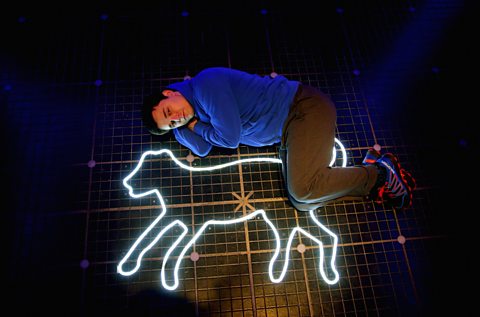
The character of Christopher in The Curious Incident of the Dog in the Night-time by Mark Haddon is both a reliable and unreliable narrator. Christopher has a really good memory. For that reason, his descriptions are highly accurate and reliable. However, Christopher struggles to interpret certain situations, as well as tone of voice and facial expressions, so can sometimes misunderstand a situation, which makes him an unreliable narrator.
Multiple narrators
Sometimes a writer may use more than one narrator to tell a story. This allows the writer to show different perspectives.
For example, in the novel Wonder by RJ Palacio the story starts from the perspective of the main character Auggie. Then it switches to his classmates, his sister, her boyfriend and others. This has the effect of showing us Auggie’s world from lots of different perspectives, adding a richness to the experiences and prejudices he faces by showing them through the eyes of different characters.

Using multiple narrative perspectives:
A. Confuses readers
B. Allows more of the story to be revealed from different perspectives
C. Allow the reader to see an unreliable perspective
Answer: B. Using multiple narrative perspectives allows more of the story to be revealed from different perspectives.
The more perspectives there are the more detail is available to the reader/audience about the characters and the world they exist in.
Test your knowledge
Play Bitesize secondary games. game
Have fun playing science, maths, history, geography and language games.

More on Fiction writing
Find out more by working through a topic
- count3 of 8

- count4 of 8
- count5 of 8