What do you know?
What are tropical storms also known as?
Depending on where they form, tropical storms are also known as hurricanes, cyclones and typhoons.
Key points
- Tropical storms form over warm oceans and travel from east to west.
- Tropical storms bring with them high winds, rain and storm surges.
- Tropical storms can cause large-scale damage and danger to life.
What are tropical storms?
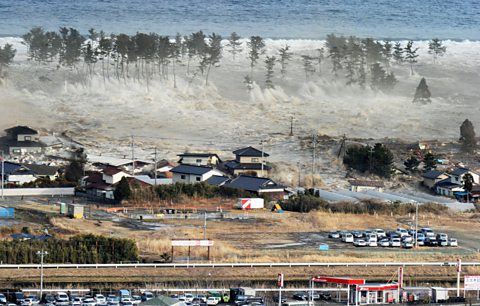
Hurricanes, typhoons and cyclones are all names used to refer to violent, rotating, tropical storms.
The term for these storms changes, depending on where they occur. If they form over the Atlantic Ocean or the Eastern Pacific Ocean, they are called hurricanes.
If they occur in the Far East, near places such as Japan, they are known as typhoons and if they occur in the Indian Ocean they are known as cyclones.
Tropical storm world map
How tropical storms form
For a tropical storm to form, there needs to be a warm ocean (27 °C or above) and light winds.
As tropical storms require warm oceans, they are normally found in tropical regions between 5° and 30° north and south of the equator where the water is warmest.
They usually form in the late summer when sea temperatures are at their highest.
The formation of a tropical storm
- Step 1: Warm air rises from the ocean. As the warm air rises it leaves a space below it called an area of A measure of air, usually when the air is rising. As it rises, it cools, condenses and forms clouds. Areas of low pressure are known as depressions.. This space is instantly filled by surrounding air rushing in causing strong winds.
- Step 2: The air that has rushed in now warms up and rises too. This rising air brings with it The presence of water in the air in the form of water vapour.. This moisture cools and condenses to form towering A heavy dark cloud sometimes accompanied with heavy rainfall.. This forms the The ring of clouds that surrounds the calm eye of a hurricane. The eye wall is where the storm is most powerful..
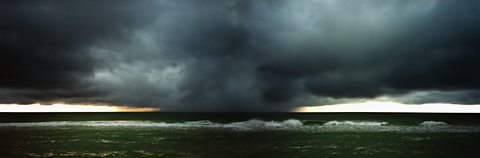
- Step 3 – When the cooled air descends it will form an area of calm in the centre called the eye.
- Step 4 – Due to the winds near the equator the tropical storm starts to move from east to west. The spin of the Earth causes these winds to curve and leads to the storm starting to spin.
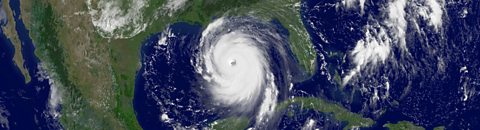
The formation of a tropical storm
Scientists believe that The long-term change of temperature and typical weather patterns. may affect tropical storms.
As the Earth warms so to do the oceans. If more of the oceans are above 27 °C, more places may experience tropical storms. Higher temperatures may also mean more energy for a tropical storm meaning they become more powerful and cause more damage.
Question
What sea temperature is needed for a tropical storm to form?
For a tropical storm to form they need a warm ocean, 27°C or higher.
Impact of tropical storms
A tropical storm can last up to a month and move very slowly, about 15 mph, across the ocean. On average seven hurricanes form each year over the Atlantic Ocean. Not all of these tropical storms make it to land; an average of two a year do.
If a tropical storm does make When a storm moves over land after being over water., it can have devastating effects on both people and the environment. These effects can be divided into primary effects and secondary effects.
Primary effects
Primary effects are caused by the tropical storm itself, usually as a result of high winds and the A rise in the sea level as strong winds push the sea up and towards the coastline. that often accompanies a tropical storm.
Primary effects may include:
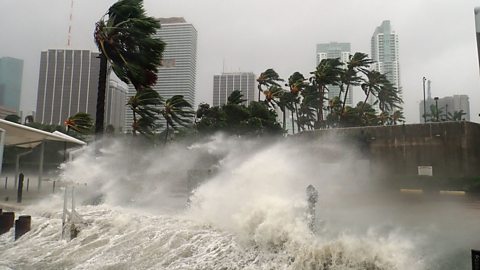
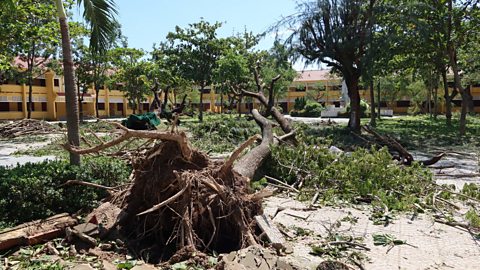
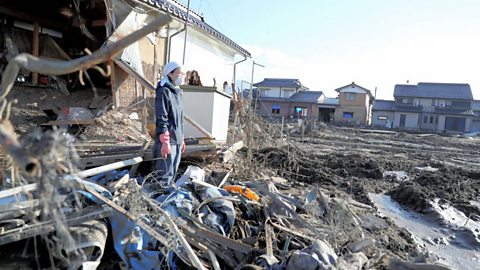
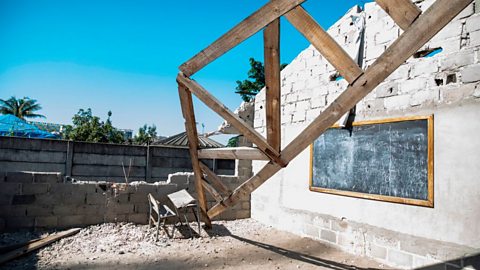
- Strong winds, heavy rain and storm surges lead to buildings being destroyed or flooded.
- Hurricane Dorian which hit the Bahamas and mainland USA in 2019 was the most powerful Atlantic hurricane on record with winds at 185 mph (295 km/h).
- Roads, railways, electricity supplies and other The parts of the built environment needed for a country to function such as roads, water and sewerage systems and ports; even schools and hospitals. being damaged.
- People being killed.
- Hurricane Katrina hit the United States in 2005 and killed more than 1800 people.
Secondary effects
Secondary effects are caused by the primary effects and usually happen later on.
Secondary effects may include:
- food and clean water shortages
- jobs being lost as businesses are damaged
- costs of damage
- landslides which can cause people to become homeless and cause evacuation difficulties for the emergency services
Question
How many people were killed by Hurricane Katrina which hit the United States in 2005?
Hurricane Katrina hit the United States in 2005 killed more than 1800 people.
Case studies
The impacts of tropical storms - Case studies
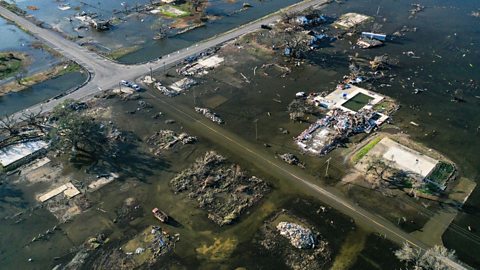
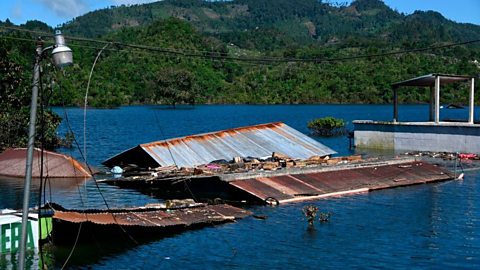
Image caption, Hurricane Delta caused large scale flooding to Louisiana's Gulf Coast in USA in 2020.
1 of 6
Test your knowledge
Play Planet Planners on Roblox! game
Explore global locations, solve real-life challenges and make the big decisions that shape the future.

More on Hazards
Find out more by working through a topic
- count5 of 5
- count1 of 5
- count2 of 5
- count3 of 5