How are voters in Scotland represented in the Scottish Parliament?
Quick version
MSPs are chosen for the Scottish Parliament using an electoral system called the Additional Member System (AMS).
AMS is a form of proportional representation
voters record two votes:
- one for a Constituency MSP
- one for a Regional MSP
There are 129 MSPs altogether:
- 73 constituency MSPs
- 56 additional regional MSPs (7 per region)
Elections to Scottish local government (councils) use an electoral system called the Single Transferable Vote (STV):
- for STV council areas are divided into wards
- each ward elects three or four councillors
- each voter has more than one vote
Video - How are MSPs elected to the Scottish Parliament
Watch this video to see how MSPs are elected using an electoral system called the Additional Member System or AMS .
Additional Member System
The Scottish Parliament is made up of 129 members or MSPs, who representeveryone in Scotland.
The country is divided into eight electoral regions and 73 constituencies.Each voter in Scotland is represented by eight MSPs.
One constituency MSP and seven regional MSPs.
They are elected using the Additional Member System or AMS.
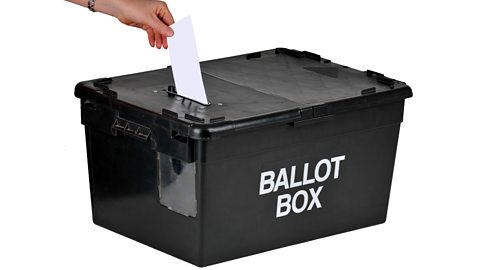
At an election voters are given two ballot papers, one for their constituencyand one for their region.
On the constituency ballot paper voters mark one cross next to the name of theindividual person they wish to vote for.
The candidate who wins the most votes is elected as that constituencies MSP.
On the regional ballot paper, voters place a cross next to their preferred politicalparty or independent candidate.
The total number of regional votes is counted and used to work out the numberof MSPs each party or independent candidate should have to fairly represent theproportion of votes they received in the region.
The number of constituency MSPs each party has already had elected issubtracted from each party's total.
The party's regional list of candidates is then used to top this up until theproportional number of MSPs is reached.
This makes the additional member system a form of proportional representation,where the number of seats a party gains relates to the number of votes itreceives.
Learn in more depth
There are two types of MSP:
Constituency MSPs - Scotland is divided into 73 areas called constituencies. Each constituency is represented by one MSP.
Regional MSPs - Scotland is divided into eight regions. Each region is represented by seven MSPs.
MSPs are chosen for the Scottish Parliament using an electoral system called the Additional Member System or AMS.
AMS is a form of proportional representation. This means it aims to give political parties a share of representatives (MSPs in Scotland) in proportion to their share of the vote.
Voters are given a ballot paper which asks them to record two (‘X’) votes:
- the first vote is for the constituency MSP
- the second vote is for a regional MSP
How are constituency MSPs elected to the Scottish Parliament?
In the Additional Member System, the first ballot paper is used to elect constituency MSPs.
- the ballot paper has a list of named individual candidates
- each political party can put forward a candidate
- independent candidates can put themselves forward
- voters put one X against the name of their chosen candidate
- the candidate with the most votes is elected
This part of the Additional Member System works in the same way as the First Past the Post System used to elect MPs to the UK Parliament in Westminster.
How are regional MSPs elected to the Scottish Parliament?
In the Additional Member System, the second ballot paper is used to elect regional MSPs. This gives voters the opportunity (a second vote) to vote for a political party.
This second vote is what makes AMS a form of proportional representation. It is used to make the proportion of MSPs from each political party more similar to the number of votes they have received.
How does the second vote of the Additional Member System work?
- before the election, each political party publishes a list of candidates for each region
- the second ballot paper has a list of political parties
- voters put one X next to their choice of political party
- votes are counted to see what proportion of votes each party received
The number of constituency MSPs elected for each party is counted and compared to the proportion of votes each party received in each region.
Additional MSPs are elected from each political party's regional list. The number of additional MSPs is used to reflect the proportion of votes each party received in the second ballot.
This aims to make the overall result fairer to all parties.
For example, in 2021 the Green Party did not receive enough votes to return any constituency MSPs. However they were given eight additional (or list) MSPs across seven of Scotland's region because of the proportion of votes that they had received in these regions. This gives Green Party voters fairer representation in proportion to their political support across Scotland's regions.
There are 56 additional regional MSPs (7 per region). When added to the 73 constituency MSPs this makes 129 MSPs altogether.
Number of MSPs by party in 2021 Scottish election
Advantages and disadvantages of the Additional Member System
What are the advantages of AMS?
More choice: Voters have more choice when they go to vote. In the first vote they may choose a local representative from one party but in their second (list) vote they may switch to a different party.
Fairer to all parties / proportional: The overall result is fairer to all parties or more proportional. For example, the 2016 Scottish Parliament elections saw a maximum difference of 5% between the voted received and the MSPs returned.
More views represented: It is possible that a greater number of parties will be represented in the government as a coalition is more likely.
Every vote counts: Although voters may find their chosen constituency candidate has little chance of winning, their second vote will help to elect a representative from the party of their choice.
More choice of representative: Voters don't just rely on one MSP. They can seek help from an MSP who they feel will better represent their views or needs.
What are the disadvantages of AMS?
Complex: Elections are more complicated with two votes and in deciding which candidates are elected from the regional list.
Multiple representatives: Having several MSPs to represent each voter is confusing for some voters.
Coalitions more likely: Coalition or a minority government becomes more likely. This can slow down political decision-making. It can also give more power to smaller parties if the larger party in government depends on their support.
Not most proportional system: Although AMS is a proportional representation system, it is not the most proportional of systems. For example, the SNP received around 44% of the vote in the 2016 Scottish Parliament election but returned 49% of MSPs (63 out of 129) while the Liberal Democrats received around 7% of the vote but only returned 5 MSPs (4%).
Parties control regional lists: Second vote is used to select representatives from a list to make the overall result proportional. This is less democratic as political parties not voters decide the order of the candidates on the list.
Video - What is the Single Transferable Vote in Scotland (STV)?
Watch this video to learn how the Single Transferable Vote or STV works.
Single Transferable Vote
Scotland is divided into 32 local authorities which are in charge of public serviceslike libraries, schools, bins, planning and social care.
Each local authority is divided into areas called council wards.
Each ward is represented by three or four councillors.
The councillors are elected using a voting system called the Single TransferableVote or STV.
On the ballot paper, voters can choose to vote for one candidate by putting a ‘1’in the box by their name or they can rank candidates in order of preference with a‘1’ for their favourite, a ‘2’ for their second favourite, and so on for as many of thecandidates as they wish.
To be elected, candidates must achieve a minimum percentage of all the votescounted.
This is called the quota.
If a candidate reaches the quota, they are elected.
Any surplus votes they receive above the quota are redistributed amongst theother candidates based on voters’ second choices.
If this brings them above the quota, they too are elected and so on until allcouncillors are elected.
If no candidate reaches the quota based on the people's first choice, thecandidate with the fewest votes drops out.
People who voted for them have their vote transferred to their second choice.In the end, the number of councillors elected from each party as in proportionwith the number of votes cast for them.
This makes STV a form of proportional representation.
Elections to Scottish local government (councils) use an electoral system called the Single Transferable Vote (STV). STV was first used in Scotland in 2007.
How does Single Transferable Vote (STV) work?
For the purposes of the election, council areas are divided into wards. Each ward elects three or four councillors.
Using the STV electoral system, each voter has more than one vote. Rather than placing one ‘X’ next to the candidate of their choice, the voter is asked to rank the candidates in order of preference eg 1, 2, 3 etc. The voter can vote for as many candidates as they wish or can choose to vote for only one (rank 1).
Candidates must achieve a minimum percentage of votes to be elected as councillors. If this does not happen based on people's first choice votes the candidate with the lowest number of votes drops out. People who voted for this candidate have their vote transferred to their second choice.
If a candidate achieves the required percentage of the vote they are then elected. Any 'surplus' votes they receive above this are redistributed among the other candidates based on voters' second choices.
This process is repeated until all councillors are elected.
What are the advantages of STV?
Greater voting choice: Voters can rank order the candidates giving them more choice. They can choose within parties and between parties.
Wider representation : As each voter has several councillors to represent them in their ward this gives them more choice in who they can speak to about their problems
Proportionality: System is more proportional than AMS and First Part the Post.
No tactical voting: No votes are ‘wasted’ ie all votes count towards choosing a representative. There is no need for tactical voting and there are no ‘safe’ seats.
Parties must work together: The most likely result of the election is that no one party will control a council. STV is more likely to result in a coalition (or minority control) of a council.
What are the disadvantages of STV?
Complexity: Elections are more complex. Several different representatives covering the same ward are likely to be elected.
Coalitions more likely: As most parties gain representation under STV usually councils are run by a several parties together in a coalition which can make decision making harder.
Quiz
Recap what you have learned
MSPs are elected using an electoral system called the Additional Member System (AMS):
- There are constituency MSPs and regional MSPs.
AMS is a form of proportional representation and voters have two votes:
the first ballot paper is used to elect constituency MSPs
the second ballot paper is used to elect regional MSPs
| Advantages of AMS | Disadvantages of AMS |
|---|---|
| more choice | complex/confusing |
| fairer to all parties | multiple representatives |
| more choice of representatives | coalitions more likely |
| more views represented | not the most proportional system |
| every vote counts | parties control regional lists |
Elections to Scottish local government (councils) use an electoral system called the Single Transferable Vote (STV):
- each voter has more than one vote
- they can vote for as many candidates as they wish in order of preference
- or can choose to vote for only one (rank 1).
| Advantages of STV | Disadvantages of STV |
|---|---|
| greater voting choice | complexity |
| wider representation | multiple representatives with weaker links to voters |
| highly proportional | coalitions more likely |
| no tactical voting | slow to count |
| parties must work together |
More on Democracy in Scotland
Find out more by working through a topic
- count14 of 19
- count15 of 19
- count16 of 19