How to use the verb 'to have' in French
Check your connection, refresh the page and try again. means 'to have' in French.
It is important to know how to use avoir as it is the second most common verb in French. It's useful to be able to talk about what you have or don't have.
Learn about the verb 'avoir' in French with Burt Bessington
Burt: Hello and welcome to Words of the World with me your host, Burt Bessington!
Let's play the game! Pass the ball as quickly as you can. When I ask, tell me in French who has the ball. But remember to use the correct form of the verb avoir. That's 'to have' in English.
Just like this…
J'ai le ballon. 'I have the ball'.
Let’s begin.
Man:J'ai le ballon. 'I have the ball'.
Burt: That's correct! J'ai le ballon is 'I have the ball'.
Woman:Tu as le ballon. 'You have the ball'.
Burt: Yes! Tu as le ballon is 'you have the ball'.
Man:Elle a le ballon. 'She has the ball'.
Burt: You got it! Elle a le ballon. 'She has the ball'.
Man:Il a le ballon. 'He has the ball'.
Burt: You guys are too good!
Il a le ballon. 'He has the ball'.
Burt: Time up! Didn't they do well?
And looking at the scores, you've won this week's star prize, a romantic meal for two. See you next time on Words of the World!
How to form 'avoir'
Avoir is an irregular verb. Regular verbs follow the same pattern, but irregular verbs don’t.
If you want to say 'I have' in French, you say:
Check your connection, refresh the page and try again. – I have
Check your connection, refresh the page and try again. – I have the ball
The form of avoir changes as the person doing the verb changes.
| French | English |
|---|---|
| Check your connection, refresh the page and try again. | I have |
| Check your connection, refresh the page and try again. | You have |
| Check your connection, refresh the page and try again. | She has |
| Check your connection, refresh the page and try again. | He has |
Asking questions using 'avoir'

When writing the question in French, you leave a space between the final word and the question mark.
A simple way to ask questions using avoir is to rise your intonation at the end of the statement. This means that your voice goes up at the end of a sentence, turning it into a question.
Can you hear the difference between these questions and statements?
Check your connection, refresh the page and try again. – You have the ball
Check your connection, refresh the page and try again. – Have you got the ball?
Check your connection, refresh the page and try again. – She has the ball
Check your connection, refresh the page and try again. – Has she got the ball?
When can I use 'avoir'?
You can use the verb avoir in lots of different phrases.
You can say how many things you have:
Check your connection, refresh the page and try again. – I have a dog
Check your connection, refresh the page and try again. – I have two dogs
Check your connection, refresh the page and try again. – I have three dogs
You can use it to ask for objects in class:
Check your connection, refresh the page and try again. – Do you have a pencil?
Check your connection, refresh the page and try again. – Yes, I have a pencil
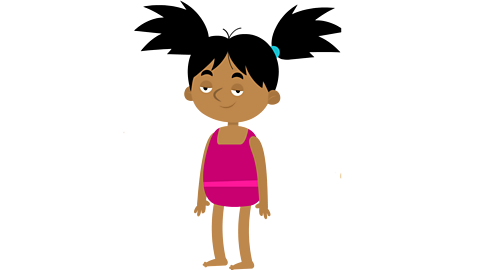
You can describe yourself:
Check your connection, refresh the page and try again. – I have long hair
Check your connection, refresh the page and try again. – I have short hair
Check your connection, refresh the page and try again. – I have blue eyes
Check your connection, refresh the page and try again. – I have brown eyes
You can say if something is hurting:
| French | English |
|---|---|
| Check your connection, refresh the page and try again. | I have toothache |
| Check your connection, refresh the page and try again. | I have a headache |
| Check your connection, refresh the page and try again. | I have stomach ache |
Negatives and avoir
To make a negative in French we add Check your connection, refresh the page and try again. and Check your connection, refresh the page and try again.around the verb.
However, because avoir starts with a vowel, the ne becomes n’:
- Check your connection, refresh the page and try again. (I have) becomes Check your connection, refresh the page and try again. (I don’t have)
- Check your connection, refresh the page and try again. (you have) becomes Check your connection, refresh the page and try again. (you don’t have)
- Check your connection, refresh the page and try again. (he/she has) becomes either Check your connection, refresh the page and try again. (he doesn’t have) or Check your connection, refresh the page and try again. (she doesn’t have)
With a negative sentence in French, we replace the indefinite articles (un, une or des) with de. So to say, 'I don’t have a cat' we would say Check your connection, refresh the page and try again..
Examples:
- Check your connection, refresh the page and try again. - I don’t have any brothers
- Check your connection, refresh the page and try again. - I don’t have a pencil
- Check your connection, refresh the page and try again. - You don’t have any sisters ?
- Check your connection, refresh the page and try again. - He doesn’t have a dog
- Check your connection, refresh the page and try again. - She doesn’t have a horse

Did you know?
In English, we use the verb 'to be' to describe how we are, but in French, you sometimes use the verb 'to have':
Check your connection, refresh the page and try again. – I am hungry
Check your connection, refresh the page and try again. – I am thirsty
Check your connection, refresh the page and try again. – I am hot
Check your connection, refresh the page and try again. – I am cold
Check your connection, refresh the page and try again. – I am frightened
In English, you also use the verb 'to be' to say how old you are but in French, you use the verb 'to have':
Check your connection, refresh the page and try again. – I am seven years old
Check your connection, refresh the page and try again. – I am eight years old
Check your connection, refresh the page and try again. – I am nine years old
Check your connection, refresh the page and try again. – I am ten years old
Key French words
| French | English |
|---|---|
| Check your connection, refresh the page and try again. | to be hungry |
| Check your connection, refresh the page and try again. | to have ___ache |
| Check your connection, refresh the page and try again. | to be thirsty |
| Check your connection, refresh the page and try again. | the ball |
| Check your connection, refresh the page and try again. | hot |
| Check your connection, refresh the page and try again. | the teeth |
| Check your connection, refresh the page and try again. | ten |
| Check your connection, refresh the page and try again. | cold |
| Check your connection, refresh the page and try again. | eight |
| Check your connection, refresh the page and try again. | nine |
| Check your connection, refresh the page and try again. | seven |
| Check your connection, refresh the page and try again. | the head |
More on Language skills: Knowledge about language
Find out more by working through a topic
- count4 of 4
- count1 of 4
- count2 of 4