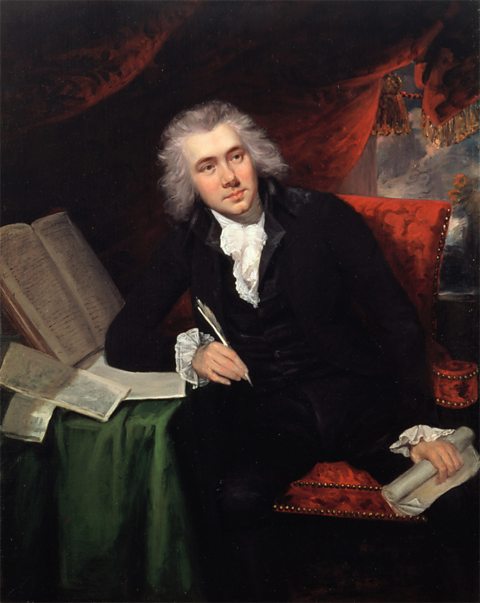
William Wilberforce was born in 1759 in Hull, East Yorkshire.
He attended Cambridge University, where he became friends with the future prime minister, William Pitt the Younger.
In 1780, aged 21 he became Member of Parliament (MP) for Hull.
Four years later he became MP for the whole of Yorkshire and began to work for the abolition of the British slave trade.
Wilberforce's Christians believe that Jesus was the Messiah promised in the Old Testament. Christians believe that God sent his Son Jesus to earth to save humanity from the consequences of its sins. faith had a considerable influence on his life. His faith led him to become interested in social reform, particularly the improvement of factory conditions in Britain.
He campaigned for several causes including:
- legislation to improve the lives of the poor
- education
- prison reforms
- ending child labour.
He was also one of the founders of the Royal Society of the Prevention of Cruelty to Animals (RSPCA).
Campaigning against slavery
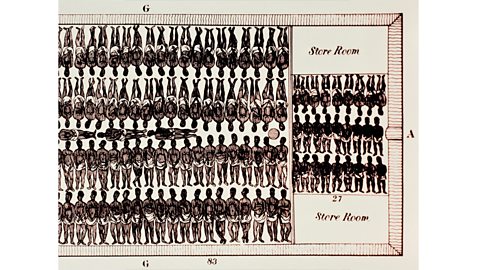
Wilberforce along with others campaigned to end the slave trade where British ships were carrying Black slaves from Africa to the West Indies as goods to be bought and sold.
Wilberforce argued that it was not right to own people.
The A person who wants to stop or abolish slavery. Thomas Clarkson had an enormous influence on him.
On 12 May 1789 he gave his first key speech on the abolition of the slave trade. It has gone down in history as one of the most significant speeches made in the Houses of Parliament.
Wilberforce was persuaded to lobby for the abolition of the slave trade and for 18 years he regularly introduced anti-slavery motions in parliament.
The Slavery Abolition Bill
Wilberforce attempted several times to bring Public bills introduced by MPs and Lords who are not government ministers. before Parliament to end Britain’s involvement in the slave trade.
After many years of defeats, he finally achieved his goal on 25 March 1807.
But this did not completely prevent British people from participating in the slave trade.
He retired from politics in 1825 due to ill health but continued to campaign for the abolition of slavery.
Wilberforce's role in the abolition of slavery. This 2012 clip is from the BBC Two programme The British Slave Trade and its Abolition 1770-1807
NARRATOR:
Wilberforce tried and failed to persuade Parliament to abolish the slave trade every year for nearly 20 years.
Finally, in 1807, Parliament passed the bill to abolish the transportation of captives for slavery — but not slavery itself.
Wilberforce was able to argue that it was not right to own people.
He therefore was seeking to redefine the right of people to own property, so he took the cause into the property owners club, of which he was a member, and sought to reform the club from inside.
And I think that that, again, was a mark of his courage and his determination.
The culmination of a life's work
Finally, on 26 July 1833, as Wilberforce lay on his deathbed, he was told that Parliament had passed the Slavery Abolition Bill.
The Bill granted freedom to all slaves within the British Empire.
Wilberforce died three days later.
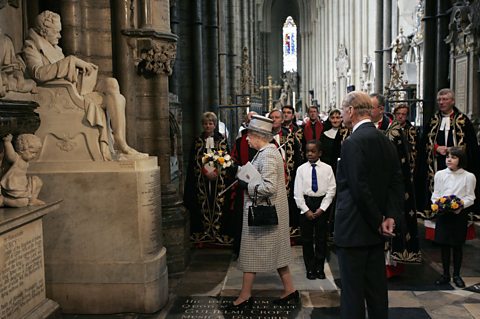
As a mark of respect for his achievements, his body was buried near his friend William Pitt in Westminster Abbey.
In 1840, a statue of Wilberforce was unveiled in Westminster Abbey. In 2007 Queen Elizabeth II laid a wreath on the statue during a service to mark the Bicentenary of the Abolition of the Slave Trade Act.
Quiz time!
More on Historical figures
Find out more by working through a topic
- count6 of 7

- count7 of 7

- count1 of 7

- count2 of 7

