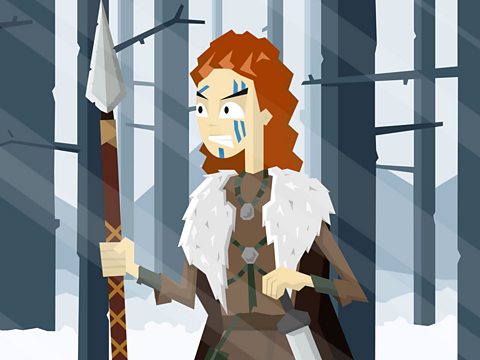
Watch: What did the Romans do for us?
When the Romans arrived in AD43, they introduced new ideas and new ways of living to Britain.
From stinging nettles to sewers - find out how the Romans changed Britain
What did the Romans do for us? When the Romans invaded in AD43, they really liked Ancient Britain, but they weren’t too impressed with the Ancient Britons.
The Romans pretty much thought they were better at everything; they built big brick and stone buildings with central heating. They built sewage systems and paved, straight roads that stretched right across the country to connect up all their new Roman towns.
Before long, they’d built so much that Britain didn’t look too different from Rome itself apart from the weather of course. The Romans even brought animals, like rabbits to Britain. And stinging nettles too! The Romans also built temples to worship their many gods – like Mars, Jupiter, Mercury and Venus.
You’ve probably heard of them, because we’ve named our planets after them. Later on, the Romans decided to believe in just one god and introduced Christianity to Britain too.
Before the Romans arrived there was no written language in Britain. They changed all that by teaching important Britons how to read and write and how to speak the Roman language – Latin. And even today, two thousand years later, a lot of our words come from Latin, like ‘enormous’ and ‘victory’ and ‘lavatory’!
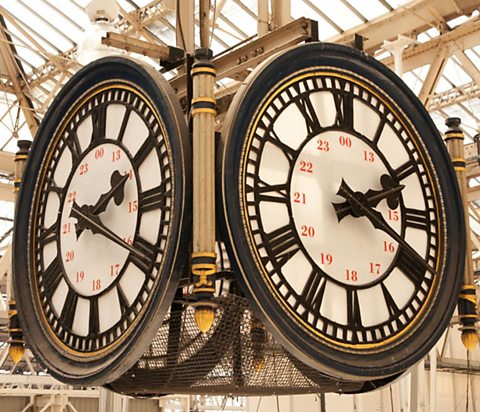
The ways we measure distances miles feet and inches – that’s all Roman, We’ve got Roman numerals, which you can still see in a lot of places, like clocks. And coins too the Romans made using coins to buy things popular throughout the whole of Roman Britain, rather than just swapping one thing for another like a sheep for a sword for example.
All in all we owe a lot to the Romans – but don’t tell them that – they’re smug enough as it is.
The end of Roman Britain
By AD410 the city of Rome was under attack and the empire was falling apart. So the Romans had to leave Britain to help back home.
The Roman Emperor Honorius sent a goodbye letter to the people of Britain.
He wrote: “fight bravely and defend your lives…you are on your own now”.
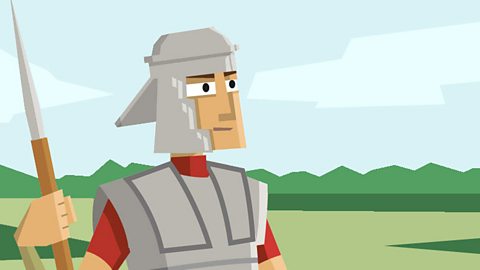
After they left many of the Roman towns in Britain crumbled away as people went back to living in the countryside.
But even after they were gone, the Romans left their mark all over the country.
They gave us: new towns, plants, animals, a new religion and new ways of reading and counting.Even the word Britain comes from the Romans.
This wasn't all the Romans gave Britain though…
Roman Roads
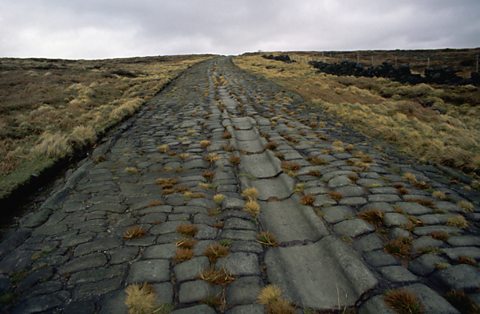
The Romans built 10,000 miles of road across Britain.
Many of these are used today as modern roads, such as the Fosse Way which went from the Roman towns of Lincoln to Exeter.
Today this is the A46 to Leicester and the B4114 and B4455 to Cirencester, crossing Watling Street (the A5).
Why not see if you can locate them on a map?
How did the Romans change towns?
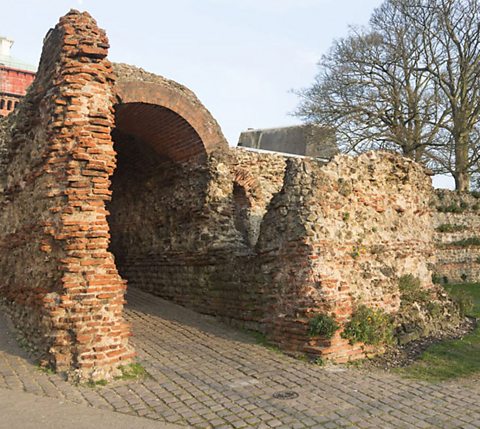
- London (Londinium) was Britain’s greatest city and is today the capital of the UK.
- When the Romans invaded, they built a fort beside the River Thames.
- This was where traders came from all over the empire to bring their goods to Britain.
- Londinium grew and grew, until it was the most important city in Roman Britain.
What's in a name?
- If a place-name has chester, caster or cester in it, it's almost certainly Roman.
- Gloucester, Worcester, Colchester, Doncaster and Manchester are good examples.
- The word chester comes from the Latin word castrum which means a fort.
- Other important Roman towns included Lincoln, Exeter, York, and Bath.
Clever town layouts
- The Romans often built upon existing Celtic tribal-settlements such as Winchester and Canterbury.
- Towns are designed in a grid. Streets criss-crossed the town to form blocks called insulae.
- In the middle was the forum. A big market square where people came to trade.
- The main buildings were in stone. Centuries later, these Roman towns survived to become the dominant towns of Medieval England.
What Roman ruins are there?
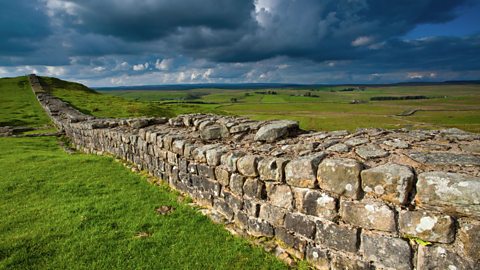
Image caption, Of all the Roman remains in Britain, Hadrian's Wall is probably the most famous. In AD122 the Emperor Hadrian ordered his soldiers to build a wall between Roman Britain and Scotland. It ran for 73 miles from Wallsend-on-Tyne to Bowness.
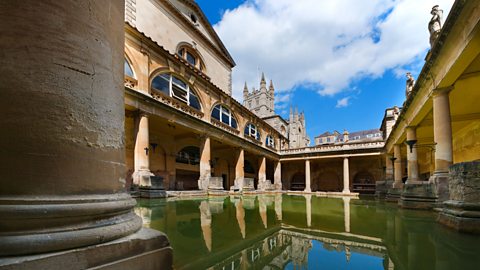
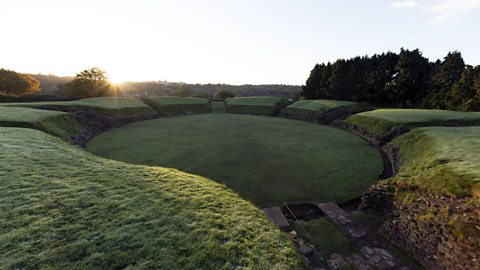
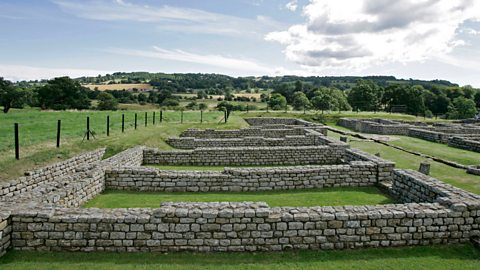
1 of 4
Language, writing and numbers
Before the Romans came, very few Britons could read or write. Instead, information was usually passed by word of mouth.
- The Romans wrote down their history, their literature and their laws.
- They spoke Latin, and it wasn’t long before some Britons started to use it too.
- The area south of the Fosse Way (Lincoln to Exeter) was the wealthiest and most Romanised part of Britain where Latin was spoken.
- Latin was also the language of Christianity and remained the universal language of learning, law and literature for 1000 years after the end of the Roman Empire.
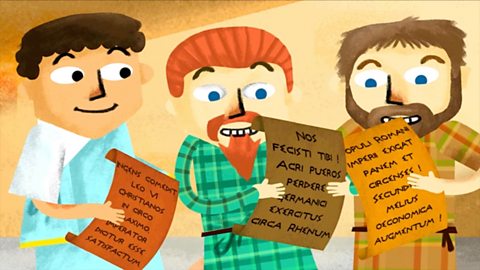
We've still got lots of words and phrases today that come from Latin. Words like exit, which means they go out, and pedestrian, which means going on foot.
Our coins are based on a Roman design. Written around the edge of some £1 coins is the Latin phrase 'decus et tutamen' which means glory and protection.
Quiz - How did the Romans change Britain?
Teaching resources
Looking for ways to introduce students to how the Romans changed Britain? This collection of animated videos explores the Roman Empire, with a focus on the Roman invasion and settlement of Britain.
BBC Bitesize for Teachers has thousands of free, curriculum-linked resources to help deliver lessons - all arranged by subject and age group.
Horrible Histories: Raid and Trade game! game
Play Horrible Histories: Raid and Trade KS2 History
More on Roman Empire
Find out more by working through a topic
- count1 of 6
- count2 of 6
- count3 of 6
- count4 of 6