Quick version
There are two key features of valleys in glaciated uplands:
- U-shaped valleys: processes of plucking and abrasion widen, steepen, deepen and smooth V-shaped river valleys into a U-shape
- Truncated spurs: interlocking spurs in the narrow V-shaped river valley are eroded away by the ice, creating snub-nosed truncated spurs
How are U-shaped valleys and truncated spurs formed?
Video - U-shaped valleys and their features
In this video, you can learn how U-shaped valleys and truncated spurs are formed.
How glaciated erosion creates U-shaped valleys and truncated spurs
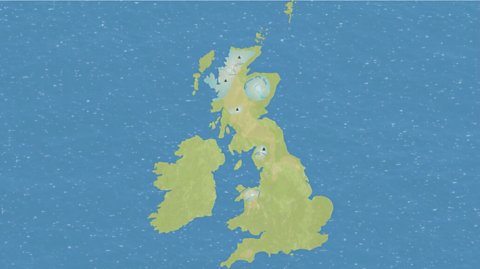
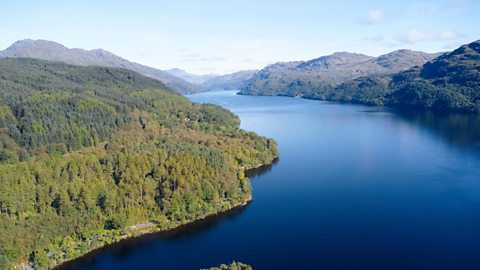
The UK has several areas of glaciated upland, including the north west Highlands and Loch Lomond.
These landscapes were shaped by massive glaciers.
This U-shaped valley was formed by a huge glacier. Starting as a V-shaped river valley but as the glacier flowed down the snow and ice plucks and erodes the lot. This widened and deepened the valley, steepening the sides and giving the distinctive U-shape.
This process also creates a truncated spur where a ridge sloping into the valley has been eroded sharply by the flowing ice.
This cuts off, or truncates, the end of the ridge.
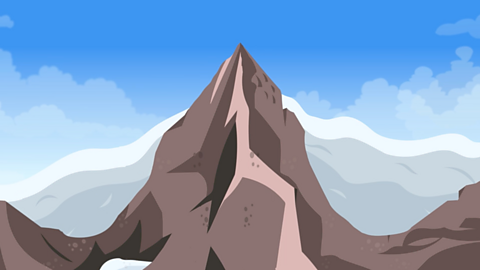
The very steep side of the spur is evidence of this glacial erosion. U-shaped valleys and truncated spurs: the distinctive footprint mapping the movement of a glacier.
Which came first, a V-shaped or U-shaped valley?
A V-shaped river valley comes first. During the ice age, a glacier forms and flows through the V-shaped valley. Over time the glacier plucks and erodes rock which makes the valley wider and deeper, with steeper walls. This is now a U-shaped valley.
Which erosion processes form glaciated valley features?
A glacier erodes a valley through the processes of When rocks and stones become frozen to the bottom or the sides of a glacier. The rocks and stones are plucked from the ground or rock face as the glacier moves. and Rocks stuck in the ice that grind away the bedrock under the glacier. to widen, steepen, deepen and smooth V-shaped river valleys into a U-shape.
Glacier erosion turns V-shaped valleys U-shaped, with a flat floor and steep sides.
The Ridges of rock that stick out that a river flows around in a V-shaped valley. When viewed from downstream, these spurs appear to be locked together. in the narrow V-shaped river valley are eroded by the glacier.
Their pointed ridges are worn away by the ice, forming steep snub-nosed A rounded area of land at the edge of a U-shaped valley..
After The build up of ice on the land during colder periods in time., a misfit stream/river or A long narrow lake found in a glacial trough. can sometimes occupy the floor of the U-shaped valley.
Examples of U-shaped valley features
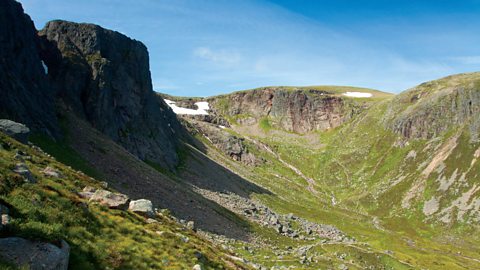
This slideshow shows features of U-shaped valleys created by glaciated erosion.
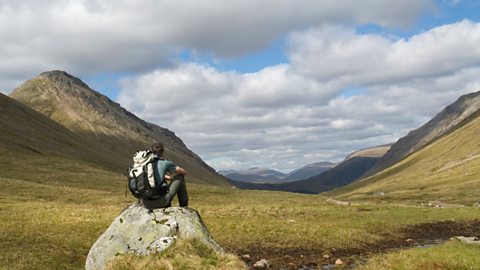
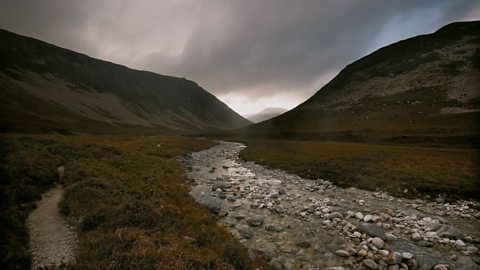
Image caption, U-shaped valley
Glaciers erode u-shaped valleys with a flat floor and steep sides, like Lairig Gartain in Glen Coe. (Richard Clarkson / Alamy Stock Photo)
1 of 4
Sample question
How is a U-shaped valley formed?
Use diagrams to explain your answer.
A U-shaped valley is formed when:
- A glacier flows in an earlier V-shaped river valley.
- The glacier plucks rocks from the sides of the valley making it steeper.
- The ice abrades the floor of the valley, making it wider and deeper.
- The ridges of interlocking spurs have been eroded back by the ice and changed to snub-nosed truncated spurs.
- When the ice melts the valley has changed from a V-shape to U-shape.
- It has very steep sides and a fairly flat floor.
- Any later rivers are called 'misfit streams' because they are far too small to have cut the valley.
Quiz
Recap
Identification and formation of the following glaciated upland valley features:
- U-shaped valleys: processes of plucking and abrasion widen, steepen, deepen and smooth V-shaped river valleys into a U-shape
- Truncated spurs: interlocking spurs in the narrow V-shaped river valley are eroded away by the ice, creating snub-nosed truncated spurs
After a U-shaped valley has been formed, features may include:
- Ribbon lake - long and narrow they are usually found in U-shaped valleys.
- Misfit stream - so called because it is too narrow to have created such a wide U-shaped valley.
- Hanging valley - formed when a smaller glacier doesn't erode its valley as deeply as the large glacier. This leaves the smaller valley hanging high up the side of the main valley.
More on Glaciated upland landscapes
Find out more by working through a topic
- count1 of 3