What’s the time?
Telling the time in French
Quelle heure est-il? - What time is it?
When you tell the time in French you don’t say 'o’clock' you say how many hours it is. The word for hours is les heures.
Quelle heure est-il?
Il est cinq heures.
Quelle heure est-il?
Et maintenant… now … Il est dix heures.
Il est dix heures et demie.
It is really common for French speakers to use the 24-hour clock.
So 8pm is…. Il est vingt heures.
Il est vingt heures vingt.
Il est vingt heures trente.
So keep an eye on the time and you’ll always be à l'heure… which is how you say 'on time' in French.
To ask the time in French, say quelle heure est-il? Or, if you want to be less formal, say il est quelle heure? To give the time, say il est (it is) and then say the time.
Bonjour, il est quelle heure, s’il vous plaît?
Bonjour, il est trois heures.
Merci, au revoir.
Translation:
Hello, what’s the time please?
Hello, it’s three o’clock.
Thanks, goodbye.
Telling the time: o’clock, quarter past, half past and quarter to
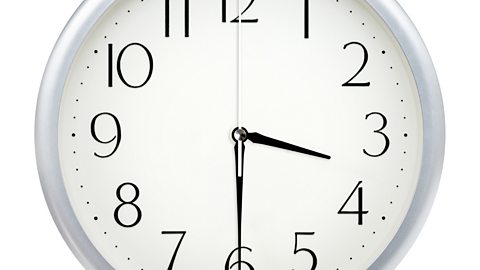
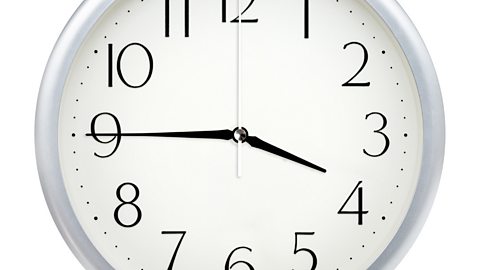
When it’s quarter past, half past and quarter to, use the following expressions:
| French | English |
|---|---|
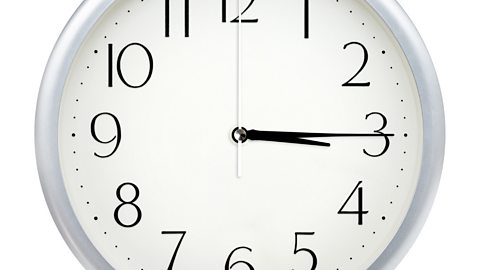
| et quart | quarter past |
| et demie | half past |
| moins le quart | quarter to |
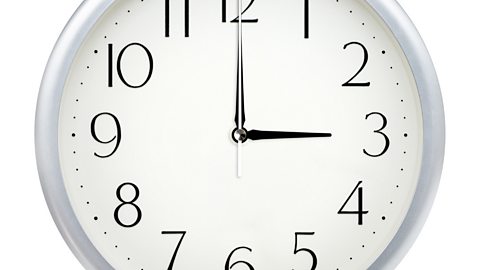
Image caption, Il est trois heures - It’s three o’clock
1 of 4
You can also say quinze (15), trente (30) and quarante-cinq (45) for these times using the 24-hour system:
- Il est trois heures quinze - it’s 3:15.
- Il est trois heures trente - it’s 3:30.
- Il est trois heures quarante-cinq - it’s 3:45.
Telling the time: five, ten, twenty and twenty-five past and to
For all other times from five past until half past, you say the hour followed by the number of minutes past the hour:
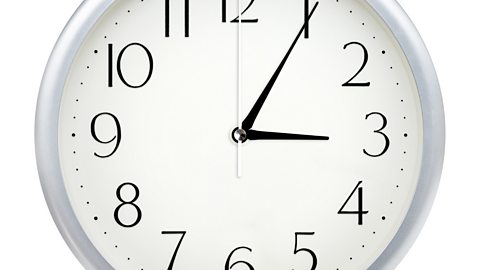
Image caption, Il est trois heures cinq - It’s five past three
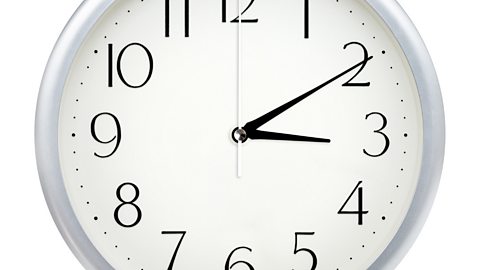
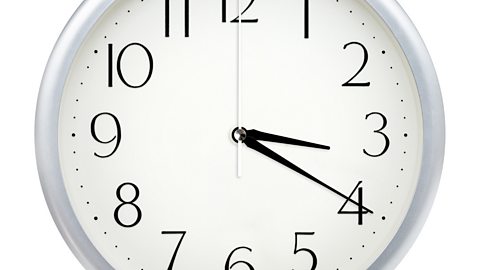
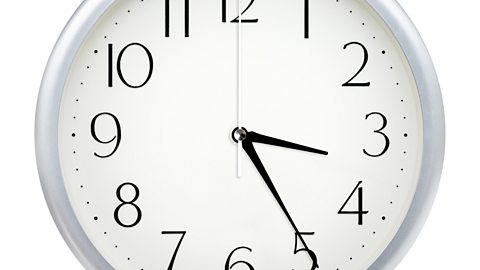
1 of 4
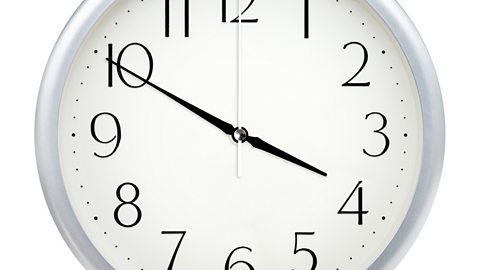
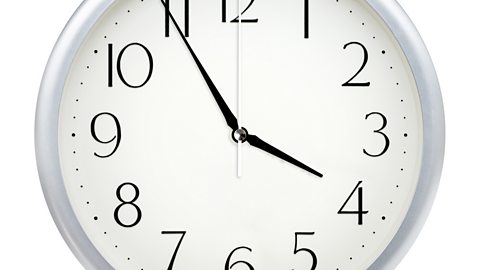
For the times between twenty-five to and five to, you need to say the next hour minus the number of minutes. For example, if you want to say ‘it’s five to four’, you need to say ‘it’s four o’clock minus five’:
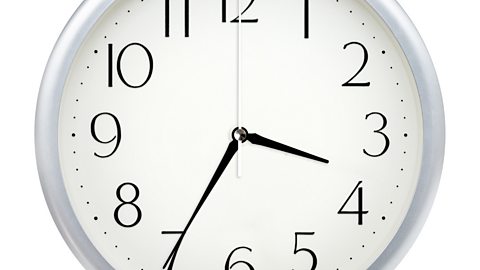
Image caption, Il est quatre heures moins vingt-cinq - It’s twenty-five to four
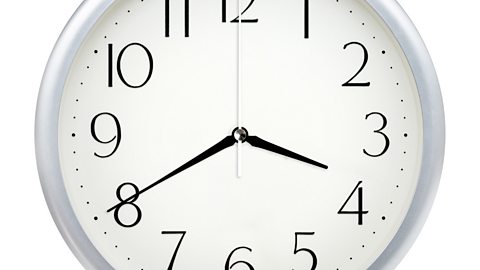
1 of 4
You can also say ‘it’s three fifty-five’ and so on using the 24-hour system:
- Il est trois heures trente-cinq - it’s 3:35.
- Il est trois heures quarante - it’s 3:40.
- Il est trois heures cinquante - it’s 3:50.
- Il est trois heures cinquante-cinq - it’s 3:55.
Numbers in fives
- 5 - cinq
- 10 - dix
- 15 - quinze
- 20 - vingt
- 25 - vingt-cinq
- 30 - trente
- 35 - trente-cinq
- 40 - quarante
- 45 - quarante-cinq
- 50 - cinquante
- 55 - cinquante-cinq
The 24-hour clock
The 24-hour clock is used a lot in French. With the 24-hour clock, you usually say quinze (15), trente (30) and quarante-cinq (45) instead of et quart (quarter past), et demie (half past) and moins le quart (quarter to):
- Il est vingt heures trente - it’s 20:30 (8:30 pm).
- Il est dix-huit heures quinze - it’s 18:15 (6:15 pm).
- Il est quatorze heures quarante-cinq - it’s 14:45 (2:45 pm).
Saying what time something happens
To say what time something happens, you need to use à (at), and use de … à to say ‘from … until’:
- Je prends le petit déjeuner à sept heures et quart - I eat breakfast at 7:15.
- La pause déjeuner est à douze heures et demie - Lunch break is at 12:30.
- Mon beau-père dîne de dix-huit heures à dix-neuf heures - My stepfather eats dinner from 18:00-19:00.
Talking about your daily routine
To say what time you do certain things during the day, you can use daily routine phrases with the time:
- Je me lève à sept heures et je prends mon petit déjeuner à sept heures et quart - I get up at 7:00 and I have breakfast at 7:15.
- Je vais au collège à huit heures et demie et la récré est à onze heures dix - I go to school at 8:30 and break is at 11:10.
- Je joue au foot avec mes copains à treize heures quarante - I play football with my friends at 13:40.
For more phrases on daily routine, click on downloadable vocabulary list below:

Quiz
Watch the video and find out how much you know about telling the time in French in this short quiz.
**AMÉLIE: Alors, quelle heure est-il?**
**MICHEL: Il est seize heures trente.**
AMÉLIE: Ok, seize heures trente … Ouf! J’ai vraiment faim!
**MICHEL: Tu as mangé à quelle heure?**
AMÉLIE: J’ai mangé à midi. Mais je n’ai pas beaucoup mangé. Tu as mangé à quelle heure?
**MICHEL: J’ai mangé le déjeuner à treize heures. Tu veux un biscuit?**
AMÉLIE: Merci! Maintenant il est seize heures trente… et à dix-sept heures je dois promener le chien.
MICHEL: Tu veux rentrer à la maison à pied?
**AMÉLIE: Non, c’est trop tard.**
**MICHEL: C’est vrai. Il faut une heure pour y aller à pied. C’est trop tard.**
AMÉLIE: Alors. J’ai une demie heure.
MICHEL: Oui, une demie heure.
AMÉLIE: Je peux prendre le bus? Non?
**MICHEL: Er… non… Il est parti à seize heures vingt. C’est trop tard.**
AMÉLIE: Tu joues au foot à quelle heure ce soir?
MICHEL: Je joue au foot à dix-huit heures.
AMÉLIE: Dans une heure et demie tu joues au foot.
MICHEL: Je peux téléphoner à ma mère et demander si elle peut venir nous chercher dans la voiture?
AMÉLIE: Super!
MICHEL: Allô? Maman? Tu peux venir nous chercher dans la voiture? Oui? Tu es là en vingt minutes? D’accord - à toute à l’heure, merci!
Elle sera là à seize heures cinquante.
AMÉLIE: Super! Merci!
Translation:
AMÉLIE: Right, what’s the time?
MICHEL: It’s 16:30.
AMÉLIE: OK, 16:30 … Ooh, I’m really hungry!
MICHEL: What time did you eat?
AMÉLIE: I ate at midday. But I didn’t eat very much. What time did you eat?
MICHEL: I had lunch at 13:00. Do you want a biscuit?
AMÉLIE: Thank you! So now it’s 16.30 and at 17.00 I have to walk the dog.
MICHEL: Do you want to walk home?
AMÉLIE: No, it’s too late.
MICHEL: Yes, true. It takes an hour to walk there. It’s too late.
AMÉLIE: So, I’ve got half an hour.
MICHEL: Yes, half an hour.
AMÉLIE: I can take the bus, can’t I?
MICHEL: Er … no … it left at 16:20. It’s too late.
AMÉLIE: What time are you playing football this evening?
MICHEL: I’m playing football at 18:00.
AMÉLIE: You’re playing football in an hour and a half.
MICHEL: I can phone my mother and ask if she can come and fetch us in the car?
AMÉLIE: Great!
MICHEL: Hello - Mum? Can you come and pick us up in the car? Yes, you’ll be 20 minutes?
OK, see you soon. Thanks! She’ll be here at 16:50.
AMÉLIE: Great! Thanks!
Game - FestiLingo: French. game
Visit the festival and practise French language skills in this game

More on Topics
Find out more by working through a topic
- count7 of 9
- count8 of 9
- count9 of 9