Human life cycles
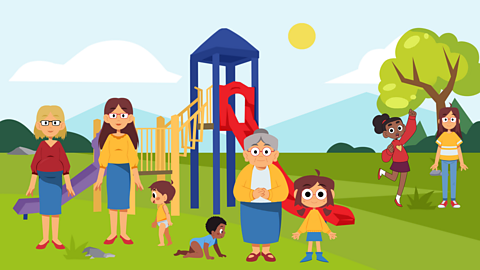
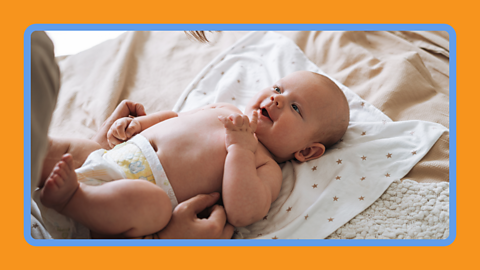
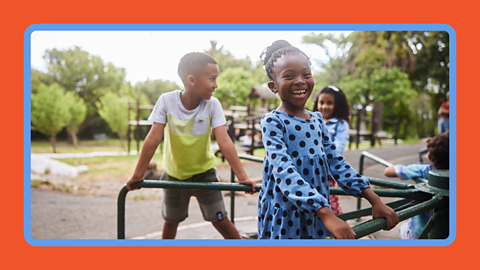
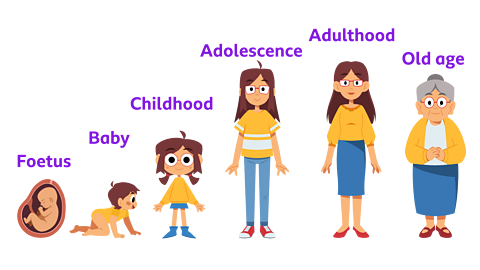
As we grow from being babies to elderly adults, our bodies go through lots of changes.
These human life cycle changes happen gradually over time.
All humans go through the same life cycle.
Humans are small at the start of their life. Over time they grow bigger and their bodies change.
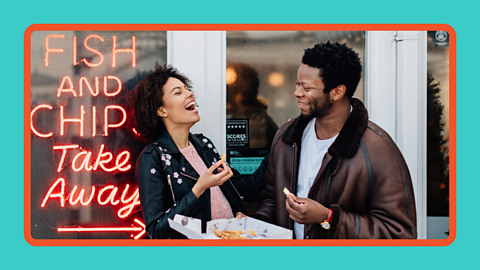
When they are grown up, they might have children of their own.
Watch: How humans change during their lifetime.
Learn about the life cycle of humans.
Narrator: This is Edna Bumcrank. She’s rather old. But of course she hasn’t always been like this. I wouldn’t do that if I was you burglar because… When she was younger, Edna used to be a ninja.
Let’s rewind a bit more… Oh! We’ve gone too far… Oops! No hang on… Actually I think that is Edna… Right at the beginning of her life cycle… Let’s zoom in… Yes! That is her!
She’s in her mum’s tummy and she’s very very tiny. Smaller than a dot from a pencil. And you were that small once too… Let’s fast forward that again…
She’s now about the same size as an apple… Ah, now she’s got a very big step in the life cycle. Being born. Let’s keep going…
And now… Yes, now she’s a teenager and her body is changing, that’s called puberty…
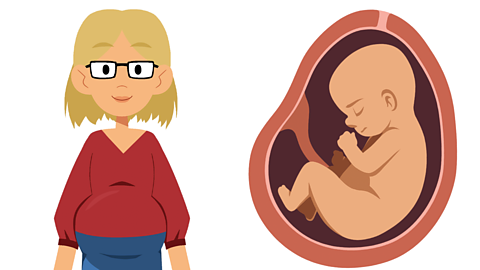
And if we keep going forward we’ll see… yes! There we are! Now she’s grown up and she pregnant. That means that a whole new life cycle is starting…
Fascinating facts
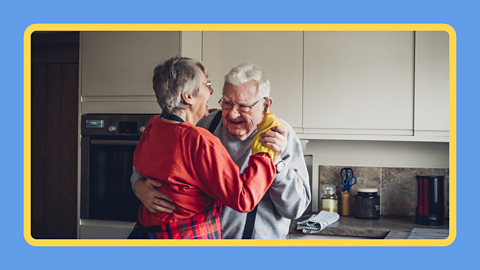
When you grow older, you might become a bit shorter. With age, bones tend to shrink in size and density, weakening them and making them more susceptible to fracture.
As people age, their skin wrinkles, their hair can often thin and it may even turn grey.
Unlike sharks which have multiple sets of teeth throughout their lifetime, humans only have two sets of teeth, our baby (or milk) teeth and adult teeth.
Babies in the womb can hear everything around them, from around 20 weeks. A developing baby can identify different noises and the tones of people's voices.
Our brain stops growing as we reach adolescence but keeps developing and maturing until adulthood.
Babies are born with all of the brain cells they will have throughout their life.
Slideshow: Human changes throughout a lifetime
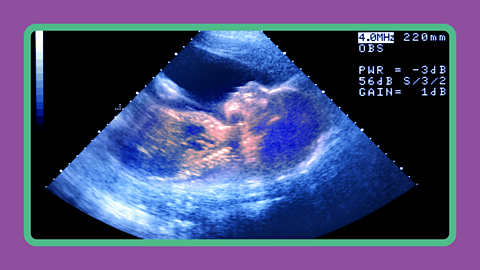
Image caption, Foetus
At the foetal stage, a baby is growing inside its mother's womb.

1 of 6
The six stages of a human life cycle
Did you know?
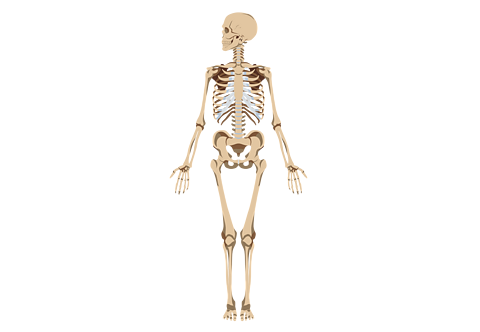
A baby is born with around 300 bones. Some of these eventually join together leaving adults with 206 bones that make up their skeleton.
Animals which have a backbone, including humans, are called vertebrates. The human spinal column is made up of 33 bones called vertebrae.
Important words
Adolescence – The period of transition between childhood and adulthood.
Adulthood – The period where humans reach maturity and the stage where some women may have babies.
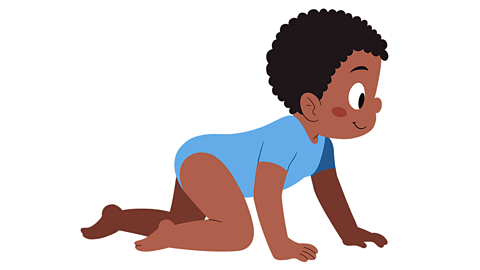
Baby – A baby is born after spending around nine months inside its mother’s womb.
Childhood – In childhood children learn to walk and talk.
Foetus – An unborn human that develops and grows inside the uterus (womb) of its mother.
Life cycle – A life cycle is the different stages of life for a living thing.
Old age – The last stage in the life cycle of a human.
Womb – An organ in a woman where offspring are conceived, and where babies develop and grow before being born.
Activities
Activity 1 – Stages in a human life cycle
Activity 2 – Take the quiz
New game! Horrible Science: Stinky Space. game
Join Pipette on her epic mission and learn some revolting facts about space along the way.