Key Points
- Land, water and air are polluted by toxins.
- Some toxins that pollute the environment build up in higher levels of food chains, causing more harm.
Pollution
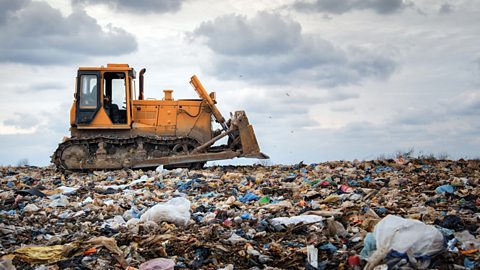
The release of harmful or poisonous chemicals into the environment. This can be into the air or water, or on land. is the release of harmful or poisonous chemicals called A poisonous chemical which harms organisms in their habitat. into the environment.
Pollution on land
It is extremely important to recycle as much as possible, especially things such as batteries. If batteries are put into the rubbish bin they can end up in Most rubbish is disposed of in landfill which involves digging a large hole in ground and burying it. where their toxic chemicals may leak out and cause pollution.
Pollution in water
Some factories have been caught illegally pumping waste into rivers and seas. Oil tankers have had accidents and spilled oil into the oceans.
Pollution in the air
Factory chimneys and vehicle exhausts release carbon dioxide and other pollutants into the atmosphere, causing climate change and harm to many forms of life, including humans.
Bioconcentration
Polluting toxins can be taken in by living things if breathed in, consumed in food or water, or through their skin. Some toxins break down into harmless substances quickly before they can affect living things. Other toxins do not do this and are absorbed by them. Many species can deal with exposure to these toxins in small levels. They do not stay in the organisms and most areThe removal of waste from cells or organisms..
Some polluting toxins cannot be excreted. These can be taken in by the organisms at the bottom of the A series of living things in a habitat showing what eats what. in low levels and so the harm is limited. The build up of these toxins is called The build-up of toxic chemicals that cannot be excreted at higher stages in a food chain.. These organisms are almost always plants or algae.
The primary consumer which eats the plants or algae, also eats the toxins within it. The toxins in this stage become In biology, concentrate means to build up..
Eventually the The organism at the end of food chain that is not preyed upon. eats the animal below it in the food chain as well as the concentrated toxins within it.
Because the toxins cannot be excreted they are found in much higher concentrations in the organism at the top of the food chain, and the effects are much more severe. This build-up of toxins that cannot be excreted at the tops of food chains is The build up of toxic chemicals that cannot be excreted in an organism..
Video
Just like with your desk, what we leave in the environment can make a real mess.
When toxins get into the environment, we call it pollution and it can cause serious problems. For example, when oil spills, it floats on the surface of the water, blocking sunlight and oxygen absorption, which harms aquatic life. It can also damage a bird's waterproofing and even its ability to fly.
Microplastics are polluting our oceans too. Loads of different products that we use break down into these tiny pieces of plastic. They travel through the food chain all the way to humans.
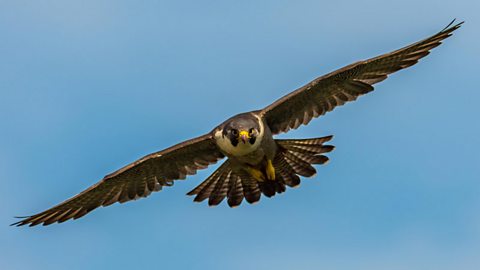
The insecticide DDT increases in concentration as it moves up the food chain. A bug ingests a little DDT, but then a mouse eats many bugs and a hawk eats many mice. We call this bioaccumulation and as the concentration increases, so do the harmful effects.
Whilst it's easy enough to clean your desk it's much more difficult when it comes to pollution, which is another reason to use products made of environmentally friendly and reusable materials.
Can you answer these questions based on the video?
1. Pollution is when what type of substance gets into the environment?
2. Which toxin that bioconcentrates is shown in the video?
Toxins
DDT
Insecticides: DDT
'Dichlorodiphenyltrichloroethane’, an insecticide which has been banned because of its environmental impact. is an insecticide that can pass up the food chain from insects to small birds, and then from the small birds to birds of prey, like hawks. DDT increases in concentration within animals, as it moves up the stages of a food chain.
For example, an insect consumes a little DDT when it eats a plant that DDT has been sprayed on. Then a mouse eats lots of insects. All that DDT in the insects, stays within the one mouse. A hawk then eats many mice. All the DDT within the mice stays within the one hawk. We call this bioaccumulation and as the concentration increases, so do the harmful effects.
Due to its damaging effects to the environment, DDT is banned in many countries including the UK.
Mercury
Mercury was used until recently to make Chemicals used to kill insects, often to stop them destroying crops. and special paints that stop barnacles growing on the hulls of ships.
Unfortunately, when mercury gets into a food chain, it damages the The network of nerves including the brain and spinal cord which send electrical signals around the body. and The organs involved in producing offspring. of mammals, including humans. The diagram shows how mercury can concentrate in the food chain.
In the sea, tiny animals and plants called plankton absorb the mercury compounds. When the plankton are eaten by small fish, the mercury they contain stays in the fish because it cannot be excreted. As the fish need to eat a lot of plankton, the concentration of mercury in them becomes higher than the concentration in the plankton.
Larger fish then eat the small fish, and larger ones still (such as tuna) eat them. This creates a high concentration of mercury in the tuna. People eating contaminated tuna may get mercury poisoning. Mercury is now banned from many chemical products and mercury use in industry is carefully regulated.
Microplastics
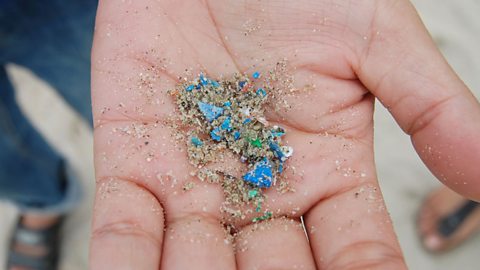
Tiny fragments of plastic smaller than 5 mm which can bioaccumulate in living things. are tiny fragments of plastic smaller than 0.5 cm. These are often formed from larger pieces of plastic, such as drinks bottles and plastic bags, which break down slowly. Plastic does not Rot or break down. and so remains in the environment forming smaller and smaller pieces. Some rivers in England have more than half a million of these in each square metre of riverbed.
Eventually these become small enough to be accidentally consumed by living things. They bioconcentrate in food chains because they cannot be excreted. The effects of this build-up are not fully understood yet but seem to cause other chemicals to bioconcentrate as well.
It is so important to recycle all plastics we have to avoid this and live more sustainably.
Test your knowledge
Quiz
Test questions
Write a short paragraph for each of the following questions. Tap 'Show answer' to see six points you could have included.
Describe examples of pollution and their effects.
- Pollution is the release of harmful or poisonous chemicals called toxins into the environment.
- Toxins are poisonous chemicals which harm organisms in their habitat.
- Pollution can be on land, in the air or in water.
- Pollution on land comes from waste that is difficult to dispose of.
- Pollution in water comes from factories illegally pumping waste into rivers and seas, as well as oil spills from oil tankers.
- Pollution in the air can come from factory chimneys and vehicle exhausts.
Describe how bioconcentration occurs. Give an example in your answer.
- Bioconcentration is the build-up of toxic chemicals at higher stages in a food chain.
- Toxic chemicals are poisonous and harm organisms in their habitat.
- Bioconcentration occurs when toxins cannot be excreted.
- Toxins are found at low levels at the bottom of food chains but much higher concentrations towards the top.
- Here this build-up causes serious effects not seen at lower stages.
- Mercury, DDT and microplastics all bioconcentrate.
Play the Atomic Labs game! game
Try out practical experiments in this KS3 science game.

More on Humans and the environment
Find out more by working through a topic
- count1 of 2