Introduction
This study guide will cover the following:
- The RESEARCH needed before becoming self-employed.
- The ADVANTAGES of being self-employed.
- The SUPPORT available to people who are or want to be self-employed.
Try to remember these three key terms to help with revision:
RESEARCH – ADVANTAGES - SUPPORT
What is an entrepreneur?
An entrepreneur is someone who starts and manages their own business. They will often take risks and invest in new ideas to develop and make their business successful.
Starting a business and making it a success is difficult, so it takes a certain kind of person to be an entrepreneur. Here are some common characteristics of an entrepreneur:
Entrepreneurs come from all walks of life but are generally confident, enthusiastic, and innovative people.
Famous entrepreneurs include Peter Jones, Steven Bartlett and Oprah Winfrey. They have taken risks and invested in something different, which has paid off.
TV shows such as Dragon’s Den and The Apprentice celebrate the ‘entrepreneurial spirit’.
Why is it important to carry out research before starting a business?

It takes a lot of hard work to be an entrepreneur, and there is no guarantee of success. Before starting a new business, extensive research is needed:
- to ensure the product will sell — do people want this?
- to ensure that materials to produce the product and premises to work from are readily available for a competitive price
- to ensure that location and advertising will attract enough customers
- to cater appropriately for a diverse range of customers or clients
- to decide on a suitable price which will generate a profit
- to be aware of the competition
- to ensure that no laws are broken which would result in the business failing
- to determine whether recruitment will be necessary and how to go about this
What are the types of research helpful for an aspiring entrepreneur?
There are two types of research which will be helpful for an aspiring entrepreneur.
These are primary research and secondaryresearch.
| Primary market research | Secondary market research | |
|---|---|---|
| Description | This is the collection of new data and information that has not been collected before and is specific to the industry or business idea. | Also known as desk research, involves gathering existing data that has already been produced. |
| Examples | • Surveys • Questionnaire • Focus Group • Observations | • Market reports • Government reports • Industry journals • Newspapers |
| Advantages | • Specific to the business. • Provides detailed information • Relevant and up to date • Can gather quantitative and qualitative data | • Quick and easy to gather • Can provide industry-specific information • Often easy to analyse |
| Disadvantages | • Time consuming • Expensive • Sometimes difficult to collect | • Not specific to the business • Could be out of date • May be biased or inaccurate |
How can an aspiring entrepreneur fund their business idea?
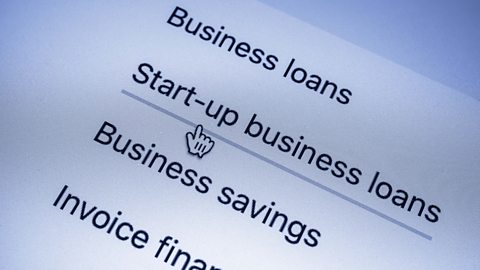
Starting a business will be expensive and most aspiring entrepreneurs need to borrow or release money from their home in order to cover the initial start-up costs. This money could come from:
- personal savings
- re-mortgaging a home
- borrowing money from a family member or friend
- taking out a business loan from a bank, building society or credit union
- credit cards
- an investor who will give money in exchange for ownership of a portion of the businesses profits
What are the 4Ps?
After carrying out extensive research and securing the funding to start the business, the next step is to focus on the 4 Ps:
Some questions to consider when focusing on the 4 Ps are below.
| 4Ps | Questions |
|---|---|
| Product | • Consider how the product should be produced. Will it be a bespoke item or could it be mass produced? • Will potential customers like the design of the product? |
| Placement | • Where can the public view the product? Online? Instore? • Where can the product be bought? • Is this accessible for all shoppers? • Is this accessible for the target buyer? |
| Price | • Can the entrepreneur undercut the competition? • Have the cost of all materials and labour been factored in? |
| Promotion | • What kind of advertising will attract the public’s attention? Will this be expensive? • Will this advertising appeal to the target group? |
What are the advantages and disadvantages to being an entrepreneur?
Being an entrepreneur is no picnic.
So why do people do it?
Advantages
For many people the advantages of being self-employed outweigh the risks involved and include:
- being the boss
- there is a sense of satisfaction in achieving business goals
- feeling passionate about work
- flexible working hours
Most people take a job to pay the bills. It’s rare to find someone who truly loves their job. Being an entrepreneur is different. It is a personal mission to make ideas a reality and help shape the world.
This feels less like work and more like an adventure.
There is also more freedom to choose what type of projects to work on and who to work with.
Most entrepreneurs work far harder than people who are working nine to five, especially in the early stages of a business. But once it is up and running, an entrepreneur can set their own hours and choose when to take holidays.
They may enjoy a healthier work-life balance as an entrepreneur than wage-earners and can more easily make time for family and friends.
The opposite is true too. During times when the business needs more attention the entrepreneur can choose to work longer hours.
Disadvantages
Of course, there are downsides to being the boss, especially if the business struggles to make a profit.
- Being self-employed means being responsible for failures as well as successes
- Being responsible for staff, who are relying on their job
- If the business is struggling, it may be necessary to work far more hours than desired
- If the business fails, debt and financial stress is likely
What support is available to entrepreneurs in NI?
It’s true that entrepreneurs carry more responsibility than the average worker. But all entrepreneurs need support. Small and medium sized businesses are vital to the health of the economy, so there is plenty of support for people who are willing to take the risk to start one.
NI Business Info
NI Business Info is an online channel that can give advice on business planning, forming a business, running and growing a business. They can give comprehensive answers to almost any question related to starting a business.
Enterprise Northern Ireland
Enterprise NI helps local people to grow and develop their businesses. They provide support with start-up research and professional development. Enterprise Northern Ireland can also give advice and support on grants to support small businesses. They can also provide links to experienced entrepreneurs who can offer personal advice for setting up a business.
Northern Ireland Direct
NI Direct helps aspiring entrepreneurs to develop skills and guidance. They provide detailed information in relation to the benefits and drawbacks of self-employment.
Department for the Economy
DfE has a wide range of responsibilities including economic policy, higher education, employment and skills programmes, innovation and enterprise. The latter two - innovation and enterprise - mean developing new products and starting new businesses. Where the DfE works on these responsibilities, it works specifically with entrepreneurs.
Invest Northern Ireland (Invest NI)
Invest Northern Ireland (Invest NI) is part of the DfE. It works closely with governments, investors and businesses around the world to attract investment to Northern Ireland. It also offers support to local businesses and entrepreneurs, with the aim of helping them attract investment or export their products overseas.
Invest NI offers advice on all aspects of business such as finding funding, creating strategies, improving skills and moving into new markets.
The King's Trust
The King’s Trust (formerly known as the Prince's Trust) works with young people between the ages of 13 and 30 who have been in care, struggled with school, have become involved in crime or have been unemployed for a long time.
They help young people by:
- developing their skills through support and training
- offering practical support in finding a job
- providing financial support
- working to build confidence and self-esteem
The King’s Trust also helps young people to develop their business ideas and make them a reality.
Watch: Exploring self-employment
What’s the difference between being self-employed and being an entrepreneur?
If you’re self-employed, you work for yourself. Maybe you’re a freelance designer, have a trade like a plumber, or you’re a professional, like a lawyer.
You’re the boss — you pocket your own income and make your own decisions.
An entrepreneur goes a step further. They see a problem, spot an opportunity, and build something new. Often, they create jobs for other people too.
To succeed, you need a mix of different skills and qualities. You’ve got to be creative, adaptable, and confident. You’ll need to solve problems, make decisions quickly, and not be afraid to fail — and to try again.
Anyone can be an entrepreneur. Here are a few examples.
Australian entrepreneur Melanie Perkins who co-founded the graphic design platform Canva, now worth over 42 billion.
Brendan McDowell from Annalong, County Down, founded B Perfect Cosmetics.
And Nicky Kinnaird from Belfast started her cosmetic retail brand Space NK in 1991. Who knew Northern Ireland would produce some of the world’s most successful beauty entrepreneurs?
But before starting any business, research is needed.
Entrepreneurs need to have a sense of whether their product will sell, who their competitors are, and what customers actually want.
They can do primary research — things like surveys, interviews, or focus groups — to gather new information. And secondary research, using existing sources like market reports or news articles, to understand the bigger picture.
Once you’ve done your research, you need to think about the most important thing in starting a business: money. You might use your own savings, borrow from friends or family, apply for a bank loan, or attract an investor who takes a share of the business in exchange for funding.
Next comes marketing — the four Ps: product, price, place, and promotion. What are you selling? How much will it cost? Where can people buy it? And how will they hear about it?
Being self-employed can have advantages: freedom, flexibility, and the satisfaction of being your own boss. But it can also have risks — financial pressure, long hours, and uncertainty.
That’s why many entrepreneurs use a SWOT analysis to identify strengths, weaknesses, opportunities, and threats before taking the plunge.
And support is out there.
In Northern Ireland, organisations like NI Business Info, Enterprise Northern Ireland, Invest NI, and the King’s Trust all provide advice, training, and funding for new business ideas.
Becoming an entrepreneur isn’t easy. But with research, planning, and persistence, you can turn a great idea into something real.
Who knows — the next big success story might start with you.
