What are the main points?
Watch the video to see some examples of how you can open a conversation and ask your colleagues for suggestions and ideas.
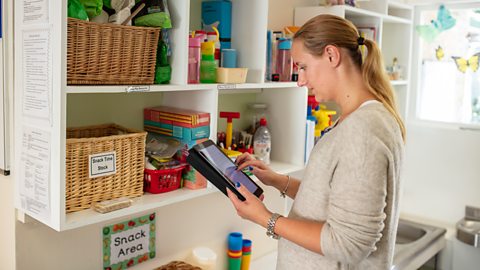
Interviewer: Hi Becky, can you tell me what you’re looking at?
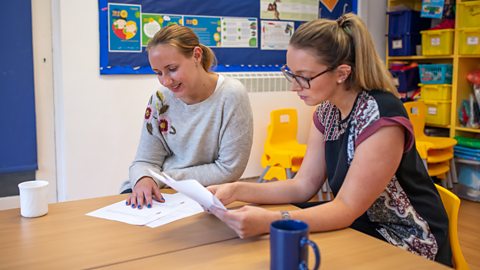
Speaker: I’m just reading the weekly plan and I’m trying to find the key theme which this week is 'Old MacDonald'.
And I’m trying to work out how to introduce that into the learning.
The children in my group are in Phase 2, so I need to focus on the letter 'F' for farm.
Today is Wednesday. We have got outdoor learning with David, so that’s in the morning.
So we can do outdoor learning with farm animals, we can introduce that.
I want to ask questions, and here in the middle column there’s some questions to ask: How they’re different?
Have they been to a farm before? And what animals have they seen?
I’ll introduce some repetition with the songs and we can talk about the letter 'f' because 'farm' and think about other things that start with that and try to connect some ideas so the questions will help with connecting ideas.
Find the details in the text
Now you've watched the conversation, test your knowledge with this activity.
Writing notes with enough detail
Watch the video to see some examples of how you can open a conversation and ask your colleagues for suggestions and ideas.
Speaker 1: Who's been to a farm before?
Have you been to a farm before?
Speaker 2: Me!
Speaker 3: Me!
Speaker 1: And what did you see on the farm?
Speaker 2: I saw goats.
Speaker 3: And baby cows!
Speaker 1: Baby cows!
Speaker 1: (TO AUDIENCE) I just write what the children do and say in order to track their learning, and at the moment we're doing 'Old MacDonald Had a Farm' so we're trying to learn about farm animals.
Speaker 2: (TO OTHER PEOPLE) And I washed my hands after.
Speaker 1: Oh, why did you have to wash your hands after?
Speaker 2: Because they were licking my hands!
Speaker 1: (TO AUDIENCE) So I write the child's name, the date, the questions I ask and answers they say.
Exactly how they said it.
Speaker 1: (TO OTHER PEOPLE) What do you think horses eat?
Speaker 2: Hay.
Speaker 1: Hay.
Speaker 2: They eat hay.
Speaker 1: Just hay?
Speaker 3: Donkeys eat hay!
Speaker 1: (TO AUDIENCE) It needs to be a good level of detail, because the parents are going to read them but they need to be quite brief and accurate.
What is the right amount of detail?
Now you've watched the conversation, test your knowledge with this activity.
Adapting speech for different people
Watch the video to see some examples of how you can open a conversation and ask your colleagues for suggestions and ideas.
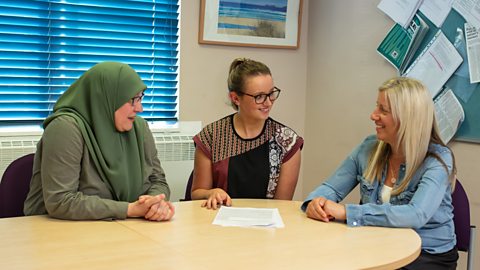
Speaker 1: Could I just have a word with you?
I just wanted to mention that a few of the parents have raised some concerns about the muddy play.
Speaker 2: OK.
Speaker 1: About their clothes getting too dirty.
Speaker 2: Is it just specific parents?
Speaker 1: Yeah, just a couple that have mentioned it, so I thought maybe we could just keep an eye on those few children.
Speaker 2: Yeah I mean, as you know I think it's really important for children to get covered in mud and to explore…
Speaker 1: I agree.
Speaker 2: …all the sensory delights of it, but…
…but yeah, fair enough, we'll keep an eye on those two children.
Speaker 1: (TO AUDIENCE) When I speak to David it's not formal, it's factual.
I need to get my point across, so it's quite friendly but still professional and we need to come to an agreement in the end.
Speaker 1: (TO OTHER PEOPLE) Put your arms up.
Aargh! You've made me all muddy again!
Speaker 2: We're all a bit muddy over here.
Speaker 1: There we are. Is that OK?
Interviewer: What's different about the way you speak to the children?
Speaker 1: (TO AUDIENCE) So I'd use shorter phrases and familiar words but with a warm and friendly tone, and sometimes I give instructions that I wouldn't necessarily give to an adult.
Who is the audience?
Now you've watched the conversation, test your knowledge with this activity.
Careers advice and tips from BBC Bitesize
Future careers, further studies and the world of work - we're here to help with advice from experts and from young people who've found their path.

More on Childcare
Find out more by working through a topic