Manufacturing Materials
Selecting the most suitable material for your project is very important. Carefully consider the physical properties, working properties, cost and sustainability of each material.
JOE
Hello and welcome to another explosive episode of Tech Bitez. So I was contacted by one of our subscribers about advising them on one of their projects. MartyMc2Fly sent me over his designs for a car/time machine and wants our expert advice.
SANDY
Ahh my expert advice
JOE
I think we should start with the materials to use. Different materials have distinctive properties and deciding on which materials to use for your project is a very important step in the manufacturing process.So I think we should start with the engine. Now, looking at Marty’s designs, I think wood would be the perfect material.
SANDY
Swing and a miss. Wood would not work in an engine for lots of reasons.
ANIMATION SEQUENCE
SANDY
Wood can be split into three main categories Hardwoods, softwoods and manufactured boards.Hardwoods. These are generally a very strong and tough wood. They also give the best finish. However, they are more difficult to work with and can be very expensive. Hardwoods come from deciduous trees and therefore take a long time to grow.Softwoods. These are a much softer type of wood. They are, however, much easier to cut and work with. They are also much cheaper than hardwoods. They are not as durable or long lasting as hardwoods. Softwoods come from coniferous trees. They grow much faster than deciduous trees.Manufactured boards. These are man made materials, made using a number of different techniques. Each type of board, for example, plywood or MDF, are produced to have specific properties. They are also the cheapest type of wood to use. Manufactured boards do not give the nicest finish and will not last as long as the other two types.
SANDY
So as you can see, wood just isn't going to work. It is a combustion engine after all.
JOE
Okay, so it's a no on the wood. What about using plastics? Not all plastics melt, right?
SANDY
Oh, correct. You see, you did learn some stuff in my classes after all.
SANDY
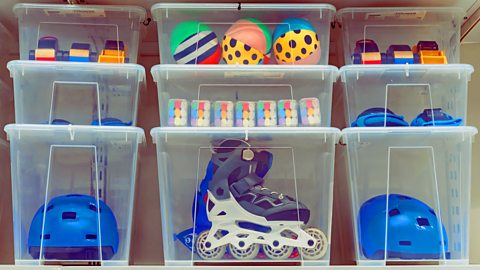
Plastics are split into two categories. Thermoplastics and Thermosets. Thermoplastics can be heated and shaped many times. An example of a thermoplastic is acrylic. This is used to make car headlights. It is often used as a glass alternative.Rigid polystyrene is another example. A common use of this would be for simple toys, as it is hard work still being light as plastics can be moulded and much more complex shapes can be produced.Thermoset plastics can only be heated and shaped once they are therefore more commonly found in instances where heat is more of an issue. For example, light fittings or a saucepan handle.
JOE
Okay, so we go for a thermosetting plastic then.
SANDY
There are other properties that you have to consider, not just heat resistance.What about a metal?
JOE
Won’t that just rust?
SANDY
Okay maybe you didn't pay any attention in my class.
SANDY
Metals are most commonly split into three categories Ferrous, non-ferrous and alloys. Ferrous metals contain iron and therefore easily rust. They are also magnetic. Examples of these are iron and steel.Non-ferrous metals do not contain iron. They therefore don't rust. They are also not magnetic. Some common examples are aluminium and copper. Lastly, we have alloys. These are made up of a mixture of more than one metal. The most common examples of these are stainless steel, made from iron, chromium, carbon and nickel. And brass, made from copper and zinc.
JOE
So, a non-ferrous metals or an alloy is obviously the correct material.
SANDY
I think that makes the most sense. Although there is the issue of time machines not being a real thing, never mind putting one in the car.
JOE
Since when!?
Wood- properties and applications
Softwoods
Softwoods come from coniferous trees. These often have needles, and stay green all year round - they do not lose leaves in the autumn. Softwoods tend to grow quicker which means that they are cheaper to buy as they will quickly be replenished.
| Softwood | Physical Properties | Working Properties | Uses |
|---|---|---|---|
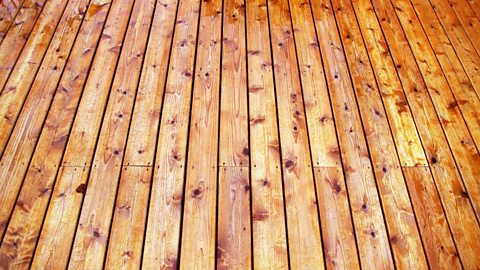
| Pine | Pale coloured with refers to the way a product looks and feels, especially in a pleasing manner pleasing grain | Lightweight and easy to form | Used for furniture and decking |
| Cedar | Lightweight and pale colour | More expensive than pine but not as strong | Used for fencing and decking |
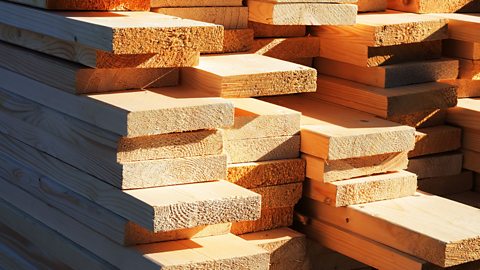
Image caption, Softwood - pine
1 of 2
Hardwood
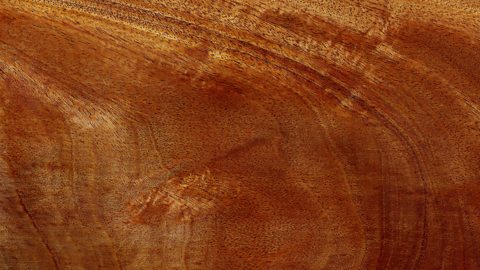
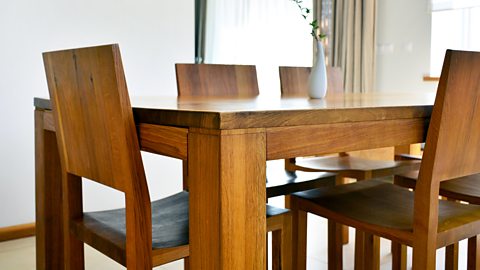
Hardwoods come from deciduous trees, which have large flat leaves that drop in the autumn. Hardwoods tend to grow slowly so are therefore more expensive as they take longer to be replenished.
| Hardwood | Physical Properties | Working Properties | Uses |
|---|---|---|---|
| Beech | Slight pink tint, close grain | Tough, durable and smooth to finish | Used for handles on tools and furniture |
| Mahogany | Dark-reddish colour, very close grain | Cuts and polishes easily, gives a fine finish | Used for high-quality furniture |
| Oak | Moderate-brown colour with unique and attractive grain markings | Tough and durable, polishes well | Used for quality furniture |
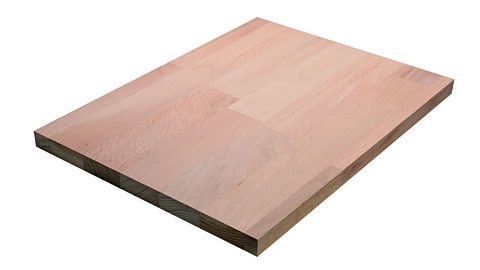
Image caption, Hardwood - beech
1 of 3
Manufactured boards – overview
Manufactured boards are usually made from timber waste and adhesive.
| Manufactured Board: | Physical Properties | Working Properties | Uses |
|---|---|---|---|
| Medium-density fibreboard (MDF) | Smooth and light brown | Smooth and easy to finish, absorbs moisture so not suitable for outdoor use | Used for general carpentry work and flat-pack furniture |
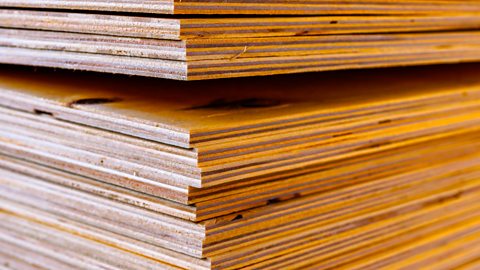
| Plywood | Layers of A thin layer of real wood glued over another board to improve the materials appearance. glued at 90 degree angles for strength, aesthetically pleasing outer layer | Easy to cut and finish, can be stained or painted | Used for furniture, shelving, construction and toys |
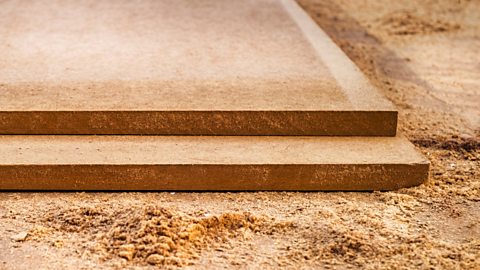
Image caption, Manufactured boards - medium density fiberboard (MDF)
1 of 2
Metals
Ferrous metals - properties and applications
| Ferrous Metal | Physical Properties | Working Properties | Uses |
|---|---|---|---|
| Mild steel | An a mixture of two or more elements, at least one is a metal. Many are mixtures of two or more metals and create a new material with improved properties that is grey and smooth, rusts if not protected | able to be drawn out into a thin wire, not brittle and tough, easy to form | Used for bike frames and fixings like nuts, bolts, screws and nails |
| Stainless steel | The deterioration of a material, usually a metal or metal alloy. Often by water and oxygen but other chemicals can cause corrosion, eg rusting. resistant (will not rust), tough, resists wear | Difficult to cut | Used for kitchenware such as cutlery, pots, pans and sinks |
Ferrous metals
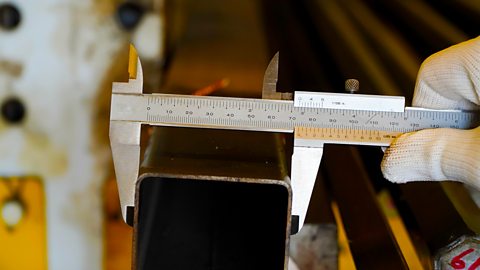
Image caption, Ferrous metals - mild steel
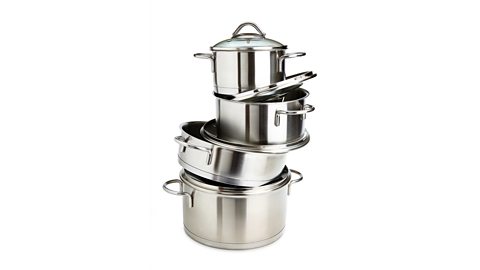
1 of 2
Non-ferrous metals - properties and applications
| Non-Ferrous Metal | Physical Properties | Working Properties | Uses |
|---|---|---|---|
| Aluminium | Light grey with a matt finish | Lightweight but strong and ductile | Used for drink cans, kitchen utensils and some parts in transport |
| Copper | Rose coloured, polishes well but can oxidise to a green colour | Good materials which allow electrical current to flow through them easily. Metals are generally good electrical conductors., can be polished, welds easily | Used for plumbing parts and electrical wires |
Non-ferrous metals do not contain iron and are not magnetic. They do not rust.
Alloys
An alloy is a mixture of two or more metals to create a new material with improved properties.
Some examples of alloys include: brass and stainless steel.
- Brass is made from a mixture of copper and zinc. Brass is commonly used to make electrical components and instruments.
- Stainless steel is made from a mixture of carbon and iron. Stainless steel is often used for kitchen utensils and cutlery.
Non-ferrous metals
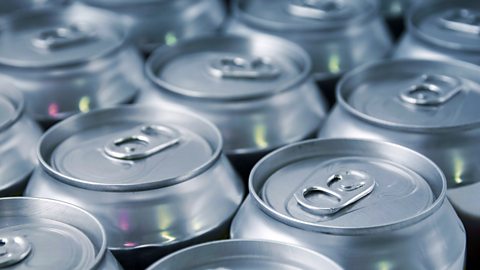
Image caption, Non-ferrous metals - aluminium
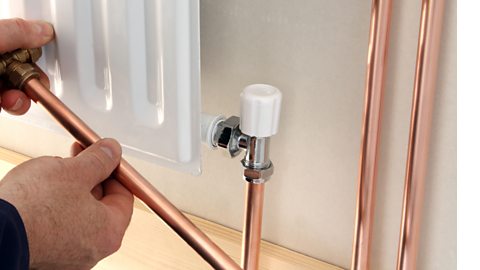
1 of 2
Plastics
Thermoplastics - properties and applications
Thermoplastics can be reformed when heated, and therefore can often be recycled.
| Thermoplastic | Physical Properties | Working Properties | Uses |
|---|---|---|---|
| Acrylic | Hard, Hard but easily broken, cracked, or snapped., shiny, available in a wide range of colours | Resists weather well, can be cut, folded and polished well, scratches easily | Used for car lights, display signs and baths |
| Rigid Polystyrene | Available in a wide range of colours | Lightweight, and can be easily shaped | Used for food containers and cheap toys |
Thermoplastics can be reformed or reshaped when heated, and can often be recycled.
Thermosetting - properties and applications
Thermosetting plastic can only be formed once as it cannot be reheated and therefore cannot be recycled.
| Thermosetting plastic | Physical Properties | Working Properties | Uses |
|---|---|---|---|
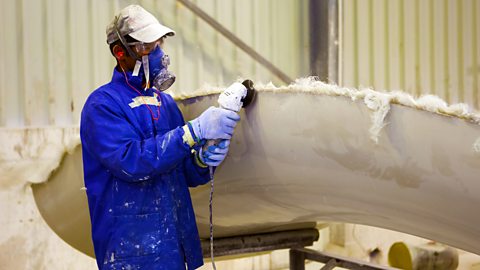
| Polyester resin (PR) | A resin and a hardener, sets clear and smooth | Strong, heat resistant and good Materials which are poor conductors and do not allow electricity to flow through them easily. | Used for garden furniture and glass reinforced boats and cars |
Plastics
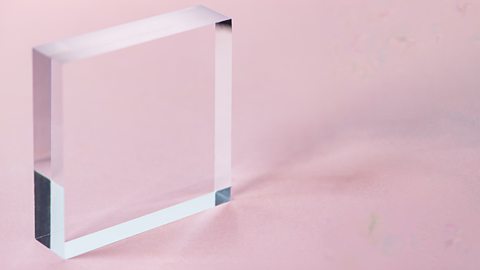
Image caption, Plastics - thermoplastics - acrylic
1 of 3
More on Manufacturing
Find out more by working through a topic
- count4 of 4
- count1 of 4
- count2 of 4