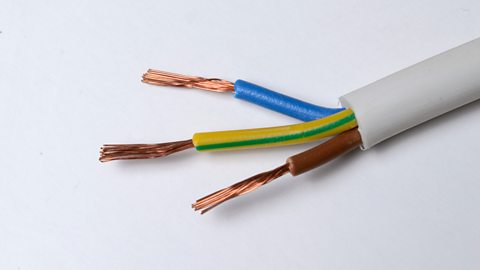
Key points about electricity
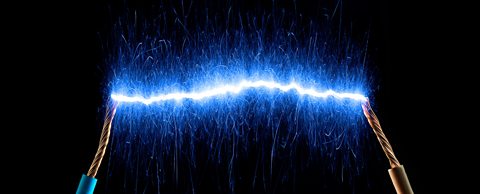
- Electricity is the presence or flow of There are two types of charged particles - positively charged particles (eg protons or positive ions) and negatively charged particles (eg electrons)..
- An electric current is the flow of These are one of the particles that atoms are made from. They have a negative charge. Charge can be positive or negative. For example, protons are positively charged and electrons are negatively charged. around a An electrical circuit is made up of components, which are connected together using wires..
- Static electricity is the build up of electrons on an A material that does not allow current to flow through it easily, eg wood or glass. .
Did you know?
- Electricity was first discovered in 600BC - the Ancient Greeks discovered static electricity.
- Electric cars date back as far as 1832.
How does electricity power a car?
Video
A case study video explaining how electricity is used to power a car.
A car battery produces electricity, which starts the starter motor and in turn starts the car engine. The battery also produces electricity for the lights, the wipers and the radio.
Inside the battery stored chemical energy is changed to electrical energy.
Electrons are produced, which go to all the components in the car that require a flow of charge.
The battery gets recharged from the alternator which turns the kinetic energy of movement back into electrical energy which recharges the battery.
How is an electric car powered?
A battery-powered car, or Electric Vehicle, does not have a gasoline or diesel engine and instead has an electric motor, power electronics, and a battery pack. They are better for the environment in terms of the amount of emissions produced whie driving compared to petrol or diesel powered cars.
How is electricity used?
Everything is made up of tiny particles. These particles may have positive or negative charges. Electricity is the presence or flow of these charged particles.
All materials contain negatively-charged particles called electrons. In metals the electrons are free to move, which means they are goodA material which allows electrical current to flow through it easily, eg copper or gold. of electricity. If there is a complete circuit a battery can push electrons all around the circuit. This is an electric current. We use electric currents to control and operate devices, including phones, computers and light bulbs.
Some materials do not conduct electricity – they are insulators. Most non-metal materials such as plastic, wood and rubber are insulators.
Imagine rubbing a balloon on your jumper. The balloon and jumper are each made of different insulating materials. As you rub, electrons move from the jumper to the balloon, so negative charge builds up on the balloon and causes A build-up of electrical charge on an object, which can be either positive or negative.. If you touch the balloon, you may feel an This occurs if current flows through a person’s body. Electric shocks can be painful. Large electric shocks (eg from lightning) can cause burns and could be fatal. as the charge travels through you to the ground.
Test your knowledge
Play the Atomic Labs game! game
Try out practical experiments in this KS3 science game.

More on Electricity
Find out more by working through a topic
- count2 of 11
- count3 of 11

- count4 of 11

- count5 of 11