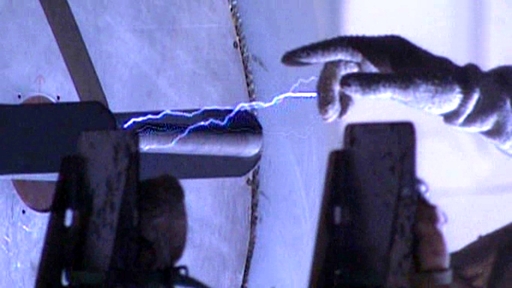
All the electrical equipment we use works using electrical circuits.
Let's learn how electricity moves through circuits to the places we need it.
Watch and learn
Watch this video to learn more about what an electrical circuit is and how it works.
Video
How do we build an electrical circuit?
Electrical energy flows around circuits which are loops made of metal wires.
In this game, touching the wire with the metal hoop will complete the circuit. Energy flows to the buzzer and you’ve lost the game.
Title: Electrical circuits
The mains electricity we use for everyday things like lights, televisions, and washing machines comes from power stations to our homes.
Electrical circuits work by moving electrical energy from a supply, like a batter, to where it is needed. The electrical circuits in our homes use metal wires coated in plastic.
The metal wires conduct electricity, which means the electricity can travel along it. Metal is a conductive material. But the outer plastic coating doesn’t conduct electricity so its safe to touch.
It’s useful to be able to turn an electrical circuit on or off by completing the loop or breaking the loop. We can do this by using a switch.
A doorbell is a switch that completes a circuit when you press it. We wouldn’t want that circuit on all the time. That would mean the doorbell ringing non-stop.
Electricity can be very dangerous. It can cause fires and injuries. We must always be careful around electric sockets and electrical things.
We can understand how electrical circuits work by doing experiments with science kits. We can make lights come on by connecting them to batteries.
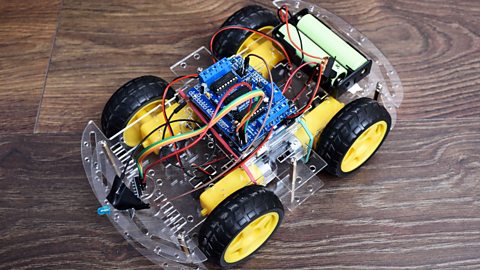
Electrical circuits make lots of things we use work. From remote-controlled cars to electric cars we can actually drive.
How does electricity move around?
We use electricity every day in lots of different ways.
Electrical energy can be turned into lots of other types of energy:
- light energy in a lamp
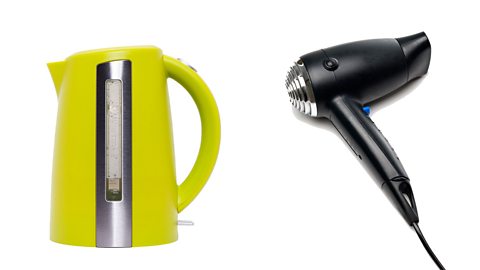
- heat energy in a hairdryer
- sound energy in a phone
- movement energy in a toy car
But it needs to get there first!
Do you know how electricity gets to where it is needed?
Electrical energy flows around a circuit, which is a loop made of metal wires.
How does an electric circuit work?
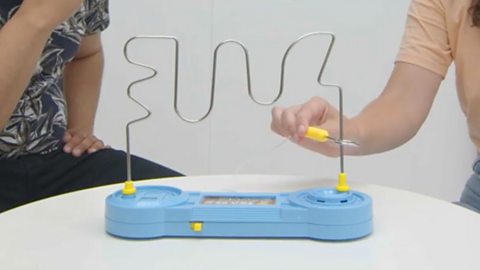
This electric buzzer game shows how an electrical circuit works.
One end of a battery is attached to the metal wire. The other end is attached to the metal loop.
If you manage to move the metal loop along the whole wire without touching it, you win the game.
If you touch the wire with the metal loop it makes a A loop of metal wires through which electrical energy moves. and electricity flows from the battery to the buzzer. BUZZZZZZ!
Here's another very simple circuit.
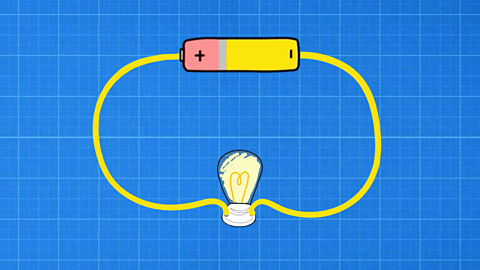
Image caption, A complete circuit
Wires connect the battery and bulb in a complete loop. Electricity flows from the battery to the bulb so the bulb radiates light.
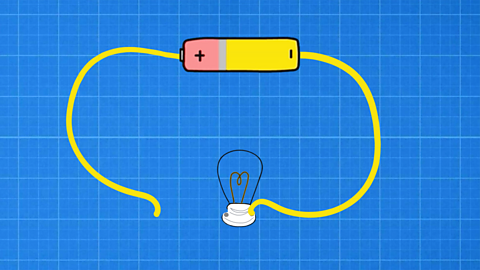
1 of 2
What are electrical circuits made of?
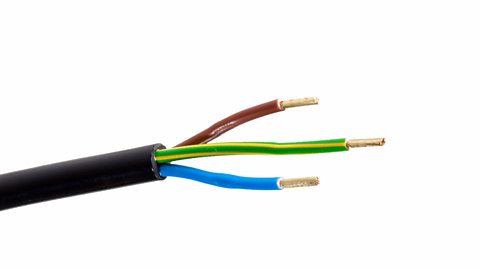
The parts of an electrical circuit are joined by metal wires.
Metals A material which allows heat or electricity to move easily through it. electricity very well. This means the electricity can travel along metal wires easily.
You must never touch a bare wire as it could give you an electric shock which can be dangerous.
This is why the metal wires used in electrical circuits are coated in plastic. It is there for our safety.
Inside their plastic covering, the metal wires transfer the electricity from the socket to the device, such as a television. But the plastic coating doesn’t conduct electricity (it's an A material that does not allow current to flow through it easily, eg wood or glass. ) – so it’s safe to touch.
Electricity in the home
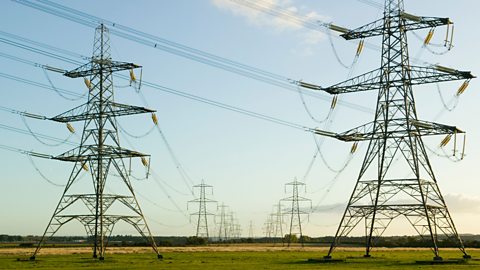
Cables in the ground or held up by pylons join wind farms and power stations to our homes and schools in huge electrical circuits.
Inside a building, more circuits are hidden inside walls, floors and ceilings to keep them and us safe.
We can plug electrical equipment like a TV, oven, washing machine or vacuum cleaner into sockets to join them to the circuit.
Not everything that is powered by electricity needs to be plugged into a socket. Phones, tablets and some toys contain circuits that carry electricity from the battery to the working parts.
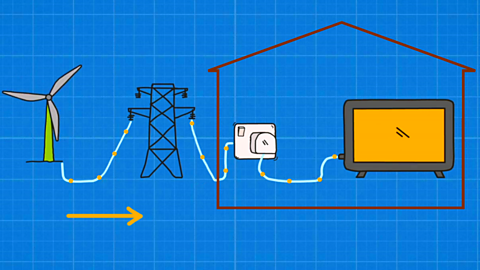
Image caption, Wire circuits carry electricity into our homes and schools to power everything we use.
Can you think of things that need electricity in your home?
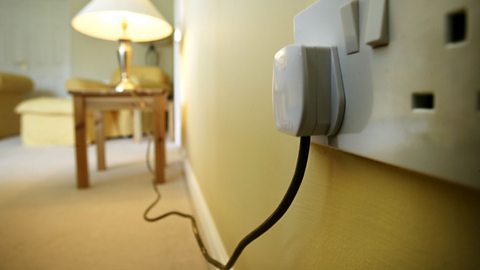
1 of 3
What are switches for?
We often want to be able to turn off a device when we don’t need it.
Some devices like the kettle and toaster turn off automatically.
Others, like the oven and the TV, need us to turn them off.
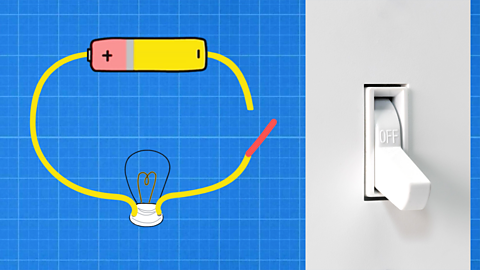
To turn something off you need to stop electricity getting to it and we do this by breaking the circuit. This is done with a A device used to turn electrical appliances on and off when needed..
A switch is part of a circuit that can be opened or closed:
- closing the switch makes a complete loop so that electricity can flow
- opening the switch breaks the loop so that no electricity flows
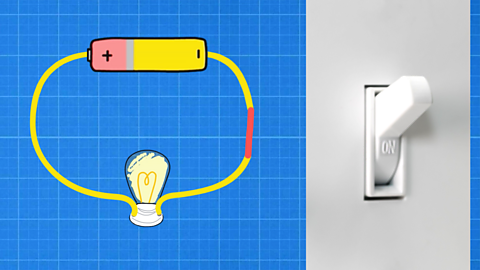
Image caption, A closed switch
Electricity flows from the battery to the bulb so the bulb radiates light.
1 of 2
Sometimes switches are harder to see.
Have a look through the examples below to learn about some switches you may not have known about:

Image caption, Fridge lights
There is a switch inside your fridge which turns on the light when you open the door.
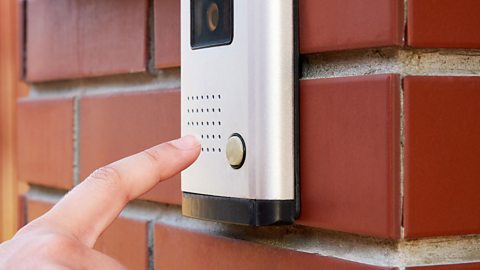
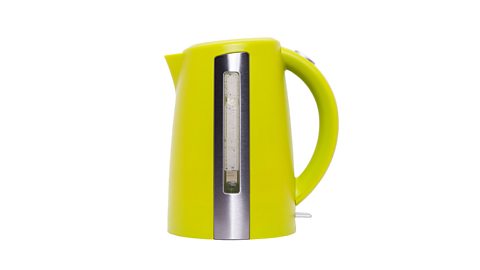
1 of 3
Can you think of any other things you use that have a switch?
Remember: Electricity can be very dangerous and is never something to be played with. It can cause fires and serious injuries if it is not treated with care.
Always be careful around electric sockets and electrical things. Never touch a socket or a bare wire.
Activity

Build your own electrical circuits!
We can get a better understanding of how electrical circuits work by building our own circuits in the classroom.
You will need:
a battery
a battery holder
wires with crocodile clips
a bulb
Watch the video to find out what to do:
Video

Check your connection, refresh the page and try again. – A loop of metal wires through which electrical energy moves.
Check your connection, refresh the page and try again. – A material that allows electricity to pass through it easily (e.g. copper).
Check your connection, refresh the page and try again. – A form of energy (electrical energy) that can make things move and work.
Check your connection, refresh the page and try again. – A material that doesn’t allow electricity to pass through it (e.g. wood).
Check your connection, refresh the page and try again. – A device used to turn electrical appliances on and off when needed.
Quiz
How switched on are you feeling about electricity?
Test what you've learned with this quick quiz!
More on Electricity
Find out more by working through a topic
- count2 of 3

- count3 of 3