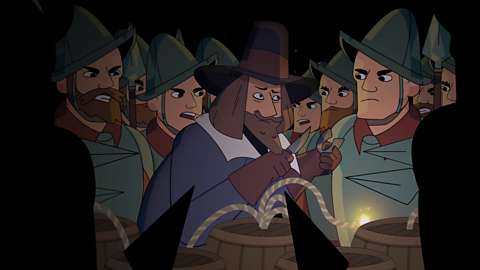
Watch: Who was Mary Anning?
Fossils are the imprinted remains of ancient creatures, forgotten about by the world, hidden in rocks under our feet.
My name is Mary Anning, and just as fossils are forgotten for many years, so too was I.
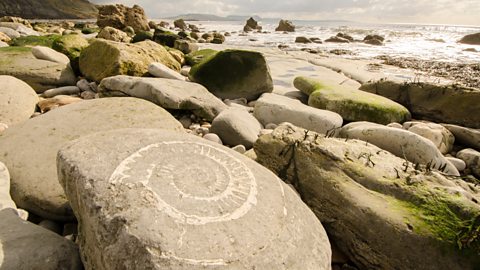
As a child I walked the seafront with my father and brother to find what we then called curiosities.
My father taught us how to patiently and carefully free these strange things from the rock.
We were very poor, so we sold what we found to people on the beach.
One customer, Elizabeth Philpot, knew so much more about my curiosities than me, so she gave me a book to help me study them.
From these books I discovered that my 'curiosities' were actually fossils; ancient creatures whose bodies were imprinted in what would become stone.
This brought to life the seafront and the cliffs that we searched with my father.
But, when my father died, we were left to search by ourselves.
One day we saw something different.
With patience and care, history began to reveal itself before my eyes.
Elizabeth brought a scientist from London who proclaimed "all science will be amazed”.
It was, and I found more amazing fossils as I grew older.
Men of science would visit, listen to my ideas, look at my finds, but most of their books never mentioned me.
What I found helped change the way humans think about the world.
But, because I am a woman, and because I am poor, I didn’t get the credit for my discoveries.
Over the years, men and women slowly became more equal, and I became celebrated as one of the greatest fossil hunters that ever lived.
What did Mary Anning do?
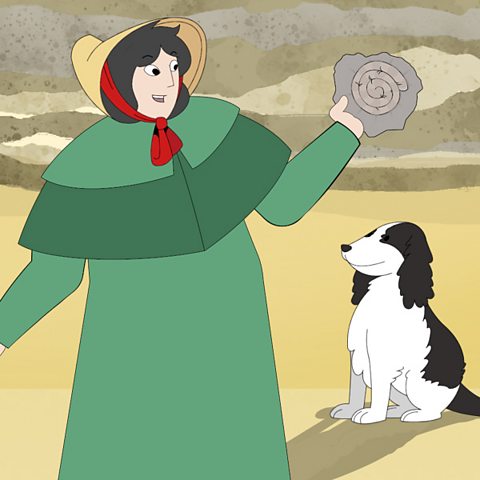
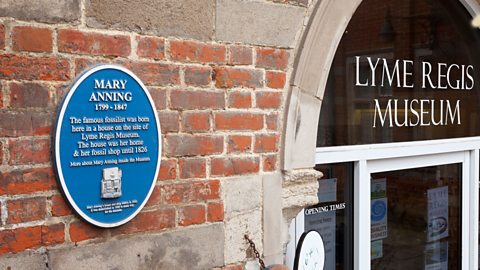
Mary Anning was born on 21 May 1799. She lived in the English seaside town of Lyme Regis in Dorset.
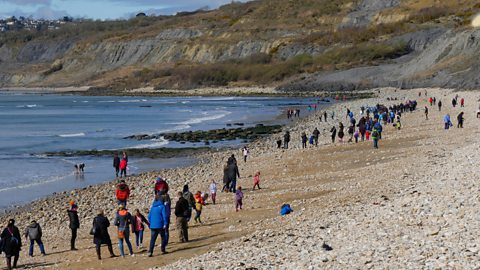
Mary would spend her time searching the coast looking for what she called ‘curiosities’.
Later in her life, as she developed a better understanding of her finds, she realised they were actually fossils.
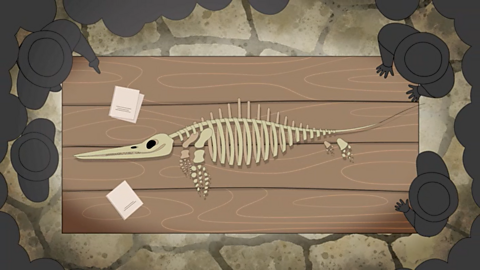
Over the course of her life she made many incredible discoveries. This made her famous among some of the most important scientists of the day. They would visit her for advice and to discuss scientific ideas about fossils. Today, Mary is remembered as one of the greatest fossil hunters to have ever lived.
The story of Mary Anning
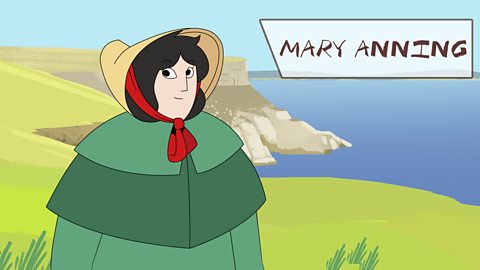
Image caption, Click through the images to explore the life of Mary Anning
1 of 7
Life of Mary Anning
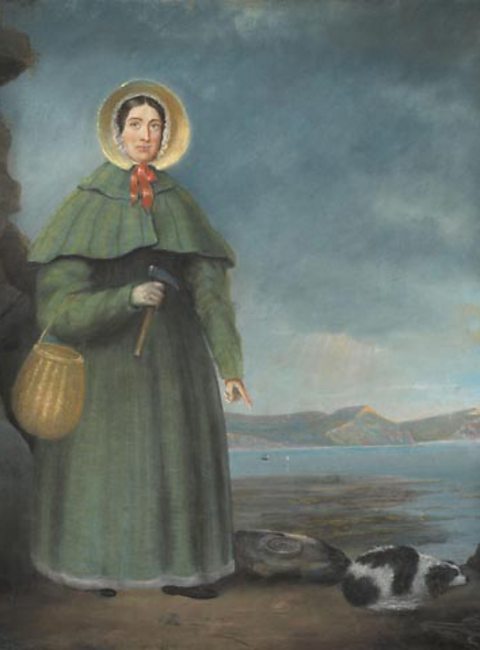
Growing up by the sea
Mary's parents were Richard Anning and Mary Moore. As a baby, Mary had a lucky escape when a woman carrying her was struck by lightning.
Her family were very poor, which meant she didn’t get to attend school much. Instead, she mainly taught herself to read and write.
Fossil hunting
Mary's family had little money so she spent most days searching the beaches with her brother looking for items to sell.
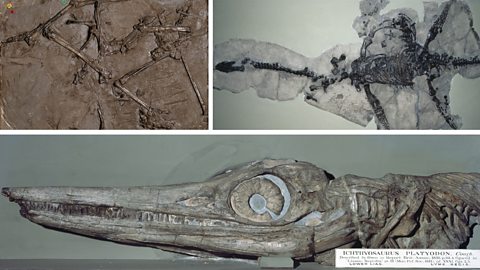
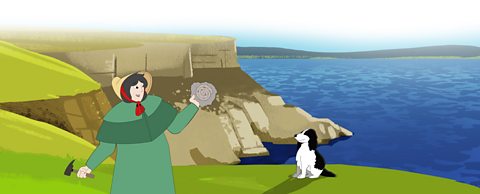
When she was just 12, they discovered the skull of a mysterious creature poking out from a cliff.
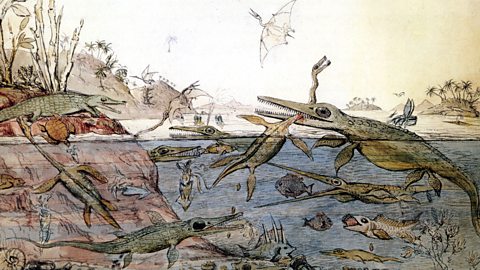
They thought it might be a crocodile, but what she had discovered was actually an ancient reptile called an ichthyosaur (which means ‘fish lizard’).
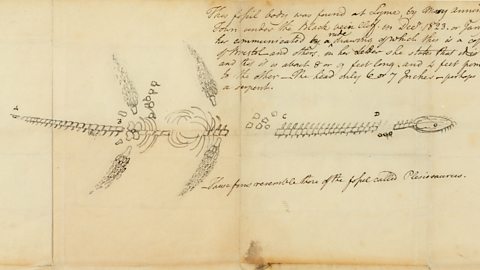
Mary went on to make more incredible discoveries in her life, including a long-necked marine reptile called a plesiosaur and a flying reptile called a Dimorphodon.
Activity: Quiz – Mary Anning
Horrible Histories: Raid and Trade game! game
Play Horrible Histories: Raid and Trade KS2 History
More on British famous people
Find out more by working through a topic
- count3 of 3
- count1 of 3