Key points
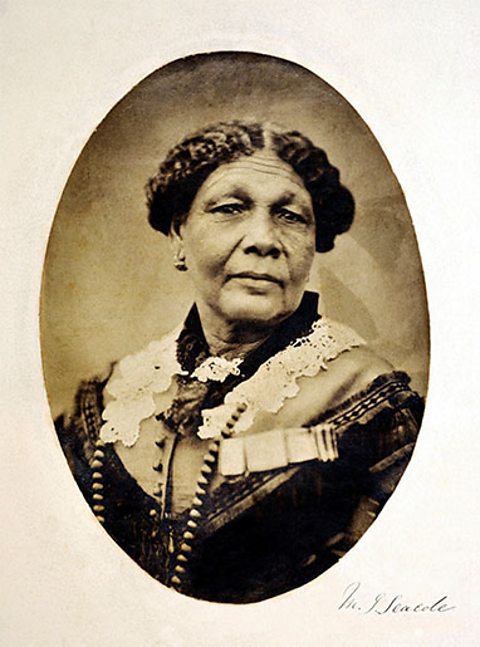
- Mary Seacole grew up in Jamaica in the 19th century.
- She learned about medicine from her mother.
- When the Crimean War began, she funded her own journey to the front line in Crimea where she opened the British Hotel to treat wounded and ill soldiers.
- On her return from the war, Seacole wrote an A story written by somebody about their own life and experiences. about her experiences.
Mary Seacole's early life
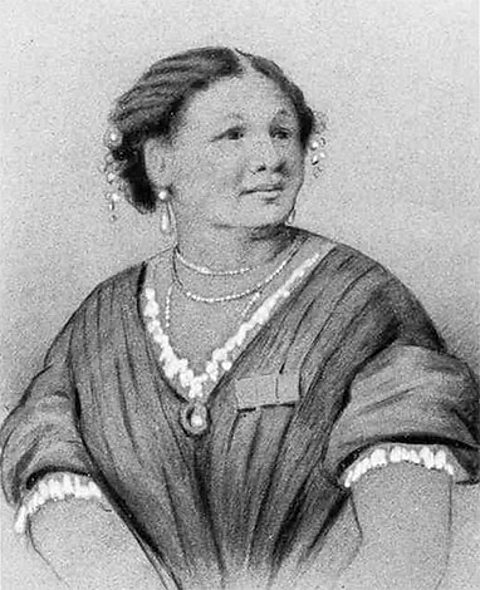
In 1805, Mary Seacole was born in Jamaica, a Caribbean island, to a Jamaican mother and a white Scottish soldier father. Jamaica was a British A country, state or territory ruled over by another country, state or territory..
At the time Seacole was born, Britain was still actively involved in the Ships from Europe sailed to Africa to trade goods for enslaved people, who were then transported to the Americas to work on plantations producing goods which were then brought back to Europe and sold for profit. and Black people in the Caribbean could still be enslaved. As Seacole was born to parents who were both free people, she herself was not enslaved. She referenced in her A story written by somebody about their own life and experiences. that she was subjected to some racial prejudice when she was growing up, but this did not stop her pursuing a career in healthcare.
Mary's mother and Blundell Hall
Seacole’s mother owned and ran a lodging house, Blundell Hall. From the age of 12, Seacole worked alongside her mother. She learned to care for people using traditional Jamaican medicines and healing techniques. Her mother used the term ‘doctress’ to describe herself. The term is used in some cultures to describe a woman who is believed to have the ability to treat sick and injured people, without having formal medical training. Watching her mother’s work encouraged Seacole to take an interest in healthcare and work as a doctress.
Seacole said in her autobiography, ‘I saw so much of my mother, and of her patients, that the ambition to become a doctress early took firm root in my mind.’
Travel
Seacole was well travelled. In her A story written by somebody about their own life and experiences. she wrote about her visits to the Bahamas, Haiti and Cuba. When she was 18, Seacole travelled to London, where she sold pickles and preserves which she had brought with her from Jamaica.
After staying in London for around two years, she travelled back to Jamaica, where she looked after her patroness, an elderly friend who had looked after her when she was young. Seacole married but her husband became unwell and she spent a lot of time looking after him.
In 1844, Seacole experienced an upsetting year when her husband died, followed shortly by the death of her mother.
Treating different diseases
Cholera
In 1850 there was a A waterborne disease that was spread through contaminated water. It caused severe diarrhoea and sometimes death. outbreak in Jamaica. Seacole observed the symptoms and the spread of disease. She travelled by boat to stay with her brother in 1851 in Cruces, a town in Panama. On the way to Panama, she experienced racism from some Americans and wrote in her A story written by somebody about their own life and experiences. that they ‘very often show this feeling in stronger ways than by sour looks and rude words.’
Not long after she had arrived in A country in Central America which shares borders with Colombia and Costa Rica., there was a cholera outbreak. Seacole used her experience of seeing cholera patients in Jamaica to treat people in Panama. She claimed that she was able to cure a cholera patient using her treatments.
While she was treating cholera patients in Panama, Seacole charged patients who could afford to pay, but provided free care for those who could not. In order to try and learn more about the disease, Seacole carried out an A scientific examination of a body to determine the cause of death. It is also known as a post-mortem. on a child who had died of cholera. She described this as ‘very valuable’. She caught cholera herself and was ill for several weeks, before making a full recovery.
How did Mary Seacole treat cholera patients?
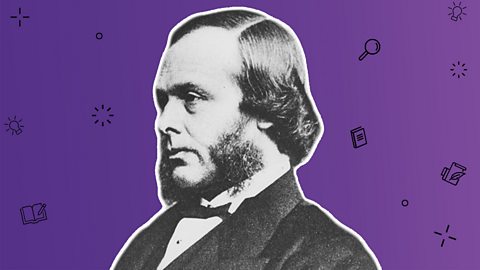
Seacole wrote in her autobiography about some of the treatments she used in Panama. She was working at a time when there was a limited understanding of the causes of disease. The link between cholera and contaminated water was not discovered until 1854 by John Snow, and Louis Pasteur didn’t publish his germ theory until 1861.
Some treatments may have been effective - such as those that helped to rehydrate patients by providing them with water. However, others would have had little positive impact. Some of the treatments included:
- Mustard poultices - mustard seeds crushed and wrapped in a bandage, which was thought to encourage healing.
- Boiled water with cinnamon - provided as a drink to help hydrate patients.
- Mercury - a substance taken orally to try and empty the patient’s bowels. We now know that mercury is highly toxic to humans.
- Emetics - substances that made the patient vomit.
Yellow fever
In 1853, Seacole travelled back to Jamaica. There was an outbreak of yellow fever, a disease spread by the bites of infected mosquitoes. Seacole treated patients during the outbreak and was upset at the amount of suffering and the number of deaths the disease caused. She wrote in her autobiography, ‘I found these scenes more difficult to bear than any I had previously borne a part in.’
Mary Seacole’s attempts to travel to the Crimea
The Crimean War broke out in 1853. It was a conflict between the United Kingdom, France, Sardinia and the Ottoman Empire against Russia.
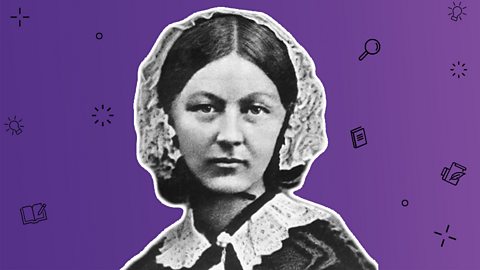
Seacole travelled to England and arrived in London in the autumn of 1854. She applied directly to the War Office to be sent as a nurse to help injured and sick soldiers in Crimea. When this offer was rejected, she applied to join Florence Nightingale’s team. Nightingale was taking a team of nurses to Crimea to try and improve the treatment injured and sick soldiers were receiving.
Seacole felt she had lots of relevant experience. Soldiers were being taken ill with diseases she had experience of treating, such as A waterborne disease that was spread through contaminated water. It caused severe diarrhoea and sometimes death.. However, her application was rejected, and she was told there were no more nurses needed. She believed she may have been rejected because of her skin colour. She wrote in her A story written by somebody about their own life and experiences., ‘Was it possible that American prejudices against colour had some root here?’She described crying when she was refused the opportunity to travel as part of the official nursing team.
Seacole remained determined to travel to Crimea. Seacole was certain she could help the soldiers in Crimea, so decided she would travel there by funding the trip herself. She had cards printed to advertise the care she was going to offer.
BRITISH HOTEL.
MRS. MARY SEACOLE
(Late of Kingston, Jamaica),
Respectfully announces to her former kind friends, and to the Officers of the Army and Navy generally,
That she has taken her passage in the screw-steamer “Hollander,” to start from London on the 25th of January, intending on her arrival at Balaclava to establish a mess table and comfortable quarters for sick and convalescent officers.
The British Hotel
When she arrived in Crimea in 1855, Seacole opened an establishment called the British Hotel near Balaklava where the front line of fighting was. The British Hotel was a place for soldiers to buy and be provided with home-cooked food, supplies, and medicine.
Seacole’s British Hotel was close to the front line of fighting. She often visited wounded men on the battlefield to care for them. This earned her the nickname ‘Mother Seacole’.
What did British soldiers think of Mary Seacole and the British Hotel?
Many soldiers were grateful for her help. A soldier, Sergeant Charles Flinn, wrote to Seacole to thank her for her help:
‘I certify that I was troubled by a severe inflammation of the chest, caused by exposure in the trenches, for about four months, and that Mrs. Seacole’s medicine completely cured me in one month, and may God reward her.’
Activity - Seacole's work and travels
Seacole's life after the Crimean War
Mary Seacole stayed in Crimea until the end of the conflict. In 1856, she returned to England with little money and nowhere to stay. She had used her available funds to open and run the British Hotel. In her A story written by somebody about their own life and experiences. she said, ‘I found myself poor - beggared.’
The Times newspaper ran an article encouraging people to remember the good things Seacole had done for British soldiers. Officers who had fought in Crimea organised a festival in aid of Seacole to help raise money for her. A newspaper article that covered the event described Seacole's heart as being ‘big enough for an empress’. The fund was supported by high profile figures from the military.
In 1857, Seacole published her autobiography The Wonderful Adventures of Mrs Seacole in Many Lands in which she documented her life, travels and work. She also expressed hope that she wouldn’t be forgotten by those she had helped.
Seacole continued to offer help to the British army. In 1857, she offered to go and help wounded soldiers during the Indian rebellion. Her lack of finances meant she was not able to go. Further fundraising efforts took place in 1867 and Seacole was able to continue to live in London.
In 1871, a sculpture was made of her by Queen Victoria’s nephew, Count Gleichen.
Key dates in Mary Seacole's life
| Date | Event |
|---|---|
| 1805 | Mary is born in Jamaica. |
| 1817 | She works alongside her mother at Blundell Hall. |
| 1823 | Travels alone to England and stays for around 2 years. |
| 1825 | Visits Cuba, Haiti and the Bahamas. |
| 1836 | Marries Edwin Horatio Hamilton Seacole. |
| 1843 | A fire destroys the Seacole's home. |
| 1844 | Her husband dies and sometime after her mother also dies. |
| 1850 | She treats people in Jamaica during a cholera outbreak. |
| 1851/1852 | Treats cholera patients during an outbreak in Panama. |
| 1855 | Travels to Crimea and sets up the British Hotel. |
| 1856 | The Crimean War ends - sometime after this Mary returns to London. |
| 1857 | Her autobiography The Wonderful Adventures of Mrs. Seacole in Many Lands is published. |
| 1881 | Mary dies in London. |
Mary Seacole's legacy
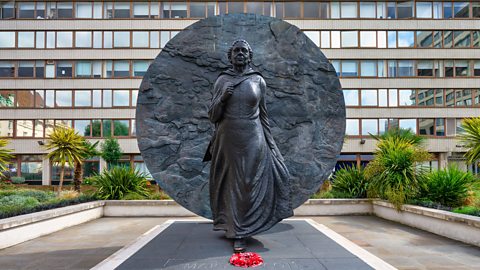
Seacole died in 1881 and was buried in London. For a time her work was forgotten by the public, but she is now remembered and celebrated. She is now often seen as a prominent figure in history and the history of Black Britons.
- In 2003, she was voted number one in a public poll, that attracted around 100,000 votes in total, to choose the greatest Black Briton.
- In 2007, English Heritage installed a blue plaque at the address in London where she wrote her autobiography.
- In 2016, a statue was unveiled of Mary Seacole outside St Thomas’ Hospital in London.
- In 2019, she was recognised by the Nursing and Midwifery Council for how she had ‘paved the way for diversity in nursing in the UK.’
Test your knowledge
Solve the Story!
An exciting new series from the Other Side of the Story, designed to help young people strengthen their media literacy skills.

More on Science, progress and health
Find out more by working through a topic
- count1 of 4
- count2 of 4
- count3 of 4