Did you know?
The word ‘analysis’ literally means to loosen something up. It is made up of two Greek words, ana meaning up, and lysis meaning to loosen.
Introduction to analysis
Analysis is an important skill to learn and practise in English – it helps you to explore and understand the writer’s craft.
Key learning points
- What is analysis and where would we use it?
- How do I analyse a fiction text and write about it?
- Which literary terms could I use in my analysis and how do I use them?
Video about analysis
A video about how to carry out analysis on fiction texts
When we analyse a text, we are trying to understand how it works. We can look at the overall structure, the individual sentences and the writer’s word choices to find different possible meanings. Think about what you’d like to explore. For example, it might be interesting to understand how the characters are portrayed.
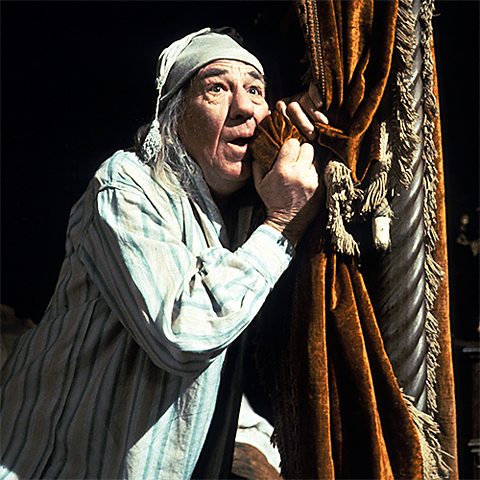
A Christmas Carol by Charles Dickens.
How does Dickens present the character of Scrooge?
Start your analysis by finding a relevant or interesting section of text.
'Scrooge! A squeezing, wrenching, grasping, scraping, clutching, covetous, old sinner! Hard and sharp as flint … secret, and self-contained, and solitary as an oyster.'
What does Dickens’s language choice tell you about Scrooge?
Dickens presents Scrooge as a character isolated from society.
But how has Dickens achieved this? Take the simile: “solitary as an oyster”. What effect does this comparison have?
Oysters have hard shells that protect themselves from predators. This simile suggests that Scrooge could be isolating himself from the people around him as a defence mechanism.
Try to explore additional connotations and further layers of meaning.
Oysters only come out to feed. So perhaps Scrooge only interacts with people when it benefits him.
And you can add depth to your analysis by exploring the context in which the text was produced.
Most rich members of Victorian society only interacted with their social inferiors when it was necessary. Dickens would have experienced this first-hand from when he was a boy working in Warren’s Blacking factory.
To summarise your analysis, articulate your personal opinion with authority.
I believe Dickens compared Scrooge to an oyster to illustrate his isolation from society. The simile alludes to his relationship with others and hints that he doesn't want to be hurt…
Use the tools of analysis to explore how a text works: start by looking at a short section; make an observation on the language choice, explain the effect or meaning, explore further layers of meaning and context – then summarise with authority!
Who knows what you might discover in your favourite texts.
What is analysis?
Analysis allows us to see the smaller parts of something and understand more about them.
Think about a woollen scarf. If you pull it apart, the strands become looser and you can start to see how it is made – the weave, the threads, the pattern etc.
When asked to analyse a piece of writing, you need to look in detail at what the writer has done. Instead of weave, threads and pattern, look for words, techniques, and the structure of the writing. This can help you understand how the piece of writing was created and the effect the writing has on the reader.
Analysis in non-fiction contexts
Analysis is a skill that is used in many different areas of life. Right now, there are millions of people all over the world completing some sort of analysis to find out the answer to something or explain how something works. Often this is based on something they have to read.
Scientific analysis might involve looking at evidence in studies and reports and picking out what is needed to support a A theory or suggestion that is made based on evidence that can be tested. or a decision.
Forensic analysis might involve looking over emails to find specific patterns or searching social media to find key words to aid an investigation.
Journalistic analysis might involve reading the testimonies of witnesses to an event and piecing together a narrative about that event.
How to analyse a fiction text
Analysing language is about unpicking the words and structure of a text to see its smaller, simpler elements.
You could focus your analysis of a text on one the following areas:
Language
- Words – adjectives, adverbs, verbs, etc
- Sentences – simple, compound, complex
- Paragraphs – structure, length
- Literary techniques – Makes a direct comparison by presents one thing as if it were something else with the characteristic. For example describing a brave person as a lion., A comparison between two objects using ‘like’ or ‘as’., Repeating a word or phrase in a sentence can emphasise a point, or help to make sure it is fully understood., Descriptive writing which appeals to one or more of the five senses. etc
Whole text
- Characters – appearance, mannerisms, motivations, dialogue
- Themes – where a theme appears, which characters represent the theme
- Plot – what happens and when, and to whom
- Symbols – links to character, links to themes
How to analyse character
When you are analysing a character in a fiction text, make sure to focus on these six areas:
- actions taken by the character
- the character's physical appearance
- how other characters behave around the character
- dialogue spoken by the character
- explore the journey a character takes in the text, do they change?
- how the character behaves
How to analyse a theme
A theme is an idea that runs through a text and can be linked to characters or moments. To analyse a theme it’s useful to look for points in the text where that theme ‘thread’ appears in the story.
Ask yourself:
- Which events link to this theme?
- Who is affected by the theme and when?
- What images or symbols are linked to the theme?
Examples of analytical paragraphs
An analytical paragraph needs to do three main things:
- Identify what the writer has done
- Consider how the writer’s choice affects the reader
- Consider why the writer made that choice
Read the extract below.
The door swung open with force, sending papers flying off the desk at the back onto the floor. As Charlie hastily picked them up, he felt an icy breeze on his neck as the cover teacher strode past him into the classroom. The teacher’s head was bowed and a frown brewed on his stormy face. Charlie sat up straighter in his chair; this was going to be a difficult lesson.

Question: How does the writer use language to present the cover teacher?
Step 1: Identify what the writer has done
Look at the techniques used by the writer. In this case, the writer has used verbs and adjectives that share a sense of foreboding eg swung, flying, strode, brewed, stormy, icy.
Step 2: Answer the question in a sentence
Now you have chosen your technique, you can start writing your paragraph. Start by answering the question in a single sentence:
The writer uses verbs and adjectives that create a sense of foreboding to present the cover teacher as an angry, tense, and quite unpleasant person.
Step 3: Explain the effect of the writer’s choice on the reader
The description of his face as ‘stormy’ makes the reader feel the teacher is annoyed. The reader might question if something has happened before he came in the classroom. Either way, the reader starts to sympathise with Charlie who is stuck in the classroom with him.
Step 4: Explain the writer’s intention
I think the writer wanted to imply that this cover teacher is someone to be wary of; he is liable to get angry at any moment. The writer may have wanted to emphasise this because maybe later in the text he does get annoyed and maybe this has an effect on Charlie later in the story.
Using literary terms
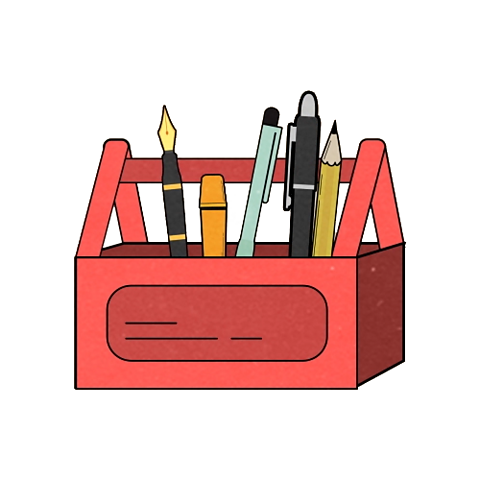
For a writer, literary terms are like tools in a toolkit. Instead of actual tools like a hammer, a wrench or a spanner, a writer uses tools such as When a word sounds like the word it is describing. For example, ‘buzz’ or ‘hiss’., repetition, an Metaphors that run throughout a piece of work..
If you see the literary terms as tools, it enables you to write about them. There are verbs you can use to help you to write about a writer’s tools:
- uses
- employs
- utilises
- chooses
Add in adverbs and adjectives to be more precise:
'The writer skilfully creates a harsh sound using onomatopoeia’ or ‘the writer carefully employs a fragile simile to help the reader understand the character’s innocence.'
Glossary of literary terms
Sound techniques:
| Technique | Definition | Example |
|---|---|---|
| Onomatopoeia | Words that sound like their action | Plop, bang, crash |
| Alliteration | The same letter or sounds at the beginnings of words | Polly parrot preened and pecked |
| Sibilance | The use of repeated ‘s’ sounds | Silently the spider slinked across the sink |
| Assonance | The use of similar vowel sounds | Sit back and relax at the track |
Figurative language techniques:
| Technique | Definition | Example |
|---|---|---|
| Metaphor | Comparing something by saying it is something else | The clouds were ink blots |
| Simile | Comparing something to something else using 'like' or 'as' | He sang like a bird |
| Personification | Giving human characteristics to something non-human | The flowers danced in the wind |
Test your knowledge
Play Bitesize secondary games. game
Have fun playing science, maths, history, geography and language games.

More on Critical reading
Find out more by working through a topic
- count7 of 11
- count8 of 11
- count9 of 11
- count10 of 11