What are predictions and conclusions?
Predictions
A prediction is like making a guess about what you think will happen in a situation or an experiment.
It's like using clues to guess what might come next.
For example, if you see dark clouds in the sky, you can predict that it might rain soon.
Conclusions
A conclusion is what we figure out after we have done an experiment or explored in a situation.
It's like looking at all the information and results to understand what happened or what we learned.
It's like saying "Here's what I found out.'
Watch: What is predictions and conclusions?
Fran: Before a scientist carries out an investigation, they might make a prediction.
And predictions are what we think will happen in an experiment based on what we already know.
So I'm doing an investigation with these two balls, and my question is which one will bounce the highest?
Now, my prediction is that this tennis ball will bounce the highest.
Let's see!
Hey!
Now after an investigation, a scientist will make a conclusion, and conclusions answer that initial question and make meaning of our results.
Let's see what my investigator is finding out about predictions and conclusions.
Child: Does temperature affect the bounce of a ball?
I've got two balls exactly the same.
I've made this ball colder by leaving it in the freezer overnight and I want to see if it changes the bounce compared to this ball at room temperature.
Time for a prediction.
I know that cold and frozen things are harder than when they are at room temperature.
So, I predict that the cold ball will be harder and bounce higher, and the warm ball will be softer and not as bouncy.
Let's find out if I'm right.
So, let's go with the room temperature one.
So, our cold ball had an average height of 24.66 centimetres, and our room temperature ball had an average height of 60.66 centimetres.
So, that means a colder temperature decreases the bounce of a ball!
Fran: What a brilliant piece of investigating there.
Now, a good conclusion it has three parts.
One: it answers the question - Does temperature affect the bounce of the ball? Well, yes, it does seem to have done.
Two: we look for patterns, and we can see that the height was consistently higher for the warmer ball.
And three: we then give a scientific explanation for the results.
In this case, as the ball was cooled the air inside had moved closer together, which made the ball less inflated.
Now, the reasoning was right, the hard ball did bounce higher, it's just the warmer ball was harder because it was more inflated.
So science threw us a little bit of a curve ball on this one!
Watch: How to draw conclusions
Learn how to analyse data and make conclusions.
Molly: Hmmm… acorns have been falling in the morning, but then disappearing by the evening, the squirrels must be taking them.
Narrator: This table shows the acorns you’ve tracked over the past week and this chart shows there have been lots of squirrels around.
But if we analyse that data, other animals have been spotted too!
That brings us to our big conclusion… it’s not just squirrels that are taking the acorns.
Did you know?
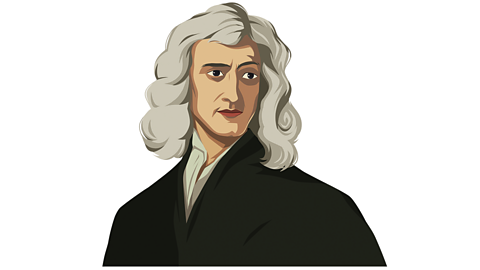
Sir Isaac Newton (1643-1727) was a British scientist and mathematician.
In 1666, Newton had been sitting under an apple tree at his family home when a falling apple made him start to think about the force of gravity.
Using scientific predictions he developed the theory of gravitational pull and thus changed the way we think about and understand the universe.
Writing up experiments
A scientific investigation usually starts with a question and often an experiment or test is often needed to find out the answer.
Before the start of the experiment or test, scientists usually make a prediction. This is a scientific guess about what you think will happen and what the result of the experiment will be when you have thought about what you already know that might help.
During the experiment, you can observe changes over time or any patterns that may occur.
Once you've carried out your experiment or test, you need to summarise any patterns you have spotted or observations you have made. This is called a conclusion.
Important words
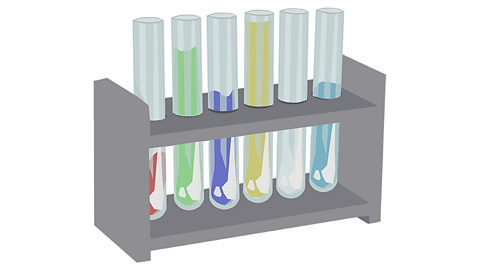
Conclusions – A summary of what we have found out from our investigations.
Experiment – A scientific procedure, often in a laboratory, that produces results.
Observations – Viewing and noticing patterns and unusual things in scientific experiments, tests and data.
Predictions – Making a guess at what you think you will find in your investigations.
Scientific investigation – Finding the answers to a question scientifically, using predictions, the right equipment and finding conclusions.
Scientists – Scientists are people who are experts in an area of science.
Activities
Activity 1 – Fill in the gaps
Activity 2 – Predictions and conclusions quiz
Activity 3 – What conditions do woodlice prefer?
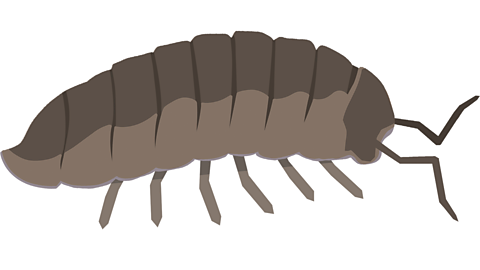
Ask a responsible adult to help you with this activity.
You will need a small number of woodlice and a container which has light and dark areas. You can make this out of a lunchbox which is half covered with silver foil.
Woodlice can be collected from under stones or leaves in a garden or local park. It is extremely important that the woodlice are not harmed in any way during this experiment and are released back as soon as possible in the same place.
1. Carefully place the woodlice into the centre of the container.
2. Leave them alone for five minutes.
3. Record the number that are in the light and dark sections.
Think about where you found your woodlice.
- What were the conditions like?
- Does this help you write a prediction?
What is your prediction?
I predict that woodlice will prefer the darker area of the container because they were found in a dark place in the garden or park.
What is your conclusion?
This depends upon your results! It could be:
- I conclude that woodlice prefer darker areas because I found more of them in the shade. (This is most likely.)
- I conclude that woodlice prefer lighter areas because I found more of them in the sun.
- I conclude that woodlice don’t prefer lighter or darker areas because I found the same number in these places.
What other scientific investigations could you complete using the same equipment?
Don't forget to return the woodlice back to their homes afterwards!
Activity 4 – Making predictions
New game! Horrible Science: Stinky Space. game
Join Pipette on her epic mission and learn some revolting facts about space along the way.
More on Working scientifically
Find out more by working through a topic
- count1 of 5
- count2 of 5
- count3 of 5
- count4 of 5