Key facts about cash flow
Cash flow: movement of money in and out of a business
Cash flow forecast: predicts future cash movements to aid planning
Importance: vital for paying bills and avoiding financial issues
Management: involves credit terms, cost control, and ensuring positive cash flow
What is cash flow?
The flow of money into and out of a business in a given time period

Money flows in from:
sales
owner’s capital
loans
government grants
Money flows out for:
buying stock
paying rent and electricity
paying staff wages
repaying loans
marketing costs
What is a cash flow forecast?
Cash flow forecast: a prediction of how much money will flow into and out of the business over the next 6, 12 or 24 months.
Like a weather forecast, it is a PREDICTION: it has not happened yet!
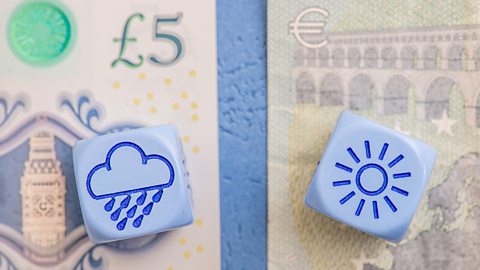
Why is a cash flow forecast important?
Why do people set up a business?
To make a profit!
To get to profitability, the business has to SURVIVE long enough to make a profit.
The importance of cash flow
Mo and Emma look at what cash flow is and why it is important for their business
Emma: Yes, so that's two new laptops.
Mo: Can I call you back?
Emma: You're spending all our money?
Mo: I've done the maths, the profits from our latest customer will cover these.
Emma: Just because we are making a profit doesn't mean we actually have the cash yet.
Mo: It's not just about how much money we make, Emma, it's about when we get it too, cash flow.
Emma: What?
Mo: The flow of money in and out of a business. So, the money that comes in over a period of time, minus the money that goes out in that same period of time, gives us our net cash flow.
Emma: Right.
Mo: So, for this month maybe we have a positive net cash flow, lots of money coming in from our sales, not too much going out on bills.
Emma: So, I can get the laptops.
Mo: But what about next month? If we have more money going out than coming in, we'll end up with a negative net cash flow and we might struggle to make any payments we need. So, let's think ahead and try and spread out what comes in and out to manage our cash flow. That's cash flow forecasting.
Emma: Okay, so we need to order more stock and pay our designer but our sales should cover that and that big order from our latest customer.
Mo: But what if we don't sell enough to cover those or if we do, but we get their payments late, so we can't make our own payments. Like that customer who made that big order, they still haven't paid us. We need to hold some cash back until they do.
Emma: So, no laptops for now.
Cash doesn’t just mean the physical money a business has in notes and coins. It also refers to cash in the bank – in other words, money that is available in the business’ bank accounts.
The management of cash is very important as cash allows a business to pay its bills. The main cash payments a business makes include:
payments to A business that provides goods or services to another business.
payments to employees
The fixed costs that come from running an office, shop or factory, which are not affected by the number of specific products or services that are sold., such as rent, electricity and telephone bills
When a business has just a few large customers and they fail to pay on time, the business’The movement of money into and out of a business' bank accounts. position is badly affected because the business does not have money it was expecting to have. This can lead to the business having financial difficulties and even failing.
A business can arrange The amount of money that a financial institution or supplier will allow a business to use, which it must pay back in the future at an agreed time. terms with its suppliers, in order to pay for raw materials or stock at a later date. Credit arrangements can also allow customers to pay for products or services within 30, 60 or 90 days. If a business allows its customers credit terms, it is a sensible option to also negotiate longer credit terms with its suppliers.
Preventing business failure
Failing to manage cash and cash flow can cause business failure. Even if a business has many customers, it can still have negative cash flow.
There are two instances when a business can suffer cash flow problems:
at A new business, usually only with a small number of employees., when large amounts of money need to be invested to get the business started, for example to pay for equipment, initial stock, rent, insurance, hiring, training and staff costs
during rapid growth, when the business needs to grow quickly but cannot keep up with the cash being paid out, for example, if the business needs to find larger premises and invest in making them ready to move into

If a business has customers who are not paying what they owe, this means that the business may be unable to pay its own bills and may become When a business runs out of cash and can no longer pay its bills..
Businesses need Positive cash flow is when more money comes in to the business than goes out. to reduce the risk of failure and insolvency. Three possible steps to get out of negative cash flow are:
negotiate an An agreement with the bank to overspend on an account. facility
keep costs under control
keep cash coming into the business by arranging sensible credit arrangements with suppliers and customers, and having fewer customers who pay for products and services on The amount of money that a financial institution or supplier will allow a business to use, which it must pay back in the future at an agreed time.
How can you calculate and interpret cash flow forecasts
Cash flow is the movement of money in and out of a business over a period of time.
Cash flow forecasting involves predicting the future flow of cash in and out of a business’ bank accounts. A cash flow forecast will usually be for a 12-month period. Forecasting cash inflows and outflows is important, especially for three types of business:
new businesses
fast-growing businesses
businesses with unpredictable sales patterns, for example seasonal businesses (eg an ice cream van)
A cash flow forecast allows a business to plan for the future. It can therefore assist the business in making important decisions, such as:
employing more staff
opening a new branch
investing in a new business
rewarding the owners for their success
Cash flow forecasting can also help a business to identify the risks of negative cash flow.
Can you calculate and monitor cash flow?
Creating a cash flow forecast for a new business can be difficult, as the business will have no previous figures to help it estimate its future cash inflows and outflows. This will require the entrepreneur to make some guesses. They will also need to monitor the business’ cash flow carefully to see whether their estimates were realistic and make changes if not.
An established business can compare its actual cash flow with its cash flow forecast to monitor whether it is achieving its targets. It can then make changes if necessary.

Calculating cash flow involves finding or estimating figures for the following:
cash inflows - all of the money coming into the business, which can be separated into different categories, for example sales, rent received and loans
cash outflows - all of the money moving out of the business to pay for its costs, for example suppliers, employees and overheads
The Little Cupcake Bakery

Sharon Woods set up a small bakery 8 months ago, operating as a sole trader. She is keen to raise more finance because she needs another oven to cope with increasing demand.
Sharon’s incomplete cash flow forecast for the next six months is shown in the table.
Can you calculate the missing figures?
| Receipts | July | August | September | October | November | December |
|---|---|---|---|---|---|---|
| Opening Balance | 2,350 | 560 | -230 | ? | -1610 | -2200 |
| Cash Sales | 2400 | 2400 | 2600 | 3200 | 3200 | 3200 |
| Sale of van | 2000 | 0 | 0 | 0 | 0 | 0 |
| Total Receipts | 6750 | 2960 | 2370 | 1880 | 1590 | ? |
| Payments | ||||||
| Equipment | 3000 | 0 | 0 | 0 | 0 | 0 |
| Purchases of ingredients | 1200 | 1200 | 1500 | 1500 | 1800 | 1800 |
| Loan repayments | 40 | 40 | 40 | 40 | 40 | 40 |
| Wages | 1500 | 1500 | 1500 | 1500 | 1500 | 1500 |
| Overheads | 400 | 400 | 400 | 400 | 400 | 400 |
| Drawings | 50 | 50 | 50 | 50 | 50 | 50 |
| Telephone | 0 | 0 | 200 | 0 | 0 | 200 |
| Total payments | 6190 | 3,190 | 3690 | 3490 | 3790 | 3990 |
| Closing Balance | 560 | -230 | ? | -1610 | -2200 | -2990 |
| Receipts | July | August | September | October | November | December |
|---|---|---|---|---|---|---|
| Opening Balance | 2,350 | 560 | -230 | -1320 | -1610 | -2200 |
| Cash Sales | 2400 | 2400 | 2600 | 3200 | 3200 | 3200 |
| Sale of van | 2000 | 0 | 0 | 0 | 0 | 0 |
| Total Receipts | 6750 | 2960 | 2370 | 1880 | 1590 | 1000 |
| Payments | ||||||
| Equipment | 3000 | 0 | 0 | 0 | 0 | 0 |
| Purchases of ingredients | 1200 | 1200 | 1500 | 1500 | 1800 | 1800 |
| Loan repayments | 40 | 40 | 40 | 40 | 40 | 40 |
| Wages | 1500 | 1500 | 1500 | 1500 | 1500 | 1500 |
| Overheads | 400 | 400 | 400 | 400 | 400 | 400 |
| Drawings | 50 | 50 | 50 | 50 | 50 | 50 |
| Telephone | 0 | 0 | 200 | 0 | 0 | 200 |
| Total payments | 6190 | 3,190 | 3690 | 3490 | 3790 | 3990 |
| Closing Balance | 560 | -230 | -1320 | -1610 | -2200 | -2990 |
Try the cash flow forecast quiz
Final check
What is a cash flow forecast?
A cash flow forecast is a prediction of how much money will flow into and out of a business over the next 6, 12, or 24 months. It helps businesses anticipate cash shortages and plan accordingly.
