What is the water cycle?
The water cycle is how water moves around our planet.
It is a process that shows how water changes from one form to another and moves between the land, the sea and the air.
Watch: Understanding the water cycle
Learn about the different stages of the water cycle.
The water cycle is…
No, hang on, not that kind of cycle.
And what's that you got there?
A shrink ray!
Right, go on, into the sea with you.
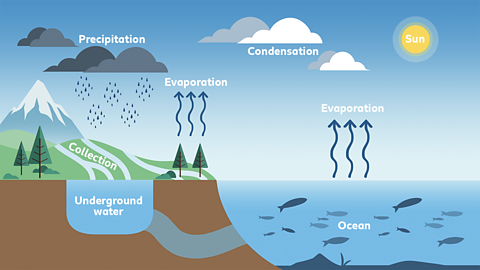
So the sun heats up water in the sea, river and lakes, and turns it into water vapour through evaporation.
Then that water vapour rises into the air.
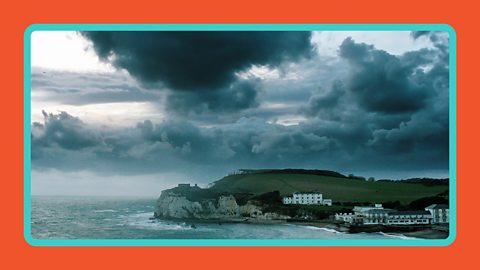
As it rises into the sky, the water vapour begins to cool and condense into water droplets, forming clouds.
Whoa, that looks comfy.
The clouds in the sky are moved around by the wind.
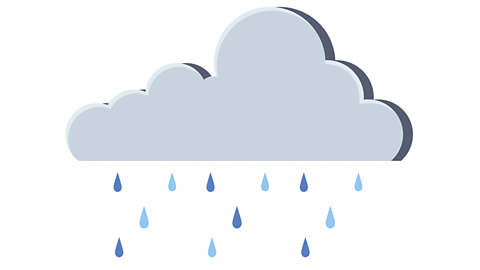
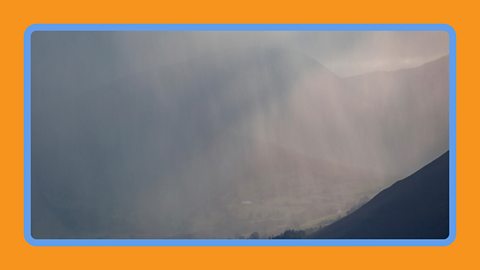
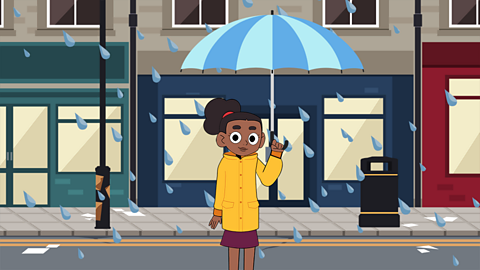
As the water droplets get heavier they fall out of the clouds as snow, hail or rain, which is called precipitation.
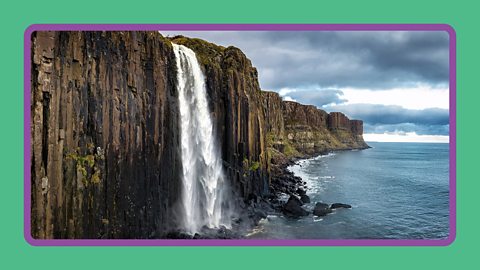
Rains that falls on the land collects in lakes and rivers, which take it back to the sea and the whole process…yep…begins again.
Whoa. Bye then.
Fascinating facts
- Rain has its own smell. It is called petrichor and is produced after rain falls on dry soil.
- On average, it rains one in three days in the UK.
- Rainfall is often presented in the shape of a teardrop. In reality it looks more like an oval or jelly bean.
- It rains on other planets in our solar system, but not water. On Venus it rains sulphuric acid!
- Rivers usually begin in upland areas, when rain falls on high ground and begins to flow downhill.
- Our seas and oceans contain up to 97% of the water on the Earth.
- Around 67% of the Earth is covered by clouds at any one time.
- The UK’s average annual rainfall is around 1,290mm. Some mountainous regions can receive as much as 4,000mm of rain per year.
Stages of the water cycle
Water on Earth is always moving. It is constantly being recycled. This is called the water cycle.
The water cycle is the journey that water takes as it moves from the land to the sky, and back again.
Have a look at the stages of the water cycle.
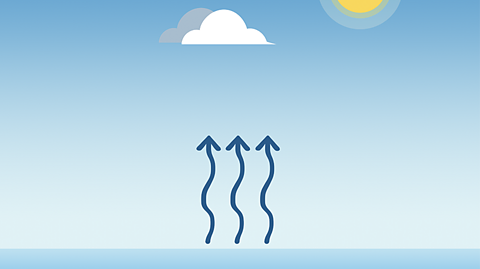
1. Water evaporates into the air
- The Sun heats up water in the sea, lakes, rivers and on land.
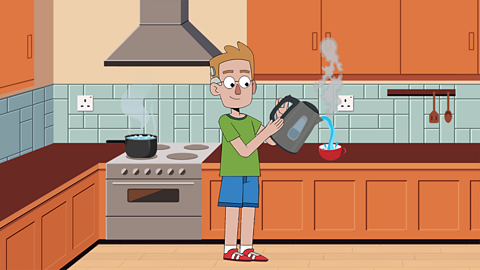
- The warm water turns into a gas which we call water vapour. This process is called evaporation.
- This isn't boiling because the water is cooler than its boiling point (which is 100 degrees Celsius).
- Evaporating is a slower process than boiling.
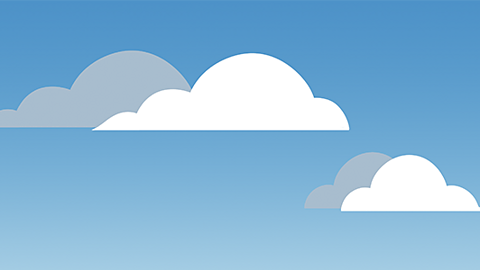
2. Water vapour condenses to form clouds
- As the water vapour rises, it gets colder and condenses.
- This makes tiny droplets of liquid water, which is what clouds are made from.
- The clouds are moved by the wind.
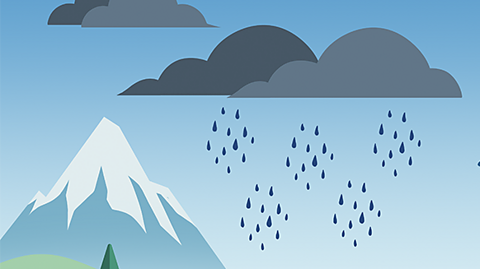
3. Water falls as precipitation
- As the droplets of water in the clouds get larger, they grow heavier.
- Eventually they fall, usually as rain.
- If the air is very cold, the water freezes as it falls and we call this hail or snow.
- Rain, snow and hail are all examples of precipitation.
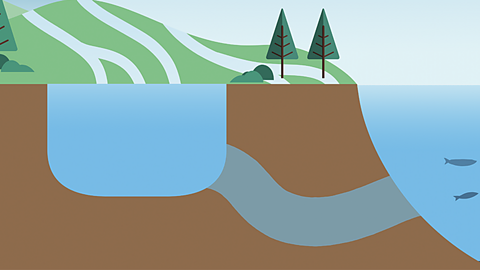
4. The water returns to the sea
- Water that falls on land is collected by streams and rivers. It then travels back to the sea.
- The water cycle starts again!
Slideshow: The water cycle
Image caption, Stage 1
Water evaporates into the air as water vapour.
1 of 4
Did you know?
Depending on how high the clouds are, and how heavy the rain droplets are, it can take between two and seven minutes for rain to reach the ground.
Important words
Collection – Water that falls as rain is collected in seas, lakes, rivers and streams.
Condensation – As water vapour cools down it turns back into a liquid, this process is called condensation.
Evaporation – When water heats up it turns into water vapour, this process is called evaporation.
Precipitation – As liquid water in clouds grows bigger and heavier it begins to fall as rain, hail or snow. This process is called precipitation.
Water cycle – The water cycle is how water moves around our planet.
Water vapour – A gaseous form of water that rises into the air.
Activities
Activity 1 – Order the water cycle
Activity 2 – Water cycle quiz
Activity 3 – Draw the water cycle
New game! Horrible Science: Stinky Space. game
Join Pipette on her epic mission and learn some revolting facts about space along the way.
More on States of matter
Find out more by working through a topic
- count1 of 3
- count2 of 3