What is globalisation?
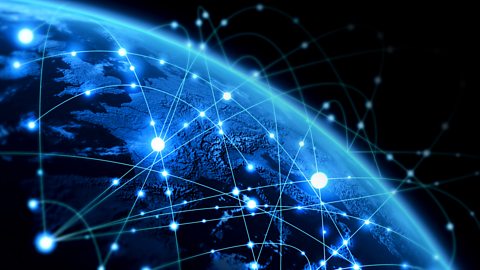
Globalisation is the process by which the world is becoming increasingly interconnected as a result of massively increased trade and cultural exchange.
Globalisation has increased the production of goods and services. The biggest companies are no longer national firms but transnational or Sometimes called transnational corporations (TNC). These are large and powerful businesses that sell products or services in different countries. with branches in many countries.
Globalisation has been taking place for hundreds of years, but has sped up enormously over the last half-century.
Globalisation has resulted in:
- increased international trade;
- a company operating in more than one country;
- greater dependence on the global economy;
- freer movement of capital, goods, and services;
- recognition of companies such as McDonalds and Starbucks in Less Economically Developed Country – usually a poorer country found in South America, Africa or Asia..
Although This is the spread of industry across our world. New developments in transport, in technology, in developing communication links and the internet mean that businesses can sell globally rather than to just a small localised market. is probably helping to create more wealth in developing countries - it is not helping to close the gap between the world's poorest countries and the world's richest.
Most LEDCs continue to provide MEDCs with cheap labour and raw materials, and most of the wealth of the multinational companies goes back to the MEDC in which the company is based.
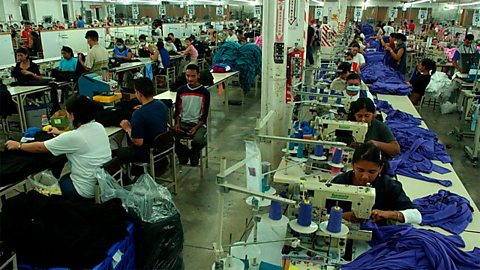
Also international laws are not always strictly enforced so multinationals can operate in LEDCs in a way that would not be allowed in an MEDC. They might pollute the environment, run risks with safety or pay low wages and have poor working conditions for their workers.
Reasons for globalisation
There are several key factors which have influenced the process of globalisation:
- Improvements in transportation - larger cargo ships mean that the cost of transporting goods between countries has decreased. The cost advantages of operating on a larger scale, eg buying more cheaply in bulk and reducing unit costs. mean the cost per item can reduce when operating on a larger scale. Transport improvements also mean that goods and people can travel more quickly.
- Freedom of trade - organisations like the World Trade Organisation (WTO) promote free trade between countries, which help to remove barriers between countries.
- Improvements of communications - the internet and mobile technology have allowed greater communication between people in different countries.
- Labour availability and skills - countries such as India have lower labour costs (about a third of that of the UK) and also high skill levels. Labour intensive industries such as clothing can take advantage of cheaper labour costs and reduced legal restrictions in LEDCs.
Does globalisation help or hinder development?
Globalisation is having a dramatic effect on world economies and on people's lives.
List of the positive impacts of globalisation:
- When a foreign company invests in a country, perhaps by building a factory or a shop. by Trans National Corporations (TNCs) helps countries by providing new jobs and skills for local people. TNCs bring wealth and foreign currency to local economies when they buy local resources, products and services. The extra money created by this investment can be spent on education, health and infrastructure.
- The sharing of ideas, experiences and lifestyles of people and cultures. People can experience foods and other products not previously available in their countries.
- Globalisation increases awareness of events in faraway parts of the world. For example, the UK was quickly made aware of the 2004 Indian Ocean tsunami and sent help rapidly in response.
- Globalisation may help to make people more aware of global issues such as The cutting down of trees and forests to allow a different land use. and The rise in the average temperature of the Earth's surface. and alert them to the need for Economic development which meets the needs of the current population without polluting the environment or depleting natural resources.. Critics of globalisation include groups such as People who work towards or advocate the protection of the environment from destruction and pollution., anti-poverty campaigners and Workers who belong to an organised association that protects their interests when negotiating hours, wages and conditions..
List of the negative impacts of globalisation:
- Globalisation operates mostly in the interests of the richest countries, which continue to dominate world trade at the expense of developing countries. The role of LEDCs in the world market is mostly to provide the North and West with cheap labour and raw materials.
- There are no guarantees that the wealth from inward investment will benefit the local community. Often, profits are sent back to the More Economically Developed Country – usually a rich country found in Western Europe or North America. where the TNC is based. Transnational companies, with their massive economies of scale, may drive local companies out of business. If it becomes cheaper to operate in another country, the TNC might close down the factory and make local people redundant.
- An absence of strictly enforced international laws means that TNCs may operate in LEDCs in a way that would not be allowed in an MEDC. They may pollute the environment, run risks with safety or impose poor working conditions and low wages on local workers.
- Globalisation is viewed by many as a threat to the world's cultural diversity. It is feared it might drown out local economies, traditions and languages and simply re-cast the whole world in the mould of the An economic system based on privately owned, as opposed to state-controlled, businesses and the creation of profit. North and West. An example of this is that a Hollywood film is far more likely to be successful worldwide than one made in India or China, which also have thriving film industries.
- Industry may begin to thrive in LEDCs at the expense of jobs in manufacturing in the UK and other MEDCs, especially in textiles.
Anti-globalisation campaigners sometimes try to draw people's attention to these points by demonstrating against the World Trade Organisation. The World Trade Organisation is an inter-government organisation that promotes the free flow of trade around the world.
This table explains how globalisation affects design and manufacture
| Aspect | Explanation |
|---|---|
| Variations in labour costs | Globalisation allows companies to use cheaper labour in some countries reducing production costs. This can lead to job losses in countries with higher wages. |
| Availability of raw materials | Global sourcing makes it easier to access materials that are scarce or unavailable locally but this can create dependencies on certain regions. |
| Moral issues in outsourcing production | Outsourcing production can raise ethical concerns about working conditions fair wages and exploitation in countries with less regulation. |
| Transportation costs | Shipping materials and products across the world increases transportation costs and can affect the overall price of goods. |
| Environmental costs | Globalisation increases carbon emissions through transportation and production which can harm the environment and contribute to climate change. |
Examples of globalisation
- Smartphone companies - Often design products in the US but manufacture parts in various countries, such as China and South Korea, where labour costs are lower and specialised manufacturing skills are available.
- Sportswear manufacturers - Usually outsource production to countries like Vietnam and Indonesia, where labour is cheaper. Often face criticism for poor working conditions in some factories.
- Electric car companies - Source raw materials like lithium for its batteries from various countries, including Australia and Bolivia, reflecting the global supply chain for raw materials.
- Flatpack furniture industry - Source raw materials and manufactures furniture in multiple countries to keep prices low.
Take the global marketplace and production quiz
More on Market influences
Find out more by working through a topic
- count1 of 2