Quick version
The Yorkshire Dales is an upland limestone are in northern England.
The area is rich in unique limestone features with many caves, potholes and waterfalls drawing visitors.
Most of the area is within the Yorkshire Dales National Park which means the landscape is protected.
Some of the most important land uses are:
- farming: sheep and cattle farming
- conservation: ecosystem, wildlife and cultural heritage
- industry: quarrying rock for construction industry
- recreation and tourism: landscape, heritage and adventure sport tourism
Learn in more depth
The Yorkshire Dales is located in northern England, with the Lake District to the west and the North York Moors to the east.
It has a temperate but unpredictable climate, with wet and windy weather frequent even in summer. The higher ground of the peaks often experience snow and frost through winter. This creates challenging conditions for farming, meaning hardier breeds are favoured for sheep on the hills and cattle in the valleys.
Most of this upland limestone landscape forms the designated Yorkshire Dales National Park so conservation of the natural environment is prioritised alongside promoting tourism and access to the landscape.
The area is renowned for its natural beauty. The scenic rolling valleys (dales) and limestone found in the landscape create many dramatic features such as limestone pavements, cliffs and caves that draw visitors who are interested in the landscape, the local heritage and activities like hill walking or caving.
Climate, geology, relief and history all contribute to the Yorkshire Dales varied land use.
Farming
Farming in the Yorkshire Dales is characterised by:
- sheep grazing on the uplands
- dairy cattle fed from pasture in the valley floors
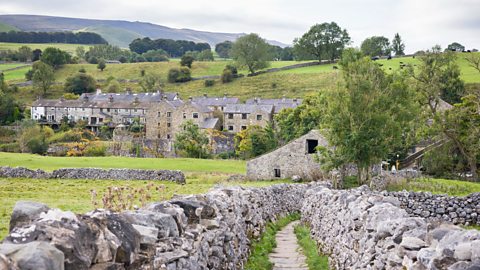
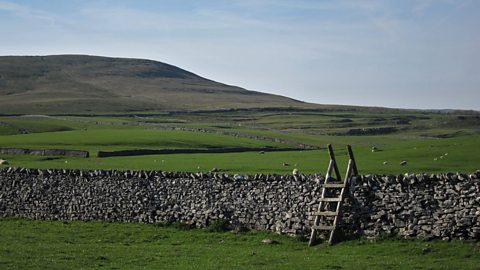
- a landscape of dry stone walls and stone barns
Hill sheep farming takes place in upland limestone areas as sheep are hardy and can cope with challenging weather and poor quality grazing.
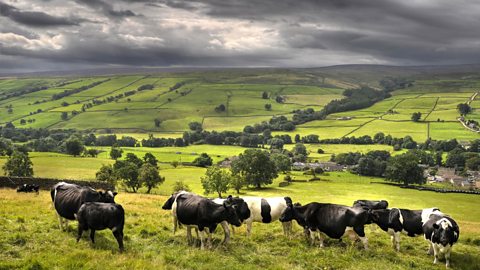
Cattle farming for meat and dairy takes place in the valleys and lower hills where the weather is less extreme, and where there is better pasture to graze because of more fertile soil. Hardier breeds like Highland cows and Belted Galloways are raised as they cope better in more challenging weather conditions.
Crops cannot be grown in limestone landscapes because of:
- poor upland weather conditions
- a lack of surface water due to the A type of rock which allows water to pass through its joints and cracks, eg limestone. limestone
- thin soils and bare rock where there is A surface made up of flat slabs of limestone.
Diversification
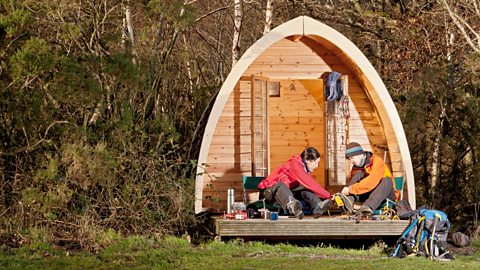
Many farms have When farmers undertake non-farming activities to generate more income. the income from their land to offer tourist accommodation, including holiday cottages, bed and breakfast, and camping. Some farms have set up farm shops to sell their own produce and other local products. Visitor experiences can also bring in more income.
For example:
- Town End Farm in Airton has accommodation in farm cottages and glamping pods.
- Wensleydale Experiences runs farm experiences where visitors can meet animals and join in with farming work like feeding livestock and repairing dry stone walls.
- Mill Close Farm sells its own meat and other local produce online and at its own farm shop.
- Image source, PeteStuart/Gwtty images
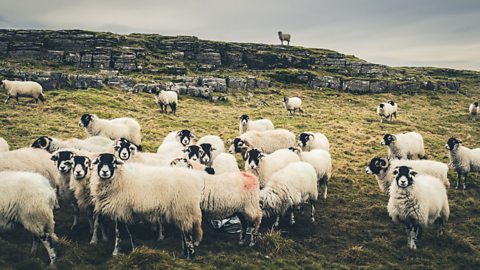
Image caption, Sheep farming
Hill sheep farming takes place in upland limestone areas. Sheep cope well with the challenging weather conditions, rough terrain and low quality grazing.
1 of 3
Conservation
The Yorkshire Dales National Park was created in 1954 in recognition of the area's natural beauty, the diversity of its wildlife habitats, its rich cultural heritage and opportunities for outdoor recreation. It is however still a living, working environment for the 24,000 people living there.
National Park status brings with it the duty to:
- conserve and enhance the natural beauty, wildlife, and cultural heritage of the National Park
- promote opportunities for the understanding and enjoyment of the special qualities of the National Parks by the public
These two aims must be achieved in ways that will also encourage the economic and social wellbeing of local communities within the National Park.
The National Park authority aims to protect the environment for all users include the following:
- national park rangers patrol areas and issue fines for littering
- footpaths can be closed temporarily to allow the vegetation to recover
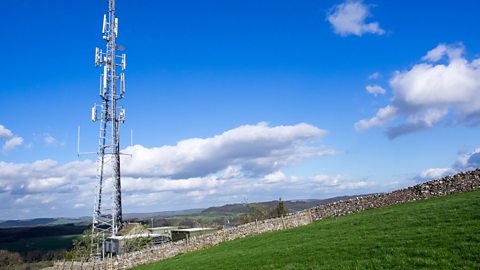
- screening car parks and coach parks to help preserve the look of the landscape
- ensure new housing is for residents rather than holiday homes
The slideshow below outlines key areas and examples of the National Park Management Plan.
- Image source, Callingcurlew23/Getty images
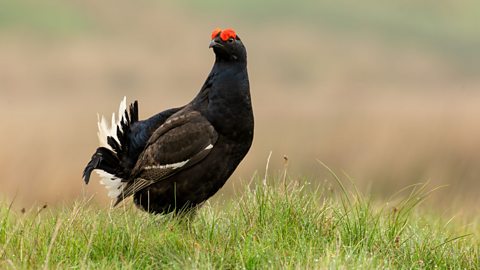
Image caption, Wildlife
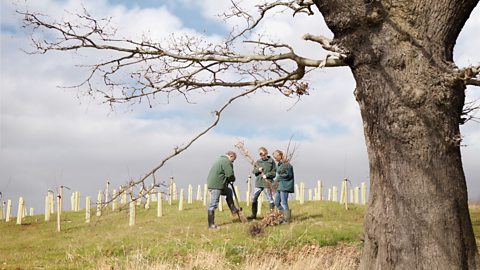
The National Park aims to support farmers and landowners to bring 75% of woodland into sustainable management by 2030. This work will also help to increase habitat for red squirrels and black grouse (pictured).
1 of 6
Industry
Quarrying
In the 18th and 19th centuries, the Yorkshire Dales was one of the primary places for lead mining in the UK. Coal was also mined and the lasting impact of these can still be seen on the landscape in spoil heaps.
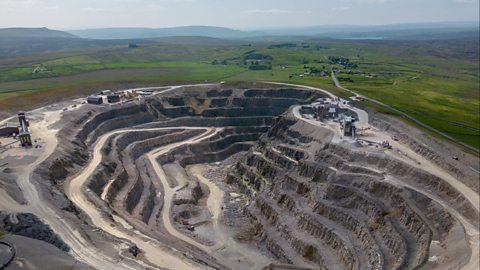
The process of removing rock, sand, gravel or other minerals from the ground. is one of the main industries, alongside farming and tourism The process of making money and any form of employment that makes money. Types of industry include primary industry such as farming, secondary industry such as manufacturing, and tertiary industry such as hospitality and tourism..
- Around 4.5 million tonnes of rock are quarried each year.
- The main rocks quarried are A type of sedimentary rock formed between 363 and 325 million years ago. and A hard sandstone that is quarried for building material..
- Most of the rock is used in the construction industry.
- One of the largest A place where materials such as stone are extracted from the ground. is Swinden Quarry, offering local employment.
Food and drink industry
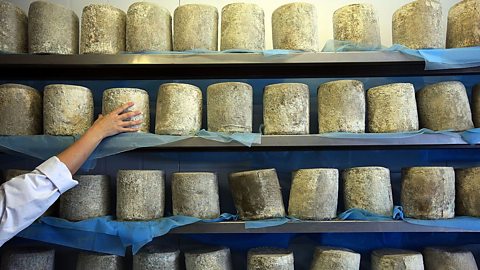
The Yorkshire Dales have a long history of industries related to farming. Dairy products, including the well known Wensleydale Cheese, have been made for centuries, as have wool and textile industries
Local produce
Businesses sell local produce, including meat, cheese and crafts, which visitors buy as part of their experience of the area.
Events like the annual Yorkshire Dales Cheese Festival attract visitors and encourage them to buy local produce.
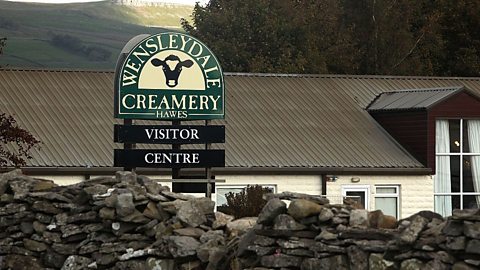
Food and drink businesses diversify to increase sales and income, for example the Wensleydale Creamery runs tours and demonstrations, Mill Close Farm sells its own meat and other local produce online and at its own farm shop.
- Image source, Philip Silverman/GETTY IMAGES
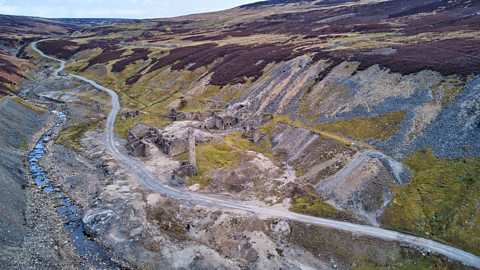
Image caption, Past industry
Tourists want to see the beautiful and unusual scenery of the Yorkshire Dales, but old industry might be considered to spoil the natural beauty of the landscape. Disused Old Gang lead smelting works, Swaledale, Yorkshire
1 of 4
Recreation and tourism
Visitors have been travelling to the Yorkshire Dales since the 18th century when writers and artists sought out the dramatic landscapes.
- The growth of the rail network in the 19th century brought increased numbers.
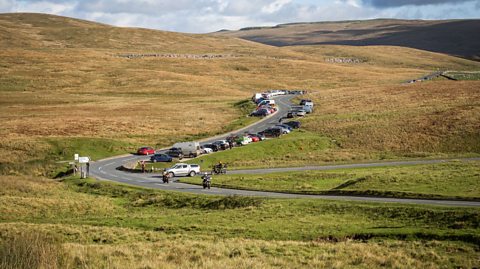
- The most dramatic growth came in the late 20th century as a result of the rise in car ownership. More than 90 per cent of today's visitors arrive by car.
Landscape tourism
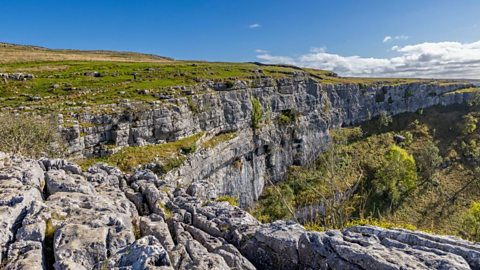
- Visitors go to the Yorkshire Dales to admire the distinctive scenery and landscape, such as Malham Cove, Gordale Scar and the waterfalls at Aysgarth and Ingleton.
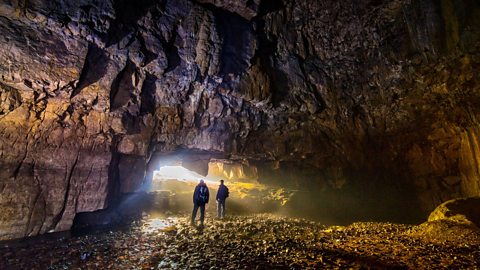
- Tourists and school children visit limestone caves, eg White Scar Caves, to admire the many Different rock formations created by water dripping through the ceiling of a cavern and depositing calcium carbonate eg stalactites. such as the Witches Tongue.
- Freeholders’ Wood, consisting of ancient semi-natural woodland, has trails and a variety of wildlife to see.
Heritage tourism
- People enjoy visiting the traditional quaint little 'Areas which have many tourist attractions and services to attract people away from fragile places.' villages such as Malham.
- Tourists like to find out about the history of the area at The Dales Countryside Museum.
- Farfield Mill is a Victorian textile mill which has been converted to preserve the local textile heritage and create a cultural hub supporting local artists.
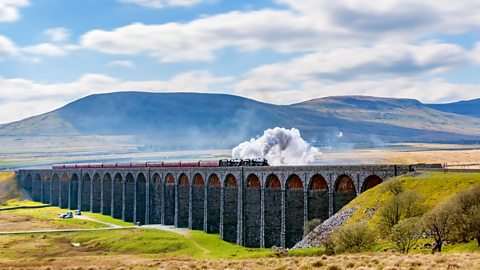
- Visitors can travel through the Yorkshire Dales on the Embsay & Bolton Abbey Steam Railway
- Malham Smithy runs traditional blacksmith experiences and courses
Adventure tourism
- Many visitors come to the area for hill walking and there are also a number of walking routes in the area like the Pennine Way.
- The steep walls of scars and dry gorges make climbing and abseiling popular.
- Other activities such as potholing, caving are very specific to the features of the underground limestone landscape.
- Cycling and horse riding are also enjoyed in the Yorkshire Dales due to the well preserved and rolling landscapes.
- Image source, Loop Images/Getty Images
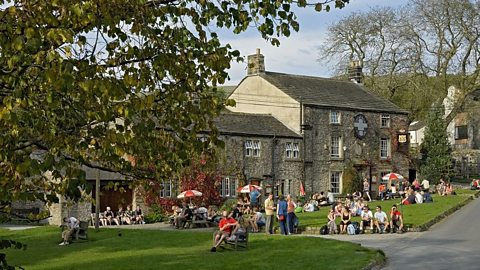
Image caption, Local history and life
Traditional 'quaint' villages like Malham attract visitors all year round along with local history museums
1 of 4
Quiz
Recap
Three land uses which are particularly important in the Yorkshire Dales are:
Farming
- sheep are farmed on higher ground as they cope well in challenging weather and with poorer grazing.
- beef and dairy cattle are raised in more sheltered conditions in the valleys, where there is better pasture.
- crops cannot be grown in limestone landscapes easily
- many farmers have diversified their income with holiday rentals, farm shops and farm experiences.
Conservation
- the Yorkshire Dales status as a National Park makes conservation a priority
- species like red squirrels, black grouse and rare orchids are protected
- the historic built environment of dry stone walls and stone farm buildings is also protected
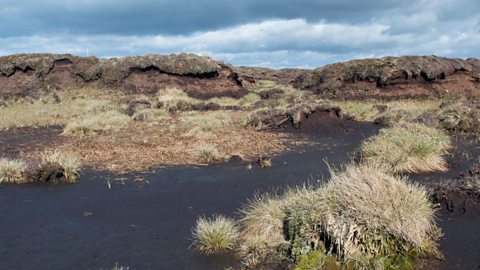
- climate change is mitigated through restoring peatlands
Industry
- quarrying is an important industry, with limestone and gritstone going on to be used in the construction industry.
- food and drink made from local produce, for example Wensleydale cheese, have a long history in the area and bring income through visitor experiences as well as sales.
Recreation and tourism
- since the 18th century, tourists have visited for the dramatic limestone landscapes
- the varied landscape and limestone features make outdoor activities like hill walking and adventure sports like potholing and climbing popular
- heritage tourism brings visitors to traditional villages like Malham, and the Embsay & Bolton Abbey Steam Railway
More on Upland limestone landscapes
Find out more by working through a topic