What are wetlands?
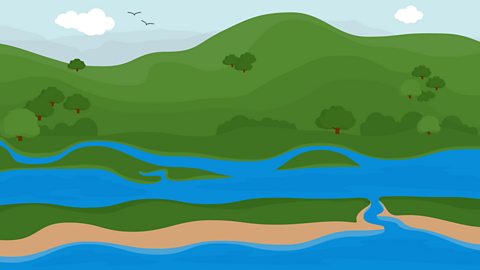
Wetlands are areas of the land that are covered by water for most of the time. They can form naturally or be man-made.
Watch: Learn about different wetlands in the UK
Learn about the different bogs, fens and wetlands that are in and around the UK.
If I told you I was visiting a bog, you might be wondering why I look so happy, but just look at it!
I'm Jude and today I'm at Flanders Moss in Scotland to find out why wetlands are so important.
A wetland is just what is sounds like - an area of land that is very wet. There might be water on the surface where you can see it, or the soil itself is often completely soaked in water like a gigantic sponge.
The plants that grow here have changed and adapted over millions of years to cope with living in so much water, like this stuff which is called sphagnum moss. When the moss dies, it begins to rot and sinks into the water to form a layer.
More moss grows, dies, sinks and makes another layer on top and so on and so on. The layers at the bottom get squashed and compacted to make a thick brown soil called peat.
About 1mm of peat forms every year and here at Flanders Moss, the peat is 7m deep in some places, that's taken over 8,000 years. When it's dried out, peat burns really well, so it's been used to heat peoples homes for many years.
In the UK, we have lost nine-tenths of our wetlands in the past 100 years and that can be a problem. The reason is because not only are wetlands home to all kinds of rare plants, birds and animals, they also help to tackle climate change.
They soak and store up a lot of water which stops nearby towns from flooding. They also reduce carbon dioxide levels in the air, which is good for the environment.
Plants take in carbon dioxide during the day and store it as carbon, but then they lose some of it during the night and also when they're burned for fuel and eaten.
But peat locks the carbon away in the mud for hundreds or thousands of years so we really need to look after the wetlands we have left.
This is Fiskerton Fen in Lincolnshire. A fen is another kind of wetland, but unlike a bog, which gets its water from rainfall, a fen's water seeps through from the rock underground.
In 2004, this place was a clay pit where huge diggers were removing the earth for building work, but it has been restored and now is this amazing wetland, where rare birds and plants can live.
Wetlands are so important for the environment and they're great places to visit as well. Find out where your nearest wetland centre is and don't forget to bring your boots or wellies.
Is that a bird of prey?
Where are wetlands?
- Wetlands are found on every continent apart from Antarctica.
- The climate in the UK is perfect for wetlands.
Types of wetlands
Different types of wetlands form in different ways, depending on where they are and how much water they have. Depending on their location, the water in wetlands can be saltwater, freshwater or brackish water - a mixture of the two.
There are four main types:
Bogs
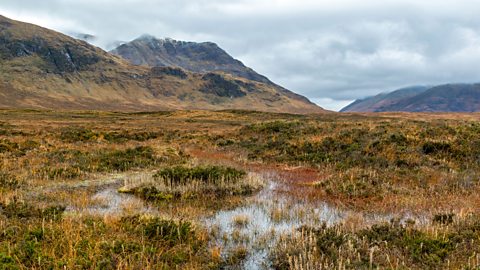
Bogs form when standing water, such as lakes, slow-flowing rivers or areas under high rainfall fill up with dead plants and it becomes spongy, wet soil. Rainwater is the main source.
The soil doesn't have many nutrients needed for plant growth, so mosses and heaths are the most common plants. Bogs are home to butterflies and insects, who feed on the flowers of the plants in the bog.
Fens
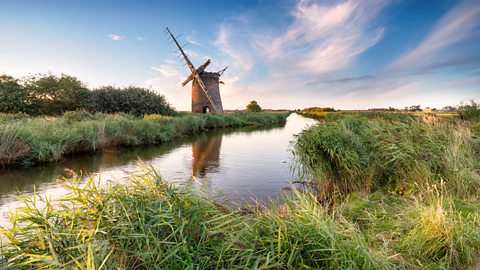
Fens are in the lowlands of the UK that are always full of groundwater. As they are always waterlogged, plant material can't rot away and it builds up to form peat. Peat doesn't have many nutrients, so only certain plants, such as mosses or sedges can grow in it.
Bogs and fens are both waterlogged areas of land - bogs by rainfall and fens by groundwater.
Marshes
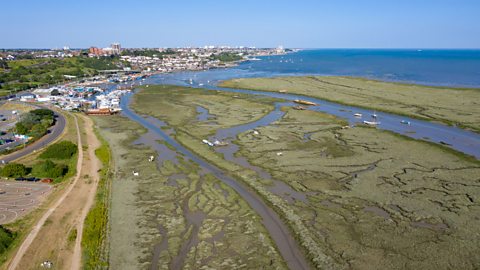
They form near rivers and along seacoasts. Often, they are found at river mouths, where the river meets the sea. The water in marshes can be either salty or fresh. Salt marshes can be found along coasts, particularly around estuaries.
Usually there are no trees, and grasses and reeds are typical for marshes. The areas are home to birds and small animals, such as newts, crabs and turtles.
Swamps
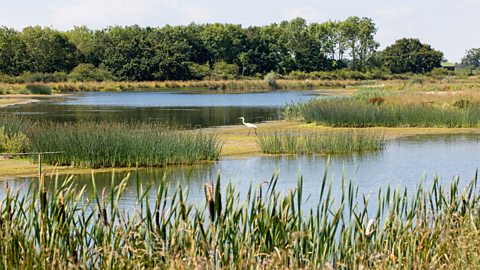
Swamps can have either salty or fresh water and form in an area that is flooded by a river. Saltwater swamps form near coastlines and there are freshwater swamps in the Scottish Uplands.
Swamps are rich in wildlife, and are home to animals such as fish, birds and frogs.
Why are wetlands important?
Wetlands are incredibly important for many reasons:
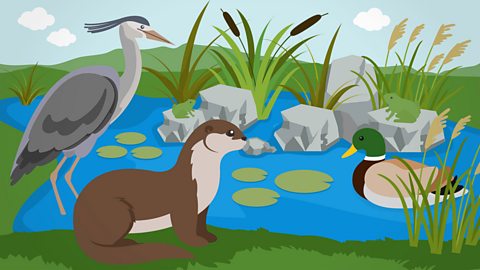
- They are home to a wide variety of plants and animals.
- They filter and clear water.
- They can slow down flooding and protect homes.
Activities
Quiz: Type of wetlands
Quiz: Wetlands

Race Across the Continents game - new update! game
Help this team of adventurers race their way to victory. Explore the globe in this exciting game update to discover new audio voiced by Ade Adepitan and fun animations. Challenge yourself with brand-new achievements and become a high-flyer!

More on Geography of the UK
Find out more by working through a topic
- count5 of 16
- count6 of 16
- count7 of 16
- count8 of 16