Key points about Bartók: Hungarian Pictures
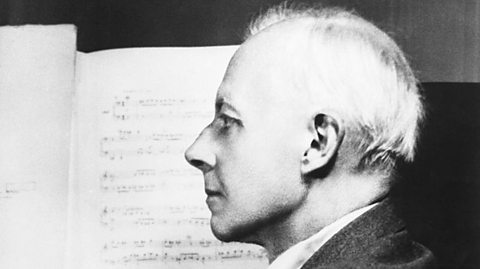
Béla Bartók (1881–1945) was a Hungarian composer who was particularly interested in the folk music of his country.
Hungarian Pictures was originally composed for the piano between 1908-1911, and then orchestrated in 1931. The first performance took place in 1932.
Bartok's interest in folk music inspired his work. This is seen with the frequent use of modes rather than scales with actual folk melodies and rhythms appearing throughout his music.
This suite is programmatic which means each movement tells a story and captures different moods.

Remember
The movements you will study for your exam are:
- Movement 1 – An Evening in the Village
- Movement 2 – Bear Dance
- Movement 4 – Slighty Tipsy
- Movement 5 – Swineherd’s Dance
You will NOT be studying Movement 3 from Hungarian Pictures.
Video
Watch the video below to learn more about the different movements of Bartók’s Hungarian Pictures.
Béla Bartók was a 20th century Hungarian composer and pianist. He studied folk music and its influences clear in his compositions. A typical feature of folk music is that it's often programmatic, meaning it tells a story. This is true of his orchestral suite. Hungarian pictures. Hungarian Pictures has five movements and is scored for a large symphonic orchestra. Completed in 1931 and first performed in Budapest in 1932, it's based on short pieces wrote for piano that Bartók wrote between 1908 and 1911.
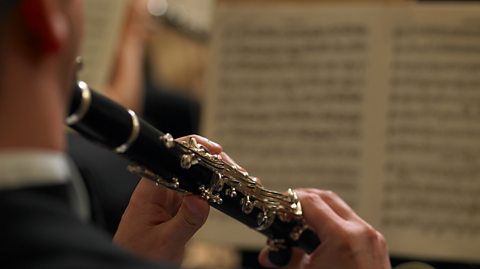
Movement One and Evening in the village is written for strings, woodwind and French horns. It has a homophonic texture, that's melody and accompaniment, and the melody is based on the Dorian mode. Remember, modes originated in folk music and were common in early music. They evolved into the major and minor scales we know today. An evening in the village has a slow rubato or free flowing a section featuring a quiet conjunct melody on the clarinet.
Let's hear it.
The contrasting B section is allegretto.
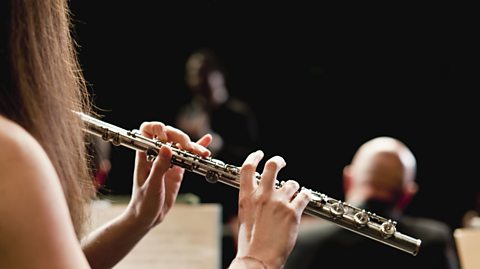
Here's the melody on the flute.
Movement two is called Bear Dance. It's allegro vivace. That means fast and lively. Bartók plays around with the time signature from two beats in the bar to three to depict the lively movement of the creature. He also adds dramatic driving quavers on the snare drum.
Movement four is called slightly tipsy and gives variations in tempo that give the music an unstable feel. The melody features acciaccatura, which are musical ornaments, also called grace notes. They're very quick notes that come in before the main note.
Have a listen.
In the middle of the movement, Bartók creates contrast by having the string section play con legno bouncing the wooden side of their bows on the strings. Offbeat chords are followed by legato playing.
Movement five, the Swineherd's Dance is the only movement to feature an original folk melody. A pentatonic tune on the clarinet.
Let's hear it!
The flute then takes over the melody with semiquavers, which makes the dance feel frantic, adding to the programmatic nature of its orchestral suite.
Movement 1 - Este A Svékelyeknél – An Evening in the Village
This piece has two sections, A and B, which are presented as follows (the numbers represent a slight variation in the section):
A-B-A1-B1-A2
There is a kind of symmetry to this structure - arch form, something for which Bartók was well known.
Tempo and tonality
It can be difficult to identify a key to this section because Bartók avoided traditional Pairs of chords in which the harmony marks the end of a musical statement (eg perfect, plagal, interrupted and imperfect). and A sequence of chords.
The speeds change between sections A and B:
- A sections - SlowlyWhen the music is played with more rhythmic and expressive freedom.
- B sections - Moderately fast
Most of this movement is in 4/4, however at the end of the movement, there are some bars of 3/4 and 2/4 which contribute to the uncertainty of 'the evening'.
Section A - 0:00 - 0:37
Tempo - Lento Rubato - played slowly, with rhythmic and expressive freedom.
Tonality - feels like F# minor. Solo clarinet accompanied by muted strings.
Section B - 0:38 - 0:58
Tempo - Allegretto - played moderately fast.
Texture and tonality - solo flute accompanied by pizzicato strings and sustained woodwind and horns. There is an unexpected chord of D# minor.
Section A1 - 0:59 - 1:31
Tempo - Lento Rubato - played slowly, with rhythmic and expressive freedom.
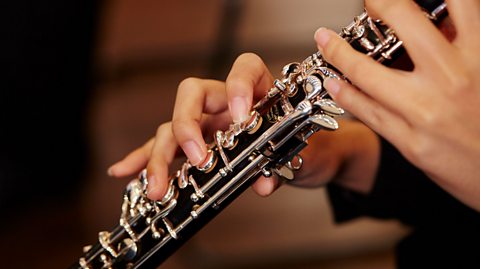
Tonality - starts in D major but ends in F# minor. The melody from A is played by a solo oboe this time, accompanied by strings which are now unmuted.
Section B1 - 1:31 - 1:52
Tempo - Allegretto - played moderately fast.
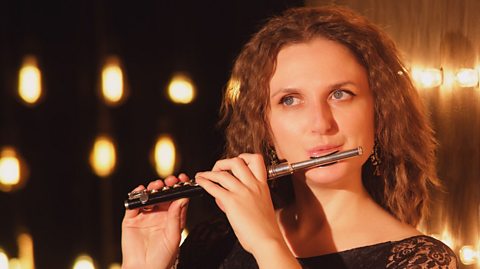
Texture and tonality - the tonality is the same as in Section B. A decorated version of the melody from Section B is played by the piccolo but this time an octave higher. This is accompanied by pizzicato strings with the clarinets and horns playing sustained notes. In the second half of this section, the other woodwind enter and play short phrases with many trills.
Section A2 - 01:53 - end
Tempo - Lento Rubato - played slowly, with rhythmic and expressive freedom.
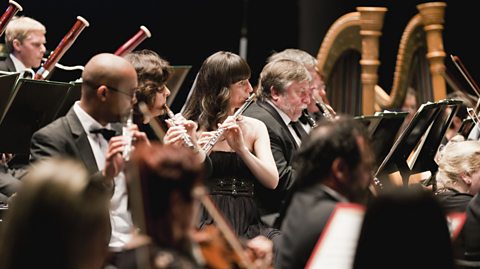
Tonality - begins ambiguously but closes in F# minor. The section A melody returns, this time in a unison texture, played by the flute, oboes and clarinets. The strings interject with sustained legato phrases. The strings put their mutes back on for the final phrase and so do the horns.
Harmony
Bartók used non-functional chords which creates uncertainty in the tonality overall. As well as this, he uses the The 6th mode of the major scale. on F# in the A section:
Melody
Both melodies in A and B are based on the minor pentatonic scale beginning on F#.
The melody of A is mainly a descending legato phrase. It's the musical equivalent of giving a relaxing sigh at the end of the day.
Both the Aeolian mode and the minor pentatonic scale on F# were typically used in folk music.
In contrast, B’s melody is staccato and conjunct quavers over short pizzicato, suggesting that not everyone’s evening is calming. The When two notes are played alternatively in quick succession. which come in B1 also contribute to this busy feeling.
Watch this clip to hear the flute playing the staccato melody with conjunct quavers.
Texture
The texture is mainly melody and accompaniment, with different woodwind instruments taking the solo line.
The accompaniment is always chordal, either in long held notes or pizzicato crotchets.
Dynamics and articulation
In the score, Bartók gives detailed markings for dynamics and articulation.
The movement explores a range of dynamics, from ppp to f, with crescendos and diminuendos in between. The contrast between the legato and staccato articulations contribute to the overall evening feel.
Movement 2 - Medvetánc – Bear Dance
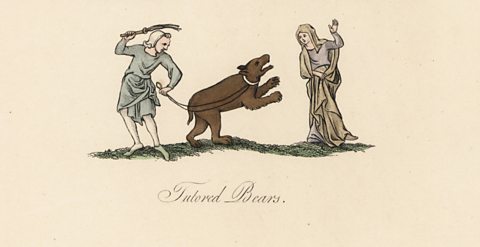
Bartók wrote that this movement was 'the impression of a bear dancing to the song of his leader and growling to the accompaniment of a drum.' This was a folk tradition which began in the Middle Ages in Eastern Europe, where a chained bear would be trained to dance for entertainment. This is now illegal in Europe.
Like the first movement, there are two main sections which create a varied A musical form in which a verse or passage is repeated. A strophic song refers to music in which every verse or chorus is sung to the same music. form with symmetry. The best way to identify each section is by listening for the A single note that is held on, or repeated, in the bass.
| Section and timestamp | Features of note |
|---|---|
| A - 00:00 - 00:15 | Pedal on D. The pedal is in the cellos, double basses, horns and tuba. |
| B - 00:16 - 00:32 | Pedal on Ab. The pedal is in the 2nd violins |
| A1 - 00:33 - 00:51 | Pedal on D |
| B1 - 00:52 - 01:11 | Pedal on Ab |
| A2 - 01:12 - end | Pedal on D |
Remember
For the AQA listening exam you do not need to study the score or memorise bar numbers. It is important to know the sections and the musical features.
Tonality and harmony
There is a lot of Notes that sound harsh or unpleasant when played together at the same time. in this piece so it is hard to work out if there is any key or tonality to it.
The movement does end on a D major chord and it is a D pedal note in section A.
The move from D to Ab in terms of the pedal notes is a An interval of 3 whole tones, or an augmented 4th. a very dissonant interval.
Melody
The main melody of the A section is based on the Aeolian mode on D#:
Most of the melodies are four bar phrases. The melodies are quite dissonant.
The melody of section B is based on the Lydian dominant scale:
The melodies are mainly stepwise in B, but again dissonant, which adds to the excitement of the bear dance.
Sonority and instrumentation
In addition to the strings, French horn and woodwind in the first movement, the composer introduces two trumpets, two trombones, a tuba, contrabassoon, timpani and two side drums.
The side drums play without the snares at the start, but with snares in section B. The brass sometimes play with their mutes and like the first movement, the strings are bowing and playing pizzicato.
A triangle is used in A1.
Texture
The texture revolves around the pedal notes which provide a rhythmic drone in the movement. The melodic line is harmonised in 3rds, 6ths and octaves by other instruments and moves in block chords.
Metre and rhythm
The excitement and anticipation of the dance is reflected by the repeated quavers in the pedal and on the snare drum. The melody line is mainly crotchets which is from the Hungarian kanász - a type of folk dance.
Dynamics and articulation
The dynamics range from p to f with some sf - sforzando - articulations to maintain the excitement. There is a lot of staccato playing.
Question and answer
What is the structure of the first two movements of Bartok’s Hungarian Pictures?
A - B - A1 - B1 - A2
Movement 4 - Kicsit Ázottan – Slightly Tipsy
This movement is in ternary form, with the return of A being developed.
| Section and timestamp | Notable features |
|---|---|
| A - 00:00 | Quaver melody featuring many acciaccaturas in the strings. The violins play col legno, meaning they play with the wooden part of the bow. |
| B - 00:39 | This consists of two motifs. The first is an off-beat accompaniment pattern, which alternates with a second legato melodic phrase. |
| A1 - 01:37 | The material from A is significantly developed. |
There are a lot of features about the following elements which gives the ‘tipsy’ and mischievous feel to the music.
| Element | Feature |
|---|---|
| Tonality and harmony | These are both ambiguous, potentially a humorous feature. The music does begin in a major tonality, with section B moving to a minor key - starting in G minor. There are a lot of parallel chords, with chromatic harmonies and dissonant chords with added notes, all contributing to an unclear tonality. |
| Melody | The main feature of this is the many acciaccaturas which decorate almost every note of the opening melody. The opening melody is characterised by the interval of a perfect 4th, whereas the second motif descends by step. |
| Sonority | This movement is mainly for the woodwind and strings, who sometimes play col legno. At the start, they are instructed to play with mutes at the tip of the bow to give a quieter, thinner sound. |
| Texture | The music is in 4/4, with a few bars of 2/4 and one bar of 5/4, which makes the phrasing feel less regular. The Allegretto Rubato means that the music is quite quick but also is quite free. The music speeds up and slows down in a number of places. There is mainly quaver movement with a pattern similar to that of the bear dance. |
| Dynamics and articulation | The dynamic range is from pp to f, with changes to throw the listener off balance. The specific articulation of slur-staccato feels like the music is swaying. |
The acciaccaturas which decorate almost every note of the opening melody help to give this movement its 'tipsy' feel.
Movement 5 - ‘Ürögi Kanásztánc – Swineherd’s Dance
The structure of this movement has more sections than other movements of the Hungarian Pictures. It is based on a folk tune which Bartók collected and recorded in Tolna County in 1907.
| Section | Features of note |
|---|---|
| Introduction - 0:00 | A drone can be heard, as well as fragments of the folk tune. |
| A - 0:12 | The first half of the folk melody is played - bars 1-16 |
| B - 0:32 | The second half of the folk melody is played - bars 17 to 33. |
| B1 - 0:48 | Bars 17 to 33 with some small changes. |
| 4 bar link | 4 bar link |
| A1 - 01:08 | Based on bars 1-16, first half of the folk melody. |
| 3 bar link | 3 bar link |
| B2 - 01:26 | The second half of the melody is fragmented and developed and the final two bars are omitted. |
| Coda | Based on the final two bars of the folk tune. |
Tonality and harmony
Based on another mode, the tonal centre of this folk tune is A (as indicated by the drone) and it is in the mixolydian mode.
The B section moves to a drone note of D but does return to A for the second half. There are some G#s in the second half of B which give a stronger sense of G major.
Melody
The melody is based on the mixolydian mode on A – it sounds like A major with a flattened 7th (G natural).
The opening of the melody contains leaps of 4ths and 5ths, followed by stepwise movement. The pitch of the melody is quite high.
Sonority and texture
The main folk melodies are played by the woodwind, including piccolo, flute, oboe and clarinet.
The strings play both bowed and pizzicato, as well as with and without mutes.
At the end, two solo violins play harmonics. Bartók was also specific in requiring violins to play on the G string, which gave a richer sound.
The movement is predominantly melody and accompaniment.
Metre, tempo and rhythm
The metre is in 2/4 throughout.
The Allegro molto gives a quick and lively feel, with some moments of calm and changes in tempo.
An A repeated musical phrase or rhythm. rhythm accompanies many of these sections:
There are syncopated horn and trumpet melodies.
Dynamics and articulation
The dynamic range is from pp to ff with many crescendos and diminuendos.
There are many details in the articulations – the melody itself is a combination of slurs and staccato.
Question and answer
Give an example of an ornament used in any of the movements in the Hungarian Pictures.
acciaccatura or trill
Hungarian Pictures quiz
More on Western classical tradition 1650 to 1910
Find out more by working through a topic