Narrator: Is that a good book you’re reading?
Inspector: It’s great! It’s about a crime.
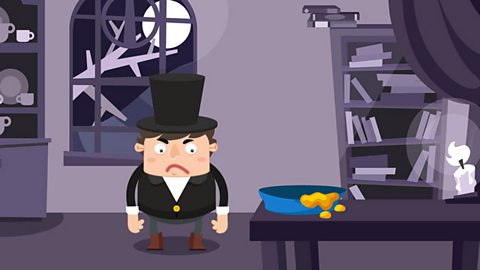
Look someone has stolen Lord Fartbasket’s custard pies!
They’re his favourite pudding, and he’s very angry!
He thinks it must have been the housekeeper or the dog.
And…I know who did it!
Narrator: So the story tells you who the thief is?
Inspector: No! But if you read very carefully there are clues and you can work it out by inferring.
Look, it says here that the housekeeper is looking nervous.
Why is she nervous?
And here it says that there is a yellow stain on her apron.
Why? Because she was eating the custard pies!
Narrator: Ahh, that’s clever. So what happens next?
Inspector: He says…he says it must have been the dog!
He’s a fool!
Now the housekeeper is going to get away with it!
No…hang on…the dog knew it was her too!
And she was hiding a pie under her dress all along!
Narrator: That is a good book - made you think past the obvious and read between the lines.
Inspector: Yes!
And I was right!
I found the evidence to prove my case.
Description
Inferring is a bit like being a detective. You have to find the clues to work out the hidden information.
Imagine the main character in a story skips into a room, smiling brightly and waving to their friends. You could infer that the character is happy.
The text hasn’t told you the character is happy, but you can work it out from the clues given.
Now playing video 2 of 4
- 4 of 4