Overview of Before You Were Mine by Carol Ann Duffy
- Before You Were Mine is an address to Carol Ann Duffy's mother.
- Duffy responds to an old photograph, imagining the life her mother lived in the 1950s before she was born.
- The poem has a nostalgic tone as Duffy imagines her mother's carefree youth.
- Duffy also reflects on the sacrifices her mother made in taking on the duties of a parent.
The poem deals with themes like youth, love, and happiness.
Looking for some quick revision? Try an interactive quiz for Higher English.
You can read Before You Were Mine by Carol Ann Duffy on the Scottish Poetry Library website.
Form and structure
The poem Before You Were Mine is written in four stanzas, each with five lines.
It is written in Poetry that doesn't have an intentional rhythm or rhyme, but instead can sound more like speech with a lack of rhyme. This is typical of Carol Ann Duffy's poetry and adds to the intimate, conversational tone of voice.
The poem ends with a repetition of the title, adding a cyclical effect that frames the reflections and images of the earlier verses.
Similarly, the poem begins and ends with a happy image of Duffy’s mother, creating a feeling of completion and leaving us with a lasting impression of her mother’s joyous, youthful spirit.
Stanza one

Opening with the specific use of “I’m” and “you” in the first line, we immediately know that Duffy is speaking as if to her mother directly. Combined with "ten years away", there is a sense of distance in both time and connection between the poet and this younger version of her mother:
I’m ten years away from the corner you laugh on / with your pals
The word “corner” hints that her mother was at a turning point, on the verge of adulthood. This emphasises her youth, particularly in connection with the informal tone of the word “pals” in line two.
We see a scene of independence and joyful, carefree friendship with phrases such as:
- “holding/each other”
- “shriek at the pavement”
The combination of "bend from the waist" and "shriek" suggests the friends are overcome with laughter - they are lost in the moment and unconcerned with how they appear.
This contrasts with the following image. A combination of the “polka-dot dress” and reference to Marilyn Monroe not only sets the scene of the 1950s but paints a picture of Duffy’s mother being a glamourous, beautiful woman in her youth.
Your polka-dot dress blows round your legs. Marilyn.
Marilyn Monroe was spoken of at the time as a sex-symbol as much as an actress, and the reference suggests Duffy's mother's freedom and sexuality. The final minor sentence sounds authoritative. The comparison of the mother and the actress is very definite.
Stanza two
Stanza two opens bluntly with “I’m not here yet”. It's a sudden intrusion into the glamorous imagery. This image of parenthood remains like an unseen threat as Duffy returns to her mother's carefree youth and the image of Marilyn Monroe:
the fizzy, movie tomorrows
This suggests the excitement of cinema, and the happy, romantic endings portrayed in Hollywood films. The idea of alternate futures possible after “the right walk home” is suggested in the following line. Walking home is a reference revisited in the final stanza, although with very different connotations.
We gather that “the thousand eyes” of the ballroom are fixed on her mother and can again picture her beauty and magnetism. Perhaps these eyes belong to men who the mother might make her walk home with.
Duffy tells her mother, “I knew you would dance/like that”, leaving us to conjure the image of skilful, energetic dancing. This thought it interrupted by Duffy’s repetition of the poem's title. "Before you were mine", mention of her mother’s mother (highlighting to us the life before Duffy was born) and the threat of “a hiding for the late on” reveal the risks of the young woman's carefree life.
You reckon its worth it.
This minor sentence suggest this rebellious young woman has weighed up her life and decided freedom and fun outweigh the consequences. The image of the younger woman directly contrasts the older version we see in stanza four.
Stanza three
A slight hint at regret comes into Duffy’s voice with the first line of stanza three, as she describes her “loud, possessive yell” and acknowledges that her mother probably preferred life before having Duffy.
 Image source, Maria Galan Still
The description of “high-heeled red shoes” as “relics” suggests that Duffy is acknowledging that the glamour and excitement of her mother’s life is behind her, and the combination of these two lines lays the blame for this at Duffy’s feet:
I remember my hands in those high-heeled red shoes, relics
"Relics" suggest artefacts from a historical figure, or even their remains, so the image brings a hint of death. This idea is continued in the image “your ghost clatters towards me”. This suggests that there are still moments when Duffy can see her mother as she once was, but the clumsy connotations of “clatters” belie the awkward movements of a now older woman instead. This is a stark contrast to the graceful dancer seen earlier.
till I see you, clear as scent
"Clear" could mean that Duffy has an unobstructed view, and a better understanding of her mother, But the word has a double meaning. The simile "clear as scent" suggests transparency. Like perfume in the air, there is a sense that Duffy's mother is there but cannot be seen.
and whose small bites on your neck, sweetheart?
The question posed in the final line of stanza three suggests that Duffy is the older woman, perhaps taking the place of her grandmother, enquiring about what her daughter has been up to.
Image source, Maria Galan StillStanza four
“Cha cha cha!” gives us a brief flash of Duffy’s mother reliving her youth as she teaches dance steps on the way home from church, but this walk home contrasts the one in stanza two and the reference to “Mass” contrasts her mother’s heady, carefree youth with the formal, religious Catholic upbringing Duffy is receiving.
Cha cha cha! You’d teach me the steps on the way home from Mass
We feel a tinge of irony as Duffy’s mother now takes on the role of the “Ma” mentioned in stanza two, and the mention of “the wrong pavement” tells us that this is not who she wants to be.
stamping stars from the wrong pavement.
The idea of stars in a pavement refers to the Hollywood walk of fame. But the glamour of the movies is now a contrast to Duffy's mother and her life. Duffy closes the poem with her own desires for her mother to be the girl she once was, “winking in Portobello”, and tells us with a nostalgic sadness of how she loves this girl she never knew.
I wanted the bold girl winking in Portobello, somewhere / in Scotland
Although "I wanted" still hints at Duffy possessing her mother, she expresses regret that her own existence took so much away from her.
What are the themes in Before You Were Mine?
Youth and happiness
Much of Duffy’s poetry focuses on themes of youth and the happiness. This poem shows Duffy’s mother as a happy, vibrant woman enjoying a carefree life. She contrasts this with the more serious picture of her as an adult, clattering across George Square, or walking Duffy home from Mass. While there are still glimmers of the younger woman, the overall sense is of regret and sadness that the duties of motherhood have robbed the mother of a different life.
Love and nostalgia
The love shown in this poem isn’t as straightforward as a mother-daughter relationship might seem at first. Instead, Duffy is in love with the idea of who her mother used to be. While reflecting on this image of her as a younger girl, Duffy feels nostalgia for a version of her mother that she never really knew, and guilty for taking that freedom and joyous youth away from her and replacing it with her “loud, possessive yell”.
Comparing Before You Were Mine with other Carol Ann Duffy poems
With its strong contrast between the before and after of Carol Ann Duffy’s mother’s youth, Before You Were Mine pairs well with Originally, which covers a significant change in Duffy’s life as she moves from Scotland to England. The notion of who she is as a person, and where she calls home, is posed to the reader, which is similar to the questions about identity raised in this poem.
In Mrs Tilscher’s Class has a similar feeling of nostalgia for the simple, carefree days of youth. The feeling of being on the cusp of adulthood but still having all the glamorous energy of childhood is apparent, as is the eventual disappointment of adulthood.
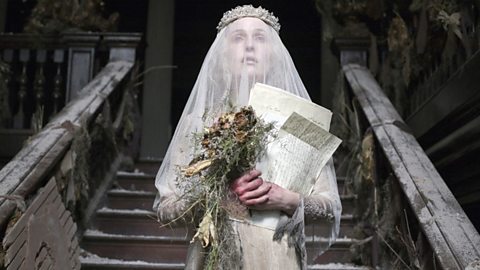
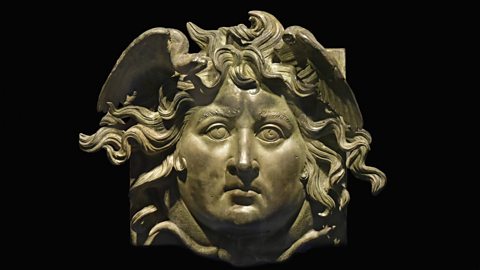
The female speakers of Havisham, Mrs Midas and Medusa are all fictional and mythological characters, in contrast to Before You Were Mine and its focus on a real person. However, this is Duffy's imagined version of her mother, so in a sense she is creating her own mythical character who has no voice of her own.
All these poems carry a sense of loss and yearning for a happier, past, when the women were young, desirable and when they followed their own desires. Each poem carries its own emotions - rage, jealousy, disappointment - but all express regret at the changes brought by relationships, time and aging.
Revise Before You Were Mine by Carol Ann Duffy
Revise Before You Were Mine and other poems by Carol Ann Duffy with interactive quizzes for Higher English.
Quizzes - Carol Ann Duffy. quiz
Test your knowledge of the set texts by Carol Ann Duffy with interactive quizzes for Higher English.

More on Carol Ann Duffy
Find out more by working through a topic
- count2 of 7
- count3 of 7

- count4 of 7
- count5 of 7