What is texture?

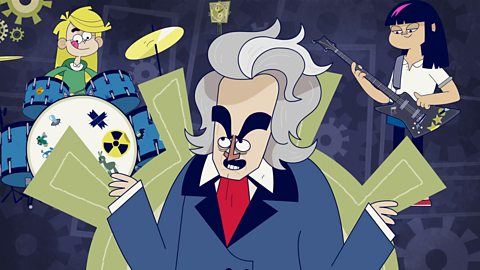
To create music we combine, mix and layer sounds. How the tempo, melody and harmony are combined in a musical composition. is the word we use to describe the way we do this.
Different musical textures can depend on:
- how many instruments are playing at a particular time
- the The quality of the sound that makes a voice or instrument sound unique. of the instruments that are playing
- how they are being played
Watch: Discovering texture
Nitin Sawhney shows how experimenting with different textures can make music more interesting to listen to.
Girl 1: Everyone stop.
Girl 2: But we've never sounded better.
Girl 1: It all just sounds like noise. We need to listen to each other.
Boy 1: But whenever we do, it ends up sounding like a broken washing machine.
Nitin Sawhney: I think I can help you with that.
Wow!
Boy 2: Nitin Sawhney!
Nitin Sawhney: You guys need to think about the texture you want to create together.
Girl 3: Texture? What's that?
Nitin Sawhney: Well…how many of you like painting?
Girl 1: Me!
I tried painting my saxophone once.
Mum said it looked like a gravy jug.
It came out orange because I mixed red and yellow paint.
I wanted it to look gold.
Nitin Sawhney: Well, You created a brand new colour by mixing two together and just like in paintings, we can mix and layer musical sounds to create texture.
Girl 2: I just mixed all my drums together!
Boy 1: So all our instruments are like a musical palette to paint tunes and songs with?
Nitin Sawhney: Yeah and the whole world is your palette!
You can mix together so many sounds from so many places.
Let me show you…
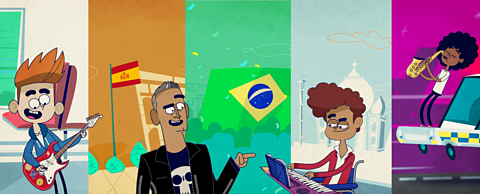
So we could take little bit of flamenco guitar in Spain…
Add some add sordu drum in Brazil…
And put it together with some vocals in India!
This is how I arranged my song Homelands.
Girl 1: Wow, that sounds… different!
Girl 2: I love the drums!
Girl 3: Yeah, we know!
Boy 1: It sounds great but we can't do that.
We don't have those instruments or voices.
Girl 3: We got all our instruments from the UK.
Nitin Sawhney: But you can listen to anything from anywhere.
You can even copy the rhythm of a train to make a drum beat.
Or Asha could play saxophone to copy a police siren.
And Ruby, you could play your bass to sound like a heartbeat.
Boy 2: Awesome.
Nitin Sawhney: The whole world is your palette and you can paint musical pictures with layers of sound.
Playing all together, or playing separately, at different points in the song changes the musical texture.
It's up to you and your imagination!
Girl 1: I could mix my saxophone and Ruby's bass with the same line, like this.
Nitin Sawhney: Now you're getting it.
Boy 1: Thanks, Nitin.
Nitin Sawhney: My pleasure, have fun.
How do you describe musical texture?
Here are some ways you can describe the texture of music.
- Thin or light - when only a few layers of sound are played together.
- Thick or heavy - when lots of different layers are played together.
What is timbre?
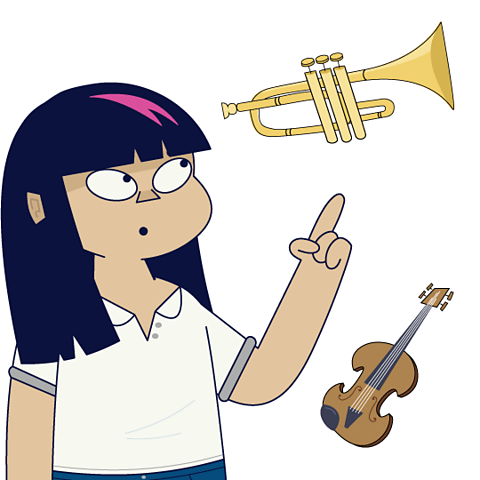
Timbre is the word we use to describe the particular sound quality of a musical instrument.
A trumpet has a very different timbre to a violin. Your voice will have a different timbre to a flute.
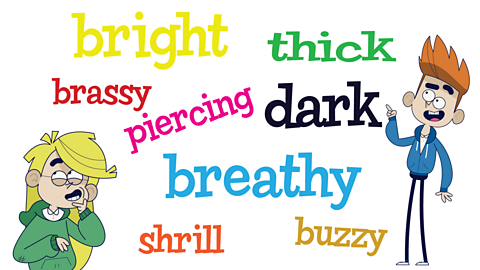
Words you can use to describe timbre might include:
Watch: Exploring texture
Explore how layers of sound create different musical textures.
Mr Brown: In music, we use the word texture to describe how sound is organised in a piece of music. The layers of sound in the music and the relationship between them.
Katie: Mm ah ok. So what are the different textures then?
Mr Brown: Well… It depends on quite a lot of things. How many instruments are playing? How many different parts there are in the music? And the timbre of the instruments that are playing.
Katie: Oh the timbre. I know this. The timbre means their unique sounds doesn't it? Like what makes an electric guitar sound like an electric guitar.
Mr Brown: Yes! To create different textures, we can mix and layer different sounds and timbres. The texture of music can be thick or thin. Wide or busy for example.
Katie: Ahhh right. So where does the cake come into this? And most importantly is there any eating involved in this lesson?
Mr Brown: Well the cake is here to help us understand layers. An example of a thin texture would be an instrument that is played on its own like this flute.
Flute plays
Now which cake do you think is most like a thin texture?
Katie: I would probably say that plain cake at the end.
Mr Brown: Great! That cake only has one layer so it represents a thin texture like the solo flute. Let's listen to our next sound.
Music plays
Katie: Wow! Well that sounds like there are quite a few layers in that one.
Mr Brown: Well noticed. We can say that that piece of music had quite a thick texture. Which cake do you think might represent a thick texture?
Katie: I would say that chocolate cake there because it's got lots of layers just like the music.
Mr Brown: Brilliant!
Katie: You can really notice the difference between the thin and thick textures can't you?
Mr Brown: Yeah you really can. Now let's look at some busy textures. A busy texture would be where you have several musical layers weaving in and out of each other all playing different things. Which cake do you think has a busy texture?
Katie: Err… none of them look particularly busy. The layers are all one colour. There are some nuts on that one on the end there though.
Mr Brown: Ahh okay. Well let's try this one here. Now when we slice into this one, you'll notice that it has different coloured layers that weave into each other.
Katie: Ooo that looks so yummy! Okay can we hear some music with a busy texture please.
Music plays
Well there are definitely lots going on in that one. It's not a very modern sound is it? Sounds quite old fashioned.
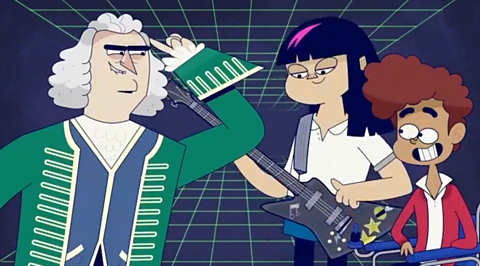
Mr Brown: Well noticed. Busy textures were very common in music from the Baroque period. It has a very dramatic and energetic style which was very popular over 400 years ago.
Katie: Hey I bet they really ba-rock-ed out to it didn't they? drum roll Yeah? No? Just me. Okay.So texture is basically how sound is organised in music. The mix of instruments, how many there are of each and what they're playing can create different textures.
Mr Brown: Spot on.
Activities
Listen to Homelands
You've heard Nitin Sawhney talk about how he composed 'Homelands'. Watch him perform the song in full and listen carefully to the different textures and timbres.
Quiz
Play BBC Bitesize educational games! game
Fun, interactive games for children aged 4-11, with maths, English, science, history and many more subjects.

More on Playing and Performing
Find out more by working through a topic
- count3 of 12
- count4 of 12
- count5 of 12
- count6 of 12