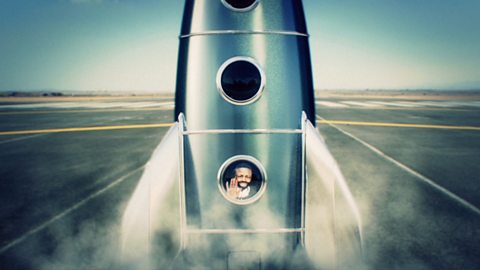
Could robots take over the world?
Robots are now a reality. We rely on them to help us, but as they become more powerful could they take over the world?
Did you know?
The word robot comes from the Czech word ‘robota’ which means forced labour.
Watch this video: Will robots take over the world?
Watch a brief introduction to the debate: will robots take over the world?
NARRATOR:
Will robots take over the world?
The first known robot was created 2500 years ago — a robot bird made out of wood, that used steam to power its movements.
Technology has come a long way since then, and now robots are taking over human jobs.
Robots can build cars in factories and drive taxis.
Flying robot drones can deliver parcels.
Robots can even perform surgical operations.
And microscopic robots called nanobots can actually be injected and swim around our bloodstream to release medicine and keep us healthy.
All the things you dislike doing could be done by a robot — such as cleaning your room, walking to school, and doing your homework.
It could change the way we develop, physically and mentally. And now, with artificial intelligence, robots are starting to be able to speak and even learn like humans.
Robots have already begun to beat humans at games, like chess.
But what if they learn to think for themselves, and decide they don’t need humans telling them what to do after all?
As technology develops, could robots look and talk exactly like humans so we can’t tell them apart?
By linking up online, robots could start learning from each other and reproduce themselves — and perhaps start doing some of the harmful things humans have done, like starting wars. And if nanobots could reproduce themselves, how could we stop them growing inside us once they got started?
In theory, we could drown in what scientists call a grey goo of nanobots.
Machines are already faster and stronger than us.
If we design robots more intelligent than us — could they take over the world?
Discuss
Controversial issues in science make for great discussion topics. The following video shows students your age expressing a range of opinions about whether or not robots will take over the world. Get together with your friends and discuss the issue!
Listen to secondary students debating whether robots will take over the world. What do you and your friends think?
Will robots take over the world?
The first known robot was created 2500 years ago — a robot bird made out of wood.
STUDENT 1: Made out of wood?
STUDENT 2: Yeah.
STUDENT 1: That’ll be too heavy.
STUDENT 2: It’s quite a long time ago, isn’t it?
STUDENT 1: Yeah.
NARRATOR: Technology has come a long way since then, and now robots are taking over human jobs.
STUDENT 3: That’s creepy, especially when they’re identical. If we had robot teachers then think about it — there’d be no detentions, no late after school.
NARRATOR: Robots can even perform surgical operations.
STUDENT 4: Like, you could experiment using that. Start off with the eye — you don’t need two eyes.
STUDENT 5: I wouldn’t want a robot doing surgery on me.
STUDENT 4: If something happens then you’ll still have one eye.
STUDENT 5: I guess that they’d be really steady with their hands, so they’d be more precise than humans.
STUDENT 6: But what if the programming went wrong? The robot won’t know. The robot won’t care.
STUDENT 5: I don’t think anyone would want a robot poking their eye out though.
STUDENT 6: Yeah, suppose.
NARRATOR: And microscopic robots called nanobots can actually be injected and swim around our bloodstream to release medicine and keep us healthy.
STUDENT 7: Must be really small if they’re like, in your blood. If you forget to get like medicine or something like that, they’ll just like do it for you.
STUDENT 8: What if they malfunction? They’re in your blood — I doubt they’ll be able to get it out.
NARRATOR: All the things you dislike doing could be done by a robot, such as cleaning your room.
STUDENT 9: Yes, please. Something I’d quite like a robot to do is just pack my bag before I go to school.
STUDENT 10: I don’t really think I want a robot doing anything for me because I think I’d lose my basic human features. I think if like robots did lots of jobs for us we’d become like really lazy and we’d just sort of sit on the couch and like watch TV and stuff like that.
NARRATOR: By linking up online, robots could start learning from each other and reproduce themselves —and perhaps start doing some of the harmful things humans have done, like starting wars.
STUDENT 11: That’s the new World War Three. If robots do bad things to us, it could be a problem because they can duplicate — they can make more of themselves. They don’t have the imperfections and impurities that humans have. Unless we’ve got like a massive off button somewhere, we’re probably all… we’re probably all doomed.
Did you know?
In 1996 a computer called Deep Blue beat Garry Kasparov in a game of chess; the first time a machine defeated a reigning world chess champion.
Decide
This video contains some final opinions. Have you come to a decision yet? What are your reasons?
Watch this video journal and listen to the point of view. What's your opinion?
STUDENT 1: Robots could take over the world, but we’d need to, kind of, give them the ability to — like the intelligence to. I mean, planes already fly autopilot and sometimes, you know, soon in the future, I doubt that you would need a pilot at all. So if you’ve got like transport — self-flying, self-driving — I think they could take over mankind.
STUDENT 2: Robots would never take over the world because if a human created a robot, then a human would be smarter than a robot.
STUDENT 3: I think that robots will take over the world. They have the technology and all the abilities to do so.
INTERVIEWER: We’re doomed?
STUDENT 3: Indeed.
Did you know?
In 2017 self-driving robots that travel along pavements started delivering take-away meals in London.
Solve the Story!
An exciting new series from the Other Side of the Story, designed to help young people strengthen their media literacy skills.

More on Inventions
Find out more by working through a topic
- count2 of 2