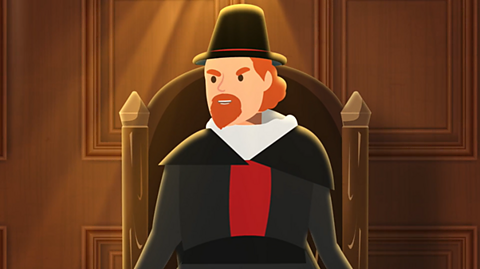
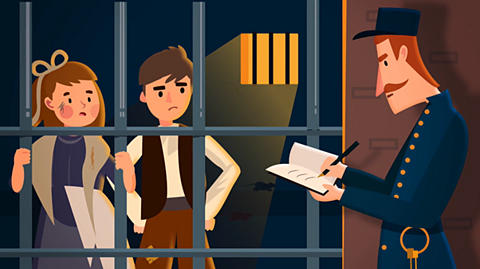
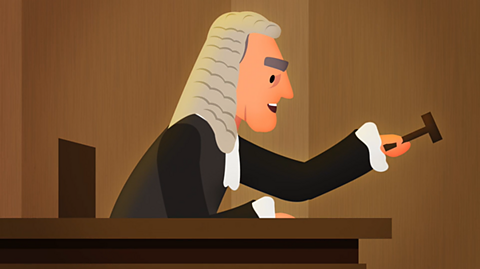
Watch: Punishing crime in Anglo-Saxon Britain
Watch this video to find out how crime was punished in Anglo-Saxon times.
MUSIC
Ethel: My bread! Thieves! Help! Someone help, they’re stealing my bread!
Villagers: Grab them! Grab them, grab them!
Judge: We are gathered here for the trial of Alwin and Edgar Erikson, for stealing bread that wasn’t theirs. Thanks to their group of ten men, their tithing, who are responsible for bringing them before us?
Alwin: We were just taking back what was already ours.
Edgar: She stole our grain to make that bread.
Ethel: Nonsense. I was given the grain by my, er… cousin.
Alwin: That’s not true.
**Judge:**And where is your cousin?
Ethel: She, erm, is unwell…
Judge: What does the village think?
Villagers: Guilty! - Innocent! - Guilty! - Innocent!
Judge: This is not simple. As set out by the laws of King Alfred, we will have to let God decide. Trial by ordeal. Each of you must grip this hot iron. If your wounds heal cleanly within three days, God will have shown us that you are innocent. Do you still proclaim your innocence?
Edgar: Yes. God will show you. He will give us justice!
Judge: Here we are, three days later. Alwin and Edgar’s hands are healing cleanly. God shows us they are innocent, and now we are gathered for the trial of Ethel. You are accused of stealing grain from Alwin and Edgar Erikson. How do you plead?
Ethel: Innocent.
Alwin & Edgar: She’s guilty! - She’s guilty!
Judge: We shall discuss the evidence and decide.
What were the Anglo-Saxons like?
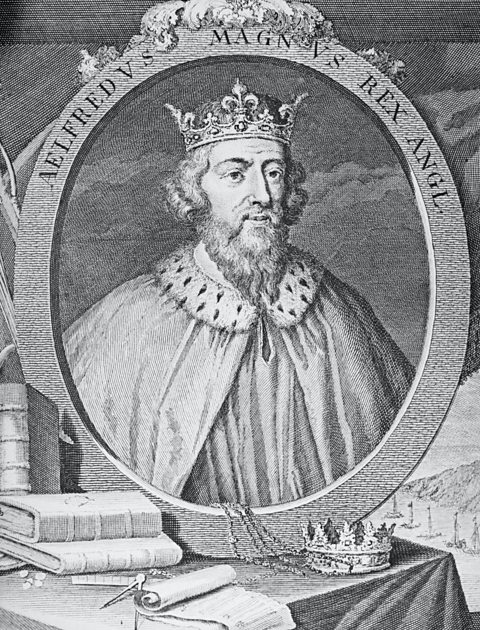
- The Anglo-Saxon period in Britain was from around 410AD to 1066AD.
- A lot of the population lived in small villages in the countryside and very few lived in towns. This meant that many people knew their neighbours well.
- Most people grew their own food and farmed the land where they lived.
- Children were considered adults at 10 years old!
Were there Anglo-Saxon police?
- There wasn't a police force like we have today. Keeping law and order was the responsibility of everyone in the village.
- If someone was seen committing a crime then the witness could raise a hue and cry (shouting for help). Everyone who heard it was expected to help chase and capture the suspects.
- There was a system in place called Tithing in which a group of ten men were made responsible for each other’s behaviour. If they didn't, they would have to pay a fine.

Anglo-Saxon punishments
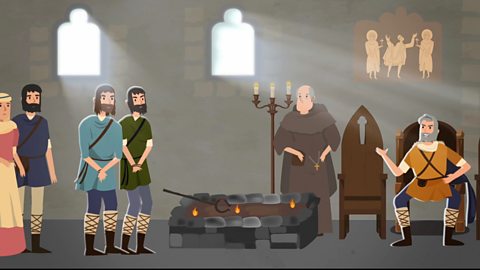
- The church and local lords decided punishments.
- The Anglo-Saxons didn't have prisons. Most people found guilty of crimes were punished with fines.
- Some crimes, such as treason against the king, were so serious that they carried the death penalty.
- Regular offenders were punished very harshly. If they were found guilty of stealing more than once they might have their hands cut off.
What was weregild?
- Weregild, which means blood price, was a system of fines where, if you injured someone, the victim received money.
| Injury | Fine |
|---|---|
| Broken thigh | 12 shillings |
| Loss of a thumb | 20 shillings |
| Loss of an eye | 50 shillings |
Did you know?

- Before weregild was developed, early Saxon Kings allowed victims of crimes to punish criminals themselves.
- So, if someone was murdered, the family had the right to track down and kill the murderer. This obviously led to more violence.
What was trial by ordeal?
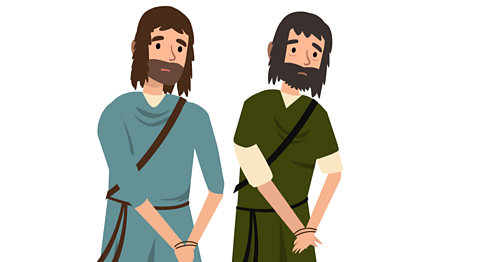
In trial by ordeal, the accused would be made to perform a task that caused injury. If their wounds healed cleanly after 3 days then they would be considered to be innocent in the eyes of God.
Activities
Activity 1: Anglo-Saxon crime quiz
Horrible Histories: Raid and Trade game! game
Play Horrible Histories: Raid and Trade KS2 History
More on Crime and punishment
Find out more by working through a topic
- count1 of 10