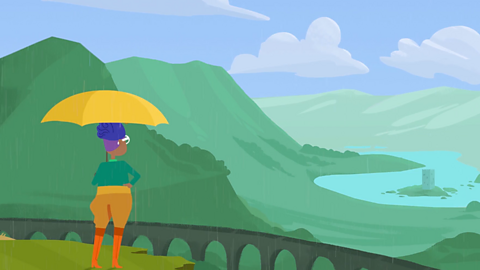
Where is the Lake District?
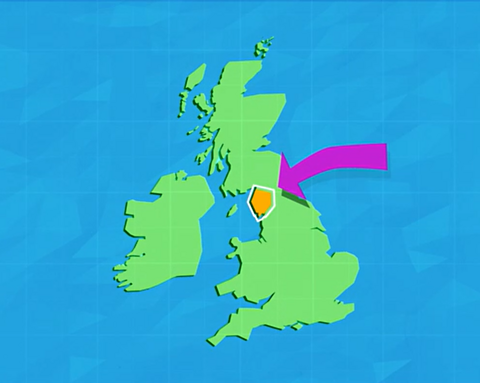
The Lake District is a national park in North West England. It is England's largest national park and covers 2362 square kilometres.
It is home to the highest mountain in England - Scafell Pike (978m tall) and the deepest lake - Wastwater (74m deep).
It is popular with both day visitors and holidaymakers because of its beautiful mountains and lakes.
What is the landscape like in the Lake District?
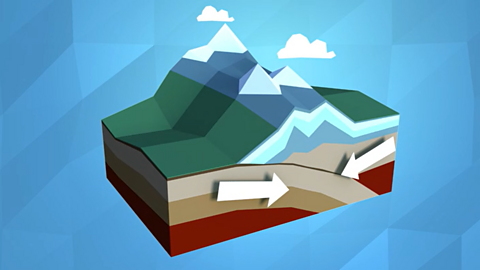
The landscapes of the Lake District have been shaped over millions and millions of years.
Rocks such as sandstone, limestone and granite gradually formed in layers. Next, tectonic plates created volcanoes and also pushed the rock up to create high mountains.
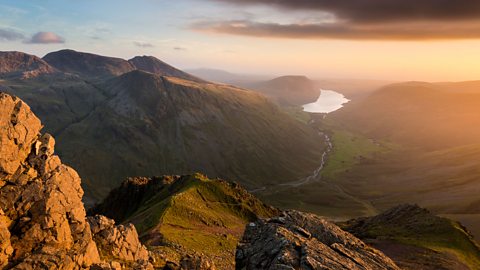
Two million years ago, icy glaciers covered the mountains.
As the glaciers slowly crept down the mountains, they picked up pieces of rock, which eroded the mountains and created valleys.
When the ice melted, these valleys filled up with the melted water and created deep lakes.
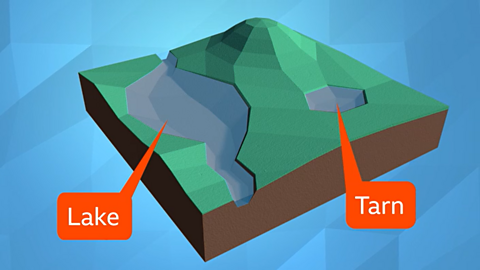
Small crevices made by the ice at the tops of mountains filled with water to create tarns. Some tarns are small mountain pools and others are as large as lakes.
Watch: The Lake District with Sue Venir
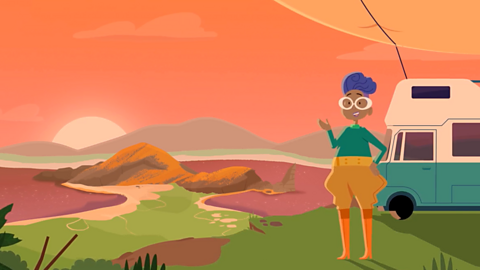
“I wandered lonely as a cloud” Oh, hello! I’m reading from a poem by William Wordsworth, a poet who was inspired by the landscape around me, here in the Lake District.
And it’s no wonder, just look at that view! The Lake District is a mountainous region in the North West of England and home to the highest mountain in England, Scafell Pike, as well as its longest and deepest bodies of water.
These lakes and mountains were formed millions of years ago when the rock was raised up as tectonic plates pushed together. During the last ice age, huge flows of ice formed called glaciers.
These glaciers flowed down the hills and mountains breaking up the ground beneath them and carving out the valleys we see today.Some were filled with water, forming lakes and smaller mountain pools called tarns. Now this landscape is home to a host of plants and animals, these include oak and pine forests, bluebells and daffodils, red squirrels, otters, deer and osprey.
But perhaps the most famous creatures from here are the one created by Beatrix Potter, the writer of Peter Rabbit and Mrs Tiggy-Winkle.
She was captivated by the animals and landscapes she saw while visiting the Lake District on holiday in the 1800s and she helped to preserve the landscape and way of life for generations by buying land and farms, and giving them to the National Trust, who look after them to this day.
The traditional hill farming Beatrix Potter wanted to preserve, still goes on here. But these days, tourism is the main industry, attracting nearly 20 million visitors every year.
If you’re lucky enough to go on holiday here, you’ll see why so many people have fallen in love with this place, from its giant mountains to its smallest inhabitants.
Who lives in the Lake District?
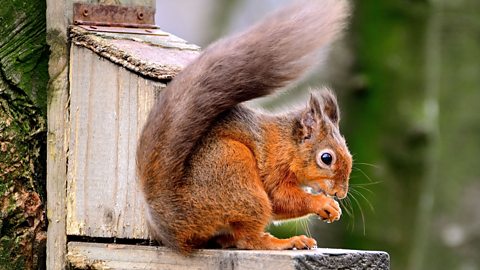
The Lake District is home to lots of plants and animals and also people, who live in towns such as Keswick and Windermere.
Tourism is an important industry here, with over 12 million visitors every year who come to walk, cycle, run, boat or to look at the amazing scenery.
Farming in the Lake District
The Lake District is a national park with hundreds of farms and hundreds of thousands of sheep. Hill or upland farms are very different to lowland farms because of the altitude (height) and harsher climate. Nearly a third of this national park is ‘Common Land’. It means that farmers have the right to graze their sheep on those hills.
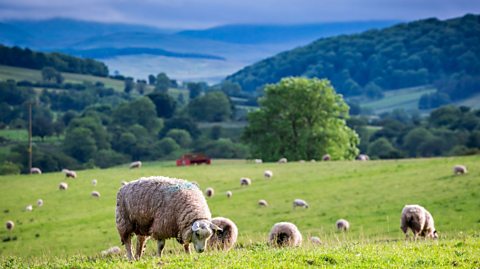
Some people think that some of this land should be replanted with trees and shrubs. They say that the large numbers of sheep are damaging the land. Life is harsh for farmers and sheep farming is declining as young people from the area move to other places
Activity: Quiz – The Lake District
Race Across the Continents game - new update! game
Help this team of adventurers race their way to victory. Explore the globe in this exciting game update to discover new audio voiced by Ade Adepitan and fun animations. Challenge yourself with brand-new achievements and become a high-flyer!

More on Exploring the natural world
Find out more by working through a topic
- count2 of 12
- count3 of 12

- count4 of 12
- count5 of 12