Pre-operation checklist
Watch the video to see some examples of how you can open a conversation and ask your colleagues for suggestions and ideas.
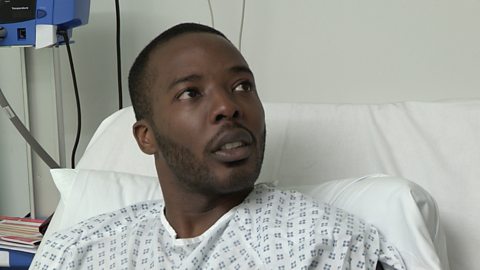
Speaker 1: Hi, Manny. How are you?
Speaker 2: I'm fine, thank you. And you?
Speaker 1: I'm fine. It's your operation today, and you're first on the list.
I'm just going to go through a checklist with you. Is that OK?
Speaker 2: Yeah, sure.
Speaker 1: Have you had anything to drink in the last two hours?
Speaker 2: Mm, nothing.
Speaker 1: Good. Have you had anything to eat in the last six hours?
Speaker 2: Mm, yeah, I just had a small bar of chocolate. Isn't that OK?
Speaker 1: Manny, you're nil by mouth.
Did nobody tell you?
Speaker 2: They did, but I thought that was just for a meal.
I was a bit uncomfortable, so I had a bar of chocolate to help me sleep.
Speaker 1: I understand. It includes all food items, I'm afraid, so I'm going to have to find out from the nurse in charge if your operation will still go ahead today.
Speaker 2: Thank you.
Speaker 1: (TO AUDIENCE) Before an operation, it's important to get to know a little bit about the patient by doing a checklist, so asking them some questions just to make sure that they're safe and ready for surgery, and also just to reassure them, because it's an operation and it can be a bit daunting.
Types of language at work
Now you've watched the conversation, test your knowledge with this activity.
Speaking in the right tone
Watch the video to see some examples of how you can open a conversation and ask your colleagues for suggestions and ideas.
Speaker 1: Sophia, bad news.
Speaker 2: Oh, no. What's happened?
Speaker 1: I've done the checklist.
Speaker 2: Mm.
Speaker 1: And Manny hasn't had anything to drink but he had some chocolate three hours ago.
Speaker 2: Oh, no! Did no-one tell him he was nil by mouth?
Speaker 1: He thought it only applied to meals, so now he's a bit anxious about his surgery.
Speaker 2: OK. Well, I'm going to have to call the surgical team and tell them that Manny's eaten and they're going to have to push his surgery back to this afternoon.
In the meantime, if you could go and see Manny and please make sure he doesn't have anything else to eat.
(TO PERSON ON PHONE) Hi, this is Sophia, the nurse from the surgical ward.
Hi. Yes, I'm really sorry but I've got some bad news.
Yes, the first patient on the list today has actually just had something to eat.
Is there any chance we can reschedule the appointment for later today, rather than tomorrow?
Five o'clock? Oh, that's amazing. Thank you.
I'll go and let him know now.
(TO AUDIENCE) On the phone in a healthcare environment, you have to make sure that you use your tone of voice to convey what you need and what you mean.
You want to be kind and friendly but you also want to be concise, as there isn't an awful lot of time in a lot of situations.
Choose the best option
Now you've watched the conversation, test your knowledge with this activity.
Presenting the information clearly
Watch the video to see some examples of how you can open a conversation and ask your colleagues for suggestions and ideas.
Speaker 1: Hiya, Manny. How are you?
Speaker 2: Just a bit worried.
Speaker 1: Well, I've got some good news for you.
I've spoken with the surgical team and they've been able to rearrange your operation for five o'clock this afternoon instead of tomorrow.
Speaker 2: That's great news!
Speaker 1: Just to let you know, I only want you to be having sips of water until 3pm, please.
Speaker 2: How about a bit of chocolate?
Speaker 1: Nice try, Manny, but no food until after the operation, OK?
Speaker 2: Just joking!
Speaker 1: All right. Well, I'll be back to check on you later on, and let me know if you need anything.
Speaker 2: Thank you.
Speaker 1: (TO AUDIENCE) Documentation is incredibly important in health care to ensure that healthcare professionals know what's been going on and a safe and accurate record of what's happened to the patient is kept.
It has to be written in a professional way and also in a legible way so that everybody can understand what's been going on.
Turn the notes into full sentences
Now you've watched the conversation, test your knowledge with this activity.
Careers advice and tips from BBC Bitesize
Future careers, further studies and the world of work - we're here to help with advice from experts and from young people who've found their path.

More on Health and social care
Find out more by working through a topic
- count4 of 5
- count5 of 5