How can we use water more sustainably?
Water is essential. Without it there would be no life on Earth.
It is important to use it responsibly and to look after our water sources.
In this article you can learn:
- What water is used for
- How Scotland's water supply compares to other countries
- Where drinking water comes from
- Where waste water goes
- How we can save water from being wasted
- Benefits and challenges of using water
This resource is suitable for sustainability topics for primary school learners.
Video - Water and sustainability
In this video, learn where drinking water comes from and how water can be managed sustainably.
Tut tut tut. Look at this:
dripping tap, bath overflowing, washing machine running with one sock in it.
Oi!
Water’s very important, you know! We need to look after it!
Without water, there wouldn’t even be life on Earth.
All of us - plants, animals and humans need it to survive.
71% of the Earth’s surface is covered by water.
But most of that’s salt water, icecaps and glaciers, and we can’t drink those.
Only one percent is freshwater, and that’s what most land-based plants and animals need.
Some very dry, hot countries don’t have much water at all, and this causes droughts which kill crops, animals and even people.
And global heating has made dry places even drier.
Global heating might even affect Scotland’s water supply in the future, causing shortages in some parts of the country.
But right now, Scotland is gloriously damp!
So, why should it matter how much water we use?
Well, in Scotland the water we use comes from rivers, reservoirs and lochs.
It’s sent to water treatment works to be cleaned.
And once harmful dirt and bacteria has been removed, the water is piped to our homes.
Every person uses around 140 litres of that water a day; for washing, cleaning, cooking, drinking and flushing the toilet.
(SIGH) Have you not been listening?
Anyway…
All the wastewater, from your home and from industries, needs to be cleaned at treatment plants before it’s returned to the environment.
The thing is, wastewater treatment plants use a lot of electricity, which isn’t great for the environment.
So, the less water we use, the better.
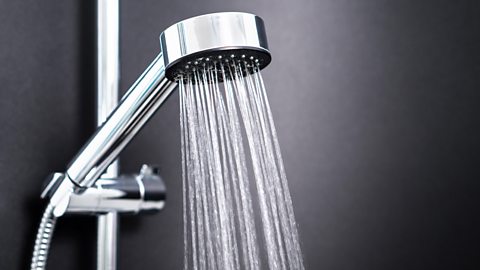
You can have a shorter shower, or fill your bath less.
Turn off the tap when you’re brushing your teeth.
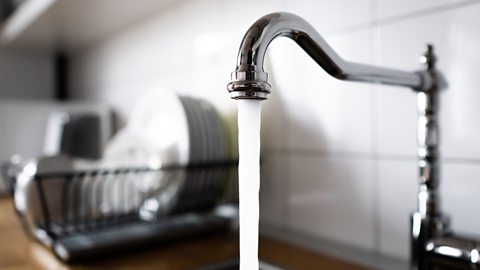
And make sure it’s not dripping.
Wear clothes more than once (if they’re still clean) rather than washing them straight away.
And do you really need bottled water?
Fill a glass or a reusable water bottle from the tap instead. That way, you’re using less plastic too.
Water is also used to grow food, make clothes and loads of other things.
So what we eat, wear and buy can have a big impact on water supplies around the world.
And you could even try not flushing the toilet after every wee.
Probably best to agree with your family about that first though!
Water on Earth
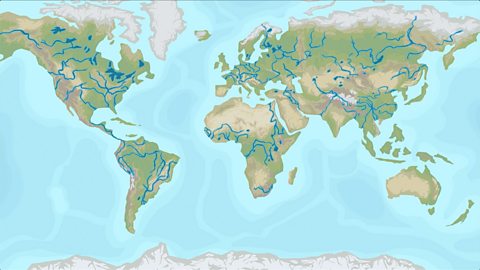
71% of Planet Earth is covered in water. That might make you think that we have lots of it to use, but actually only 1% is drinkable.
Most of Earth’s water is salt water in the seas and oceans. Humans, animals and plants need fresh water as our bodies are not able to process salt water.
As Earth's population increases so does its need for fresh, clean water. But the amount of water on Earth stays the same, as it is recycled over and over again in a process called the The process in which water travels from the Earth's surface, up into the sky and back to Earth again. The three steps of the water cycle are evaporation, condensation and precipitation.. This means we need to do our best to not waste it.
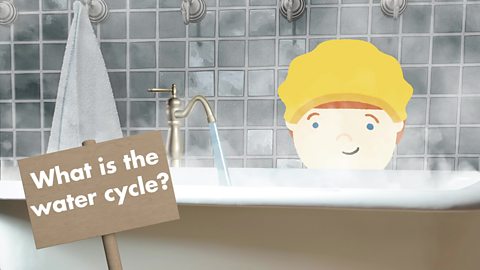
Learn all about the different stages of the water cycle: What is the water cycle?
What is water used for?
At home we drink it, cook with it, use it to clean ourselves and our clothes and for flushing the toilet.
Water is needed for public parks and filling swimming pools. Other businesses and services in our community (including the fire service) need water too.
You might not know is that a lot of water is also needed for agriculture, industry and electricity. For example for:
- watering crops and feeding animals for food and clothing
- capturing hydroelectric, tidal and wave power
- cooling fossil fuel and nuclear power stations
- making and dying textiles and clothing
- making steel, concrete, plastics, paper and other products
So it isn't just water from our taps that we use every day. There is lots of hidden water use that we are responsible for. Some of this can be in countries that don't have a lot of water, so we should think carefully about how much we use and if we can reduce it.
Find out why water is an important part of our health and wellbeing: Water
Water in Scotland
Where does drinking water come from?
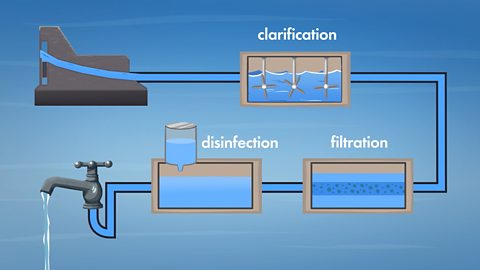
In Scotland we have lots of freshwater lochs, rivers and A large body of water, often man made, that has been created by stopping the natural flow of water., as well as plenty of rain to fill them.
But before we can drink it, the water is piped to water treatment plants where it is cleaned of harmful dirt and bacteria.
Underground pipes then carry the clean water to our homes.
Where does our waste water go?
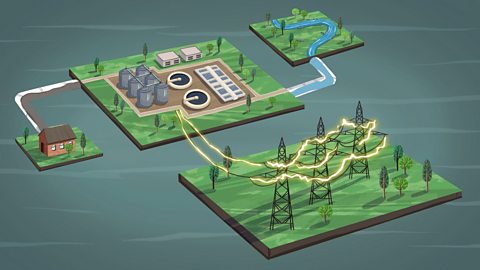
Waste water goes down the drain into sewage pipes where it is taken to waste water treatment works. It is cleaned there and then returned to rivers and the sea.
These treatment works use lots of electricity, which isn’t good for the environment. The less water we waste, the better it is for the environment (and it’s the right thing to do when others in the world have a scarce supply of water!)
How Scotland’s water supply compares with other countries
In Scotland people use around 165 litres of water a day for washing, cleaning, cooking, drinking and flushing the toilet.
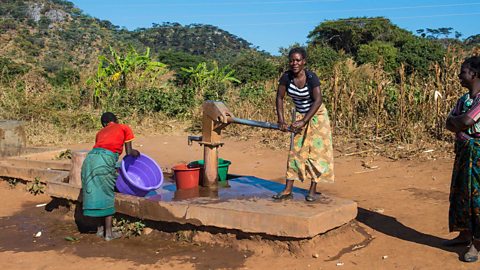
However, some countries in the world have less access to water. They might be in places that are very dry and hot. Many poorer countries don't have the money to build water pipes to supply people's homes, or water treatment facilities to make sure water is clean.
When it doesn't rain for a long time and the ground becomes hard and dry. can have a huge impact on people’s lives. Water access can be more restricted in places with droughts, so people might not have the same instant access to water we are lucky to have.
In some less developed countries, people have to To control the amount something is used. When resources are scarce, they need to be rationed. For example, during World War 2 food was rationed to share it out equally. how much water they use. Getting clean water can involve very long walks. Often children, especially girls, have to fetch water for their family. This can mean they don't have time to go to school and learn.
Can you think about what is different between that and how we access water?
How can we save water from being wasted?
Here are some things we can do:
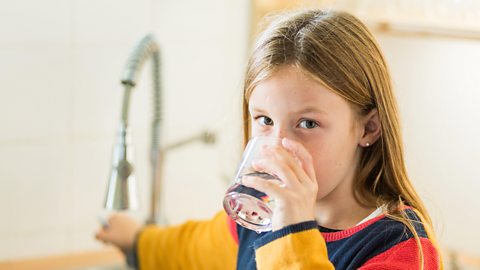
Image caption, Fill a glass or bottle from the tap instead of using bottled water
It takes more water to make a plastic bottle than the bottle can contain. (Phanie / Alamy Stock Photo)
1 of 4
Benefits and challenges
Benefits
Water is needed for survival. Humans, plants and animals need access to fresh water in order to survive.
Water is used by humans for many different reasons. We use water in our homes for washing and cooking etc, while water is also used in many different industries.
Both fresh water like rivers and lakes, and salt water in our seas and oceans provide a habitat for many species of wildlife
The kinetic energy of water can be used to produce renewable sources of energy. Hydro-dams, tidal energy and wave energy all rely on water to generate electricity.
Challenges
Natural sources of water still need to be cleaned before we use it. Cleaning waste water at water treatment works uses a lot of electricity.
In hot, dry countries there can be a scarce supply of water, which might mean there isn't always enough for people, farming and industries.
In some places people don't have access to safe drinking water. Using unsafe water can be the cause of illness and death.
Natural sources of water are becoming polluted due to human activity. This may be through our use of chemicals or through our increased use of plastic.

Key words about water use
Check your connection, refresh the page and try again. - A shortage of water that can impact people and the environment. These occur when there is a lack of rainfall over an extended period of time, usually a season or more.
Check your connection, refresh the page and try again. – To control the amount something is used. When resources are scarce, they need to be rationed. For example, during World War 2 food was rationed to share it out equally.
Check your connection, refresh the page and try again. – A shortage of something, for example food or water. When there is not enough of a particular resource for the amount of people who need or want it.
Test your knowledge
Quiz
Challenge
Keep a water diary
Track how much water you use in a day and what for.
Write down each time you use water and what it is for.
At the end of the day, look at the list and see if there are any ways you can reduce your water waste.
Remember: Don’t reduce how much water you drink to reduce your water use – it is important to stay hydrated!
Why do we need water? revision-guide
Learn about why we need water for our health and wellbeing.
How does rain affect daily life? revision-guide
Rain can affect our lives in many different ways.
What is the water cycle? revision-guide
Learn about the different stages of the water cycle.
More on Materials and resources
Find out more by working through a topic
- count3 of 7
- count4 of 7
- count5 of 7
- count6 of 7