Animals and food
Plants are able to make their own food when sunlight shines on their leaves.
Unlike plants, animals, including humans, can't make their own food.
This means they need to find their nutrition by eating other things, like plants or other animals. Animals get their nutrition from what they eat.
Watch: Animals and food
Fran: All animals need food to survive.
The food animals eat provide them with the nutrients they need to grow.
There is protein that helps them build strong and healthy bones, muscle and teeth.
Fat helps keep them warm, and carbohydrates to give them lots of energy for moving about.
Both animals and humans need a balanced diet filled with nutrients to keep their body healthy.
Different animals need different amounts of nutrients and different types of diet to keep healthy.
Where an animals gets their nutrients depends on what kinds of food they eat.
Herbivores are animals that eat plants and vegetables.
Carnivores are animals that eat other animals
And omnivores are animals that eat a mixture of the two.
Let's see what my investigators are learning about animals and the food they eat.
Child: Different animals get their nutrients from different foods.
I'm investigating which animals around the farm are herbivore, omnivore and carnivore.
Cow, definitely herbivore.
A snake eats meat, so carnivore.
Chickens eat veg, plants and meat so that makes them omnivores.
Did you know, plants make their own food from sunlight? Isn't that cool?
Fran: All animals including us humans get the nutrients we need to grow, keep warm and move from eating a healthy balanced diet.
And talking about food it is time for my lunch because my stomach is rumbling!
Watch: Feeding time for baby birds
Learn about animals that feed in gardens.
Narrator: You don’t have to go far to find interesting plants and animals.
The average back garden provides shelter and food for many.
Ants will find a treat if you leave some jam out. Bees will collect nectar from flowers.
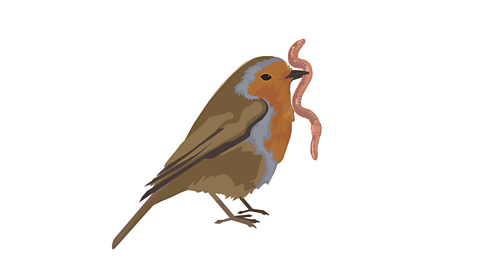
Robins collect grubs from the soil, and carry them off to feed their young.
There might be foxes visiting your garden to see what they can find.
These strawberries are providing a good meal for a mouse.
Fascinating facts about animals and food
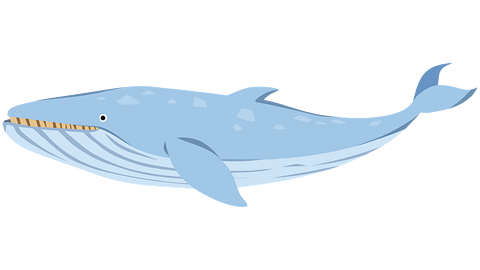
Blue whales can eat up to four tonnes of krill, which are tiny crustaceans, each day.
Herbivores generally outnumber carnivores and omnivores in a habitat as they are often prey.
Sharks can go up to six weeks without food as they have a slow metabolism, which means food breaks down much slower than normal and therefore releases energy over a longer period of time.
The female praying mantis typically eats the male after mating.
Some animals can be both predators and prey. Spiders for instance will eat flies and other insects, but they are in turn eaten by birds.
Dolphins use sound to find food with echolocation.
Human activities like deforestation, pollution, and overfishing can have huge impacts on food chains and where an animal gets its nutrition.
Three groups of animals
Animals can be placed into three different groups, based on what they eat:

Carnivores are animals, such as lions and eagles, that eat other animals.
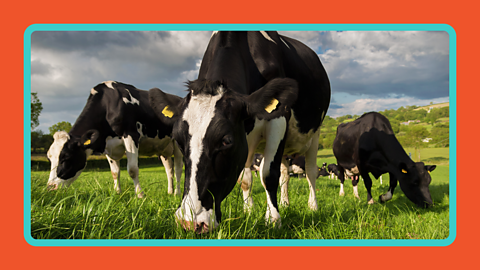
Herbivores are animals, such as zebras or cows, that only eat plants.
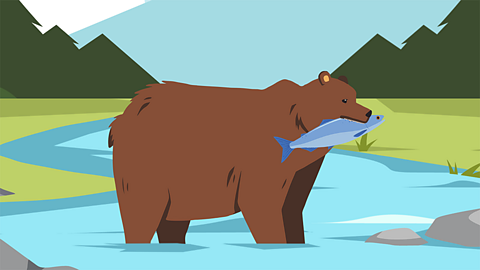
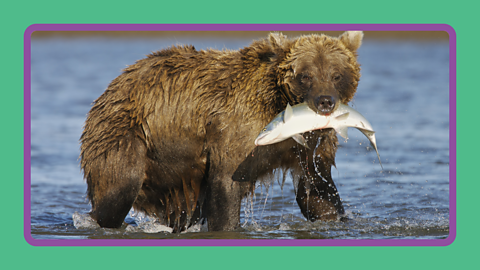
Omnivores are animals, such as bears or rats, that eat both plants and other animals.
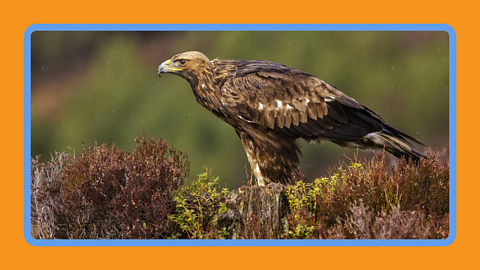
Image caption, Carnivores
Eagles are carnivores, they only get their nutrients from meat such as fish, rabbits or squirrels.
1 of 3
Did you know?
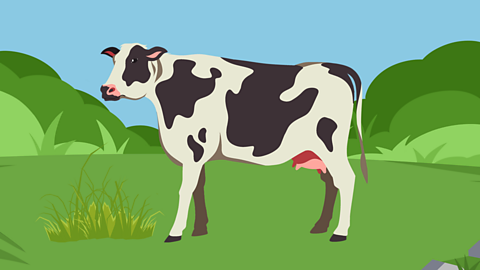
All mammals have a stomach which is where the food they eat is digested. A cow's stomach is divided into four compartments to help them digest the grass that they eat.
How do animals get nutrition from what they eat?
Nutrition is like fuel for our bodies. When animals eat food, their bodies break it down into smaller parts called nutrients. These nutrients help animals to grow, stay healthy, and have the energy to do all the things they need to do, like running, jumping and playing.
Herbivores: Some animals, like cows and rabbits, are herbivores. This means they eat plants like grass and leaves. These animals have special digestive systems that can break down tough plant material to get the nutrients they need.
Carnivores: Other animals, like lions and tigers, are carnivores. They eat other animals for their food. Carnivores get their nutrients from meat.
Omnivores: Some animals, like bears and humans, are omnivores. This means they eat both plants and animals. Omnivores get their nutrients from plants and other animals.
Food chains
Food chains can be used to show what foods different animals eat. They also show how the energy from food moves through the chain of plants and animals.
Animals can be herbivores, omnivores or carnivores.
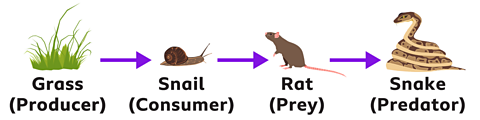
At any stage in a food chain, if animals do not get enough food they will starve and eventually die. If animals don't eat the right types of foods they can often become unhealthy.
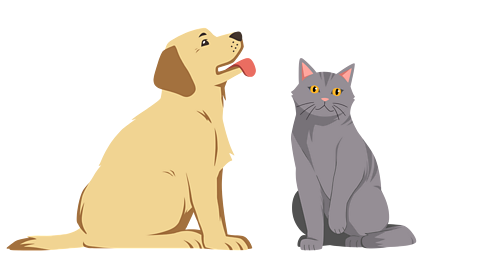
Most animals don't eat more than they need, but some of our pet dogs and cats might become overweight if they eat too much – just like us!
Important words
Carnivore – An animal that eats meat. Sharks, wolves and eagles are all carnivores.
Consumers – Consumers eat plants and other animals.
Food chain – Food chains can be used to show what foods different animals eat, they also show how the energy from food moves through the chain of plants and animals.
Habitat – Where an animal or plant lives.
Herbivore – An animal that eats plants. Cows, horses and rabbits are herbivores.
Nutrition – The substances plants and animals take in as food.
Omnivore – An animal that eats both meat and plants. Bears, crows, rats and mice are omnivores.
Predator – An animal that hunts and eats other animals. Badgers are predators and will hunt mice, rabbits and insects.
Prey – An animal that is hunted and eaten by other animals. Rabbits are prey for foxes.
Producers – Plants make food using energy from the sun in a process called photosynthesis. They are called producers.
Starve – To be so hungry that something feels pain or even dies.
Activities
Activity 1 – Nutrients quiz
Activity 2 – Animals and food quiz
Activity 3 – Order the food chain
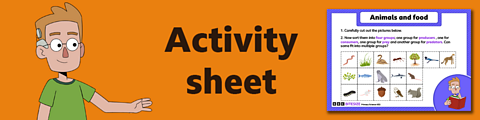
Activity 4 – Food chain challenges
Have fun playing these games about the different food chains around the world.
New game! Horrible Science: Stinky Space. game
Join Pipette on her epic mission and learn some revolting facts about space along the way.
More on Animals including humans
Find out more by working through a topic
- count2 of 5

- count3 of 5
- count4 of 5
- count5 of 5