Key points about the slave trade
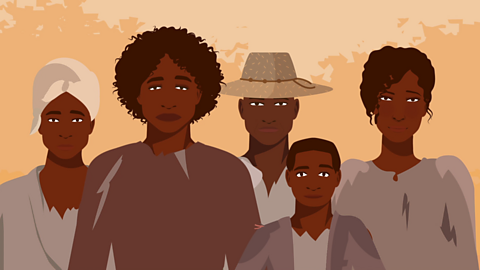
- The trade in enslaved people was a terrible part of history, where people were treated as property and deprived of their rights
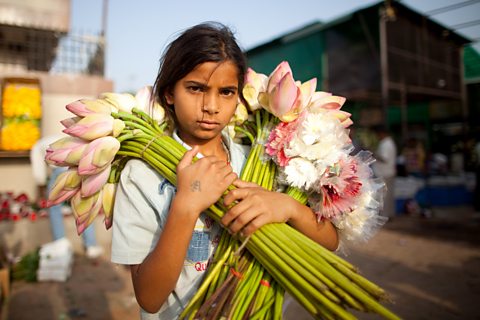
- Slavery still exists today in forms such as forced labour, debt bondage, human trafficking and child slavery
- In 400 years of the Atlantic Slave Trade, at least 12 million Africans were taken to the Americas as slaves, with many dying during the harsh journey
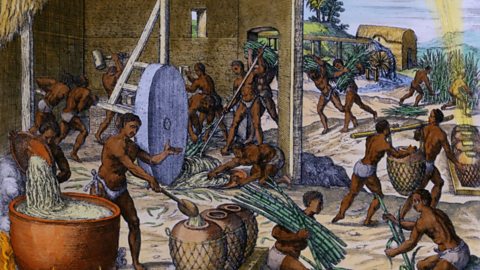
- The Atlantic Slave Trade began because Europeans wanted labourers to work producing goods like sugar, tobacco and cotton
- Cities such Liverpool and many British-owned companies benefited from the slave trade, and some historic buildings are connected to this dark past
- A statue of Edward Colston, a wealthy slave trader, was toppled in Bristol as people protested against racism
What is slavery?
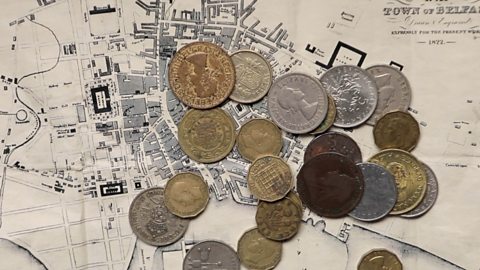
The trade in enslaved people was one of the most terrible aspects of our history. Some wealthy businessmen in Belfast engaged in it without any criticism from society.
Slavery is one of the most terrible aspects of human history. Beginning around 1500 for about 400 years, African people were taken from their homes and shipped to America where they were forced to work for owners of plantations who owned them. Although that happened thousands of miles away from here, some people in Belfast grew rich from the slave trade…
… or to put it a slightly different way, you're not going to believe this, but for hundreds of years, slavery was legal.
It was legal to sail from Britain to Africa, kidnap ordinary people, take them to America and make them work for nothing. Shackled, tortured and humiliated.
What's more, some of the people involved in this lived in Belfast: men like Waddell Cunningham, who owned a slave-labour sugar plantation on the Caribbean island of Dominica, which he christened Belfast after his hometown. Cunningham was one of the richest men in Belfast and actually proposed establishing at Belfast slave trading company. He even tried to sell an 11-year-old African child in the local paper, yet many people in Belfast thought him a good Christian and excellent businessman.
I know it was over 200 years ago but that surely doesn't excuse the inhumane acts of men like Waddell Cunningham.
Slavery is considered by many to be one of the most terrible crimes and injustices of human history - the treatment of human beings as property, deprived of personal rights. The modern definition of a slave is someone who is:
- Forced to work through mental intimidation or physical threat.
- Owned or controlled by someone who claims to be an employer, usually though mental or physical abuse or the threat of abuse.
- Physically constrained or has restrictions placed on their freedom of movement.
- De-humanised and treated as means of production.
- Traded, bought and sold as ‘property’.
- No or little employment rights or protections.
Slavery can exist in many different forms and across many different places.
What is freedom from slavery?
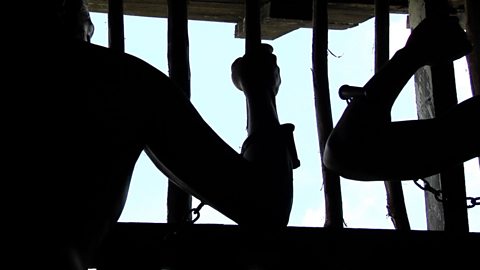
Before exploring different types of slavery, it is important to talk about what freedom is. It is a very difficult subject to define and a lot of people have different views on what exactly it is.
The Universal Declaration of Human Rights (UDHR) is a document that attempts to define the rights and freedoms of all human beings.
Discussing slavery, the UNHR states that ‘No one shall be held in slavery or servitude; slavery and the slave trade shall be prohibited in all their forms.’ We are still working to abolish slavery to this day.
What is modern slavery?
There are many forms of modern slavery and according to Anti-Slavery UK, slavery can exist in the following ways:
- Forced labour - any work or services which people are forced to do against their will under the threat of some form punishment.
- Debt bondage - the world’s most widespread form of slavery, when people borrow some money and are required to work to pay off the debt, then losing control over the conditions of both their employment and the debt.
- Human trafficking - involves people being transported into a situation of exploitation through the use of violence, deception or coercion.
- Descent-based slavery – where people are born into slavery due to belonging to a 'slave class', caste or a group. A child of a mother in slavery is automatically enslaved too.
- Child slavery – defined as the delivery of a child by its parents or a guardian to someone else for the purpose of exploitation. Child slavery can include child trafficking, child soldiers, child marriage and child domestic slavery.
- Forced marriage – when someone is married against their will and cannot leave the marriage. Most child marriages can be considered slavery.
- The exploitation of migrant workers in conditions amounting to slavery.
What was the Atlantic Slave Trade?
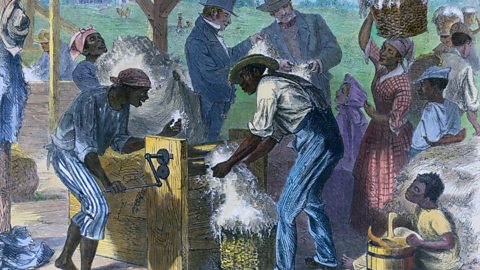
The Atlantic Slave Trade stands out because of its global scale and lasting legacy. At least 12 million Africans were taken to the Americas as slaves between 1532 and 1832 and at least a third of them in British ships.
They were taken from their homes and shipped across the Atlantic where they were forced to work for landowners who ‘owned’ them.
The Atlantic Slave Trade began for economic reasons. Labourers were needed to carry out the back breaking work needed to produce the goods such as sugar, tobacco and cotton wanted by Europeans. European slaving companies offered guns, alcohol and manufactured goods to African tribal leaders in return for abducting people to be traded as slaves. Selling these people to European companies allowed the tribal leaders to build up their own kingdoms and set them apart from their rivals.
This of course raises serious ethical questions but many Europeans didn’t consider these. For instance, there was no real thinking about the concept of human rights. More important were the attitudes of European superiority. The Europeans thought that their modernity, religion and white skin afforded them the right to impose their will on people who didn’t have these characteristics, regardless of the morality involved.
The journey across the Atlantic Ocean was known as the ‘middle passage’ and many of the abducted Africans did not survive the experience. They were chained beneath deck with little in the way of food or sanitation. Diseases such as small pox were common. The dead, the sick and those who refused to conform were simply thrown overboard.
What is the legacy of the slave traders today?
There were many British-owned companies which made their fortune from the slave trade, such as the Royal African Company. Between the 17th century and 18th century, the company transported approximately 212,000 slaves. 44,000 of these slaves died en route. These companies were often owned by respected businessmen who invested money in their cities. One such city is Liverpool. It was one of the most active cities in the slave trade and many of its historic buildings have depictions of Africa carved into the stone.
Edward Colston, whose statue was toppled by people protesting against racism in Bristol, was a prominent member of the Royal African company. He used his wealth from the slave trade to finance hospitals, schools and churches throughout the UK. Back then, people considered Colston to be a kind and generous man but looking back at history, we can see that one of the reasons he was able to be so charitable was because of the wealth he had built up from the slave trade. Although the Atlantic slave trade happened thousands of miles away from Britain, many of the buildings, objects and goods we take for granted are connected to the slave trade.
Test yourself
More on Slavery
Find out more by working through a topic
- count3 of 7
- count4 of 7
- count5 of 7
- count6 of 7