New technologies
The use of information and communication technology (ICT) (from PCs to smartphones) has transformed the workplace.
The introduction of new and improved machinery means:
- faster production
- more output
- the loss of jobs as work practices become more efficient
Advanced machinery means faster production. Some jobs have been lost to automation and the use of ICT, but new ones have been created as businesses seek people with digital skills.
How has the growth of new technologies affected jobs in NI?

- Factory jobs are becoming less common because new technology is replacing people with machines. This means tasks can be done faster and more efficiently, leading to more sales.
- Self-service checkouts in supermarkets are becoming more popular with customers using scanning machines themselves. So, instead of needing many cashiers, a smaller number of staff are now helping customers scan their goods at these checkouts.
- Travel agencies and insurance offices need fewer workers because most people book holidays and insurance online. These jobs are shifting to people working at price comparison sites and online agencies.
- Manual stock-taking jobs are fading away since most businesses now use automated systems.
- New job opportunities are emerging in areas like web design, app development and AI.
STEM
What is STEM?
The term STEM is an acronym that stands for science, technology, engineering and mathematics. The modern, connected world is dependent on technology. The number of businesses that rely on STEM skills is growing.
Northern Ireland businesses are struggling to recruit enough STEM staff. There are 2.8 million high-level STEM jobs in the UK. Forty-three percent of vacancies for STEM professionals are difficult to fill due to skills shortages as not enough people are studying these subjects.
What are STEM careers?
The following areas are important to the Northern Ireland economy. All require STEM skills.
| STEM Skills | Career sector/jobs |
|---|---|
| ICT | Software development, AI and robotics engineering, database development, systems architecture and internet specialist skills, mobile communication, computer games, touch screen technology and satellite navigation devices. |
| Creative and digital media | Cloud computing, mobile technologies, cross-platform mobile applications, computer games and digital entertainment, cyber-security products and services, green/low carbon IT products. |
| Agri-food sector | Areas of work include bakery, distillery, creamery and ready meals' production. Jobs can include laboratory technicians, food scientists, biotech, machine operatives, butcher and supply chain manager. |
| Business and financial services | There are many industries within finance, accountancy and financial services sector. Jobs vary from accountants, bank officials, underwriters, insurance and investment brokers, actuaries and pensions advisers. |
| Advanced manufacturing and engineering | Careers requiring CAD skills, CNC machine operatives, mechanical and electrical engineering skills including at technician level and strategic marketing. |
| Renewable energies and recycling | Climate agreements are increasing demand for more energy efficient technology and new engineering solutions. Careers in this sector include mechanical engineers, research and development managers, physical scientists, design and development engineers, biological scientists and biochemists. |
| Health and life sciences | One of NI’s most important sectors, employing people in the discovery and development of products for the healthcare and wellbeing of humans and animals. Microbiologists, pharmacologists and biomedical engineers are just some of the jobs available. |
Skills shortages
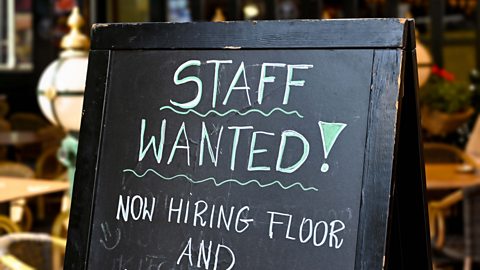
Northern Ireland is experiencing a shortage of workers with certain skills. Employers in the areas of:
- manufacturing
- information and communications
- hospitality
- health and social work
reported the highest levels of skills shortages in the latest Employer Skills Survey.
How can businesses be impacted by skills shortages in the workplace?
Businesses can be impacted in many ways by skills shortages in the workplace.
- Businesses may not be able to meet demand because they lack staff with suitable expertise and could lose trade as a result.
- Failing to meet orders may reduce business profits and harm growth.
- Certain businesses may be forced to close down if they cannot secure enough skilled workers to make them competitive.
- Businesses may be forced to offer higher wages, costing more money and harming growth.
- Some businesses may be forced to outsource some of their work to other countries - which can be time-consuming and expensive.
How can Northern Ireland reduce skills shortages?
- Encourage STEM subjects in schools
- Put more money into education
- Better quality education for STEM courses
- Retraining or free training to help unemployed get into these areas
- On the job/off the job training
- Waiving third level education fees or reducing them
- Apprenticeships
- Incentives such as a bonus for taking a specific course
- Work with exam boards to develop new qualifications relating specifically to STEM jobs
Why should schools promote STEM subjects?

- They provide pupils with the skills required for employment in STEM-based businesses.
- STEM subjects are needed to work on important global issues such as climate change, healthcare and technology. Students who study STEM can help make a positive impact on society and solve some of the planet's biggest challenges.
- They broaden pupils’ career prospects.
- They support businesses in the local economy by preparing highly-skilled workers.
- They encourage innovation and creativity offering the opportunity to create and discover new products and work in new and emerging industries.
- STEM subjects teach critical thinking and problem solving - skills that are valuable not just in STEM careers, but in everyday life.
What are some of the emerging careers as a result of globalisation?
Watch: The impact of globalisation
The impact of globalisation on employment
Narrator:
Globalisation is a term that describes how businesses and cultures work together and communicate via a global network of communication, transportation and trade.
For Northern Ireland, this has some advantages.
We get to trade with new countries and sell things that we are good at making, such as beef and buses.
We also get to buy things we want relatively cheaply, like cars and computers, and we can eat strawberries all year round.
Mind you, there are downsides. The planes and ships needed to transport goods around the world all contribute to more carbon emissions.
That's bad for the environment.
People here can lose their jobs, as the things they used to make are now made cheaper somewhere else - like ships.
And sometimes the products we buy may be sourced from countries where workers are paid very little, or which use children to do the work.
Not only do things move around the world more these days, people do too.
Migration is when people leave their own country to find employment or a better standard of living.
Immigrants are usually trying to improve the quality of their lives, by finding employment, better pay and better conditions at work.
They may also be avoiding more persecution or racism.
Northern Ireland is an attractive option for immigrants because there are good employment opportunities. The National Health Service is free and the education system is excellent.
Often they still have to take badly paid work, live in poor housing conditions, and they can be victims of racism
One of the main reasons for globalisation is the growth of new technologies.
The use of technology has changed the workplace with faster and more efficient production.
It has also changed how we spend our time at home, using the Internet, social media and computer games.
So you might want to think about learning as much as you can about technology.
It might change your world.
More on The impact of globalisation on employment
Find out more by working through a topic
- count1 of 4

- count2 of 4