What are the key points in planning for production?
- When planning for production it's important to include time management and cost control.
- These ensure production runs smoothly, stays within budget and meets customer expectations.
- Without them projects may face delays, increased expenses and poor quality outcomes.
- Proper planning helps avoid these issues and leads to efficient, successful production.
What is a Gantt chart?
A Gantt chart is a visual tool used to plan and schedule projects. It displays tasks along a timeline, showing what needs to be done, and when and how long each task will take.
Key Features
| Structure | The vertical axis lists tasks, while the horizontal axis represents time in days, weeks or months. |
| Bars | Each task is represented by a horizontal bar, indicating its duration and start and end dates. |
| Task duration | Each task has a defined duration. For example, 'design and plan' takes the entire first week. |
| Task sequence | Tasks are arranged logically, with 'gather materials' following 'design and plan'. |
| Timeline | The entire project spans five weeks, clearly showing when tasks are scheduled. |

Using a Gantt chart helps the individual or team understand the project timeline, stay organised and ensure tasks are completed efficiently and on schedule.
How to calculate direct costs
Calculating direct costs involves adding up the expenses that are directly associated with producing a product or service. This usually includes two main components: labour costs and materials costs.
Labour costs
Labour costs refer to the wages paid to workers who are directly involved in the production process. To calculate labour costs, you need to know
- The hourly wage of the workers
- The number of hours worked
Formula
Labour Costs = Hourly Wage × Hours Worked
Example
- Formula
Labour Costs = Hourly Wage × Hours Worked - Imagine you have a worker who earns £10 per hour and works for 40 hours in a week
- Calculation
Labour Costs = £10 × 40 = £400
Materials costs
Materials costs are the expenses for the raw materials used to produce a product. To calculate materials costs, you need to know
- The cost of each material
- The quantity of each material used
Formula
Materials costs = (Cost of material 1 × Quantity of material 1) + (Cost of material 2 × Quantity of material 2) + …
Example
Formula
Materials costs = (Cost of material 1 × Quantity of material 1) + (Cost of material 2 × Quantity of material 2) + …Suppose you’re making a table and need the following materials
Wood £50 for 2 sheets
Screws £10 for 100 screwsMaterials costs = (Cost of wood × Quantity of wood) + (Cost of screws × Quantity of screws)
Materials costs = (£50 × 2) + (£10 × 1) = £100 + £10 = £110
Labour costs
Calculate by multiplying the hourly wage by hours worked.Materials costs
Calculate by summing the costs of all materials used.Labour costs + Materials cost = Total direct costs
Add labour and materials costs together.
How to calculate overhead costs
Calculating overhead costs involves determining the indirect expenses related to running a business or project that are not directly tied to producing a product or service. These costs might include rent, utilities and admin expenses. Often, overhead costs are calculated as a percentage of labour costs.
Calculating overhead costs
Formula
Overhead costs = Labour costs × (Overhead percentage ÷ 100)
- Start by calculating the total labour costs as above
- Find out the overhead rate, which is given as a percentage.
For example, if the overhead rate is 20%, it means that overhead costs are 20% of the total labour costs
Example
Formula
Overhead costs = Labour costs × (Overhead percentage / 100)Let’s say the labour costs for a project are £500.
Assume the overhead percentage is 20%Overhead costs = Labour costs × (Overhead percentage / 100)
Overhead costs = £500 × (20 / 100)
Overhead costs = £500 × 0.20
Overhead costs = £100
Calculating total manufacturing costs
To calculate total manufacturing costs, you need to combine both direct costs and overhead costs.
Formula
Total manufacturing costs = Direct costs + Overhead costs
Example
Calculate Direct costs
Direct costs = Labour costs + Materials costs- Labour Costs £500
Materials Costs £200
Direct Costs = Labour Costs + Materials Costs
Direct Costs = £500 + £200
Direct Costs = £700
- Labour Costs £500
Calculate Overhead costs
Overhead costs = Labour costs × (Overhead percentage / 100)- Overhead percentage 20% (applied to labour costs)
Overhead costs = Labour costs × (Overhead percentage / 100)
Overhead costs = £500 × (20 / 100)
Overhead costs = £500 × 0.20
Overhead costs = £100
- Overhead percentage 20% (applied to labour costs)
Add Direct costs and Overhead costs together
Total manufacturing costs = Direct costs + Overhead costs- Total manufacturing costs = Direct costs + Overhead costs
Total manufacturing costs = £700 + £100
Total manufacturing costs = £800
- Total manufacturing costs = Direct costs + Overhead costs
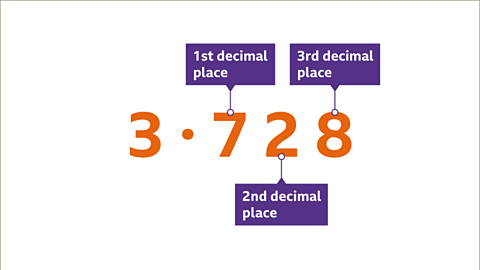
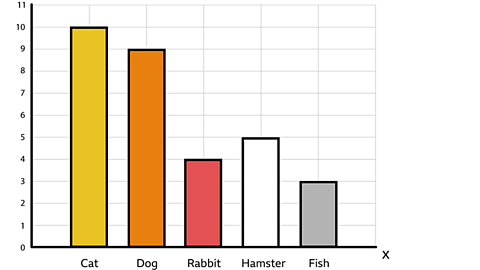
Fractions, decimals, percentages and graphs
Producing and analysing data is extremely important when you are planning your production.
It is very useful to be able to understand mathematical process such as fractions, decimals and percentages, as well as interpreting and producing reports using graphs, tables and charts.
Test yourself
More on Manufacturing practices
Find out more by working through a topic