Description
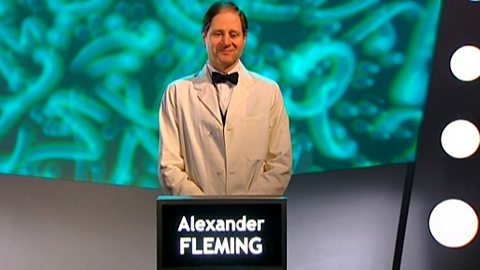
While competing in a game show called ‘The greatest science investigator of all time’, famous scientists from history describe their life’s work and explain why they deserve the title. On this show it’s the turn of Sir Alexander Fleming, who describes how in 1928 he discovered penicillin, which kills some bacteria responsible for serious human infections. The most important part of the discovery happened while he was away on holiday. A blob of mould had grown on a dirty dish in his lab. All around the mouldy blob, there were no bacteria growing. He reasoned that something in the mould was killing the bacteria. This substance is what he later called penicillin. This discovery led to a group of medicines called antibiotics, which have saved countless lives.
Classroom Ideas
Before sharing this clip tell the students that the scientist they are going to find out about invented something that had a big impact on World War II. Ask for suggestions as to what this might be. After sharing the clip students could then discuss why penicillin had an impact on the war. They could look at the war poster with the headline ‘Thanks to penicillin…he will come home’ and consider what this meant. Through discussion, students should develop an appreciation of the impact Alexander Fleming’s discoveries have had on society. They could discuss if they have ever had penicillin and what it was for, have they ever seen penicillin e.g. mould on bread.
Students could also explore modern day uses of penicillin. They could create mould in their own classroom using bread in a jar left for some time and observe the changes that occur.
Now playing video 1 of 3