Watch: What are autobiographies and biographies?
Biographies and autobiographies are both types of non-fiction stories about someone’s life.
They are both based in fact but there are some key differences between them.
Watch this video in which teacher Mr McPartlin explains the differences. Listen carefully and join in with the activities.
What are the differences between biographies and autobiographies? Watch this Teacher Talk to find out.
[THEME MUSIC]
[SCHOOL BELL RING]
MR MCPARTLIN: Hello, I'm Mr McPartlin, and today we're checking out the similarities and differences between biographies and autobiographies.
Biography and autobiography. These words might look and sound pretty similar. But they don't mean the same thing.
First, let's start with the similarities. Biographies and autobiographies tell the story of someone's life. They're both written in the past tense and recount events in chronological order—that's the order in which things happened.
While it may be fun to add in outrageous tales or a moment of great valour that didn't actually happen, biographies and autobiographies are non-fiction works. They tell the lives of people as accurately as possible.
Now we've covered the key similarities. So, what's the main difference between the two?
An autobiography is written by a person about their own life. This means it will be in the first person, using words such as "I", "my" and "me".
Whereas a biography is written about another person's life. So it'll often name the individual it's writing about and refer to them in the third person, with words such as "she", "they" and "her".
Let’s put our knowledge into practice. Coming up are two sentences. I'd like you to work out whether each belongs in the autobiography or the biography.
"Her determination and strength shone as she led the national rugby team to victory." Where does this sentence belong? That's right—by using the pronouns "she" and "her", this sentence belongs to the biography.
How about this sentence?
"I was six when I first picked up an electric guitar. Guitar in hand, I could see my name in lights." Ready?
Well done!
Yes, this is from an autobiography. The three "I"s and "my" were big hints here.
Ready to make a start on your own autobiography?
Brilliant!
Whether you are writing an autobiography of your life or the biography of someone you admire, these handy tips will have you sorted for both.
First up, you need a catchy title. "Astronauts, Asteroids And My Love Of Aliens" is so much more interesting than just "My Life."
Next up is writing with emotion. Once you've established the facts, add in the feeling. This will help to make your reader feel like they were there.
For instance:
"My nerves boiled within me as the rocket burst into action. It was equally thrilling and terrifying."
Finally, there's so much to say in an autobiography and biography that sub-headings can really help the reader to navigate the way through.
For example: Astronauts, School, Life in Space, and Touchdown would be super sub-headings for this astronaut autobiography.
Why don't you try writing your own autobiography? You'll also need:
A super catchy title.
Lots of descriptive, emotive moments.
A few subheadings to guide your reader through.
Some autobiographies are even turned into films.
I wonder which actor or actress would play you in your best-selling autobiography?
For more help, challenges and games on this subject, visit bbc.co.uk/bitesize.
Similarities and differences
Time for a recap on those similarities and differences!
Similarities
Both biographies and autobiographies:
tell the story of someone’s life
are written in the past tense
follow chronological order (the order in which things actually happened)
are non-fiction
Differences
| Biography | Autobiography |
|---|---|
| Written by a person about someone else’s life. | Written by a person about their own life. |
| Written in third person (he/she/they) | Written in first person (I) |
Examples
To see some examples, watch the first minute of each of these clips.
The first clip is written as a biography of activist Rosa Parks and the second clip is written as if it were an autobiography. Can you spot the differences?
Watch: Rosa Parks biography example
We use buses every day to go to school or into town. It's not unusual, but this story is about a bus journey that changed millions of lives.
Let's go to America, in 1955, to Montgomery in the southern state of Alabama.
There, when a woman called Rosa Parks refused to give up her seat, a bus journey became very important.
Rosa's refusal was a protest about racism against black people. Racism is when someone thinks you’re not as good as them because the colour of your skin or your race is different to theirs, so they treat you differently.
At that time, southern states in America, had something called ‘segregation’. This meant people of different skin colours had different schools, restaurants, even toilets.
Segregation happened on buses too.
One day, Rosa was in a seat for black people, but white people's seats were full. The bus driver wanted Rosa to give her seat to a white person, but Rosa said no!
Rosa was a member of a civil rights group which fought for black and white people to be treated the same.
She was arrested and taken to jail for a few hours.
Rosa didn't fight alone, people organised a bus boycott, which meant they stopped using buses for a year. They walked instead. This bus company lost a lot of money. The boycott was a peaceful stand against racism.
Judges eventually said having separate black and white parts of buses was not allowed.
"Hello, friends of freedom. It's a wonderful day and let us be thankful we have reached this point and we will go farther from now to greater things. Thank you!"
Today, Rosa Parks is remembered as an ordinary woman who took a stand to help black people in America be treated fairly. To be treated the same as whites.
Watch: Rosa Parks autobiography example
The life of Rosa Parks, in her own words.
Top tip!
Autobiographies tell you more about the person’s thoughts and feelings, however they may not always give you the full picture about someone’s life.
If the person telling the story doesn't want to mention things that don't make them look good, they could just miss them out!
Activity 1
Complete this true or false quiz about biographies and autobiographies.
Activity 2
Click on the image below to read a biography from Bitesize KS2 History about the famous fossil hunter Mary Anning.
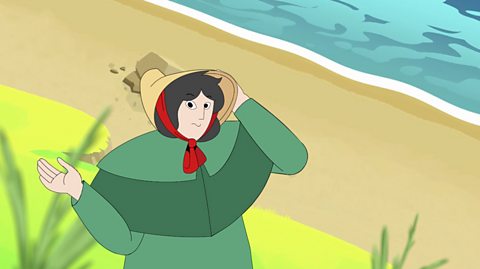
Imagine the same story, but told by Mary Anning herself. How would it be different? What would Mary's thoughts and feelings be?
Re-write the story as if you were Mary writing your autobiography.
Use this sentence to start you off:
My name is Mary Anning and I was born on the 21 May, 1799.
Activity 3
You don't have to be famous to write an autobiography! People in the future will be very interested in the life you are leading right now.
If you could write a letter for someone in the future, what would you tell your reader?
You could mention:
the things you do in your daily life
the things you like and that you are interested in
the changes you have seen in your life in the last year
your thoughts and feelings about what has happened to you
You could start your autobiography with these words:
Dear Reader Of The Future,
It has been an interesting and unusual year…
Top tip!
When you have written your autobiography, you could make a copy and hide it somewhere.
Perhaps, in hundreds of years’ time, someone will find it and discover what it was like to be you, today!
Challenge
Have you ever read a biography or autobiography?
Lots of famous people from history, or even those alive today, have written or had books written about their lives.
Why not see if you can find an autobiography or biography of your favourite pop star, sports star or celebrity to read?
Play our fun English game Crystal Explorers! game
Use grammar, punctuation and spelling skills to explore jungles, caves and tombs on your mission.

More on Non-fiction
Find out more by working through a topic
- count5 of 5
- count1 of 5
- count3 of 5