Key facts about responsible parenting:
Commitments: the key responsibilities of being a parent.
Challenges: all parents experience difficulties and challenges.
Consequences: the positive and negative impacts of parenting on both children and parents.
It may be helpful to remember these three ‘Cs’ for the exam.
COMMITMENTS – CHALLENGES - CONSEQUENCES
What are the responsibilities and roles of parents or carers?
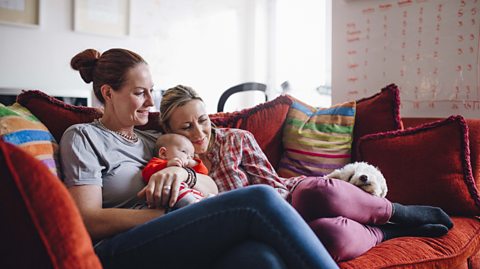
Some of the different types of family structures and parents are:
- single parent
- teenage parent
- older parent
- adoptive parent
- carer
- same sex
- step-parent
Responsibilities
Parents of any age have a responsibility to care for their children and ensure that they grow up happy and healthy.
This means creating a safe and loving home environment, and providing opportunities to develop emotional, social and cognitive skills that will serve them throughout life.
| Responsibility | Types of care |
|---|---|
| Food and clothing | Shelter and food are two of the most basic needs. A parent must ensure that their children have clothes, food and a secure home. |
| Money | Children will need new clothes, daily food and different experiences. These things cost money, so affording this can be difficult. |
| Health | Children are vulnerable to all sorts of sicknesses and accidents. Parents must learn to protect them from harm and care for them when they are unwell. A big part of this is getting children vaccinated. This will protect them, and others, from developing serious childhood illnesses. |
| Support | Children need different types of emotional support and encouragement as they grow. When they are very young they will need comfort from a parent when they’re feeding and sleeping. Primary school children will need help to complete homework, get to music lessons and sports games on time and someone to talk to about their social lives. Teenagers will need help adapting to life as an adult and all the complications that brings. |
| Spiritual development | Practising a religion will inevitably lead to questions from a child. Children can be supported in their spiritual development by taking them to religious services, sending them to Sunday school, summer camps and religious events at school or in the local community. |
| Developing morals and values | Children should be encouraged to be good citizens and effective contributors to society and their community. In order to do so, parents should teach their children to display good morals and values such as using manners and knowing the difference between right and wrong. |
Roles
Schooling
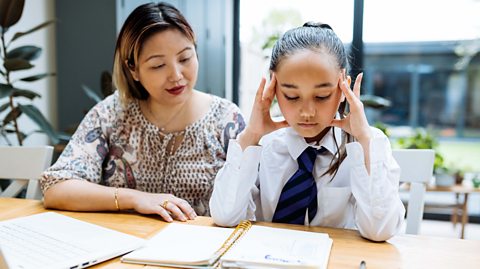
All children should go to school to help them acquire the knowledge and skills they will need as adults.
A parent’s role is to guide them through this. They may have to help them with their homework, explain concepts they did not understand in class or take them to places such as a museum to extend their learning.
Social development
Children will want to meet and play with friends. Parents will need to ensure that they have enough safe and enjoyable opportunities to do so.
There is also an opportunity to become friends with other parents this way, get involved in community groups or take them to civic activities.
Morals and values
Parents have a duty to instil a sense of right and wrong in their children.
Parents will have to discipline their children when they do the wrong thing.
Interests and skills
Children become involved in a lot of different activities as they begin to discover what they find most enjoyable in life. A parent’s role is to help them reach their full potential.
They may have to take their kids to sports training and matches, music lessons or play rehearsals.
What are the opportunities and challenges of parental responsibility?
All families are not the same and different parents and carers will have different experience of the roles and responsibilities that are expected of them within their family structure.
Carer parents
| Stronger family bonds | Providing care for a child within the family can strengthen relationships. |
| Providing stability | Carers can offer a sense of familiarity and security, especially if the child has experienced trauma. |
| Life experience | Older carers may have parenting experience, making them well-equipped to handle challenges. |
| Cultural continuity | They can ensure children stay connected to their heritage and family traditions |
Foster parents
| Making a difference | Providing love and stability to children in need can be deeply rewarding. |
| Personal growth | Learning to navigate trauma-informed care and emotional resilience. |
| Support networks | Foster systems often provide training, financial assistance and access to resources. |
| Potential for long-term connection | Some foster placements lead to lifelong relationships or adoption opportunities. |
Adoptive parents
| Creating a forever family | Providing a child with a permanent, loving home. |
| Diversity in family structures | Opportunity to embrace adoption from different culture and expand perspectives. |
| Personal fulfilment | Many adoptive parents find deep meaning in raising a child in need of a home. |
| Strong parent-child bonds | With love and patience, adoptive families often develop deep emotional connections. |
Single parents
| Independence and control | Freedom to make parenting decisions without conflict from a co-parent. |
| Strong parent-child bond | Spending more one-on-one time often leads to a close relationship. |
| Resilience and strength | Single parents often develop strong problem-solving and time-management skills. |
| Expanding support networks | Many single parents build strong friendships and community connections. |
Same-sex parents
| Diverse and inclusive upbringing | Raising children in a home that promotes diversity, acceptance and equality. |
| Strong communication skills | Many same-sex couples develop excellent teamwork and parenting strategies. |
| Opportunities to challenge stereotypes | Helping normalize different family structures and fight prejudice. |
| Resilient children | Kids raised by same-sex parents often develop strong empathy and open-mindedness. |
Teenage parents
| Early motivation and resilience | Many young parents develop a strong sense of responsibility early in life. |
| Longer time to grow with their child | A young parent can be actively involved in their child's life for decades. |
| Adaptability | Younger parents often have energy and a fresh perspective on parenting. |
| Stronger drive for success | Many teenage parents work hard to pursue education and career goals for their child's future. |
Young parents (early 20s)
| High energy levels | Younger parents can often keep up with the demands of parenting. |
| Ability to relate to their children | Growing up in a more modern era helps them stay connected with trends and youth culture. |
| More time for future career growth | They have a longer window to balance parenting with personal ambitions. |
| Stronger adaptability | Young parents often adjust more easily to new parenting challenges. |
Older parents (late 40s+)
| Life experience and wisdom | Older parents bring maturity and patience to parenting. |
| Financial and career stability | Many have established careers, offering financial security. |
| Greater emotional readiness | Older parents may feel more prepared and confident in raising children. |
| Prioritizing quality time | They often focus on meaningful experiences with their children. |
Stepparents
| Blended family strengths | Opportunity to create a new, loving family dynamic. |
| New perspectives and role modelling | Stepparents can offer additional emotional support and guidance. |
| Strong relationship-building skills | Navigating blended family dynamics can lead to stronger emotional intelligence. |
| Expanding family love | A child gains another caring adult in their life, leading to lifelong bonds. |
What are the impacts of becoming a parent?
| Impact | Outcome | |
|---|---|---|
| Emotional impact | Unconditional love & stronger bonds | Many parents experience a deep emotional connection with their child, which can be life-changing. |
| Increased stress & worry | Parents often feel heightened anxiety about their child's safety, health and future. | |
| Greater sense of purpose | Parenthood can provide meaning and motivation in life. | |
| Personal growth | It encourages patience, empathy and emotional resilience. | |
| Lifestyle changes | Less personal time | Hobbies, self-care and social outings often take a backseat. |
| Changes in daily routine | Sleep schedules, meal times and daily activities revolve around the child. | |
| Healthier habits | Many parents become more conscious of their health and well-being. | |
| Loss of spontaneity | Planning activities becomes necessary. | |
| Social and relationships | Shifts in friendships | Social circles may change, with parents gravitating towards other parents. |
| Strengthened or strained relationships | Parenthood can bring partners closer or introduce stress. | |
| More family-oriented mindset | Parents often reconnect with their own family members. | |
| Feeling of social isolation | Some parents, especially new ones, may feel disconnected from their previous lifestyle. | |
| Financial impact | Increased expenses | The costs of childcare, food, healthcare and education add financial pressure. |
| Career adjustments | Some parents, especially new ones, may feel disconnected from their previous lifestyle. Parents may change or reduce working hours, affecting income. | |
| More focus on financial planning | Budgeting, saving and investing for the child's future become priorities. | |
| Impact on career/ambitions | New work-life balance challenges | Parents must juggle responsibilities at home and work. |
| Career motivations may change | Some parents pursue more stable or flexible careers to prioritize family time. | |
| Development of new skills | Parenthood strengthens multitasking, patience and time management skills. | |
| Long-term impact | Desire to create a legacy | Parents want to pass down values, traditions and a strong foundation for their children. |
| Changed perspective on aging | Many start thinking more about their own future, retirement and health. | |
| Deepened empathy & understanding | Parents often develop a greater appreciation for their own parents and caregivers. |
What's the impact of parenting on the child?
Effective parenting will have a positive effect on a child’s physical, emotional, social, cognitive and moral development:
| Physical development | Emotional development | Social development | Cognitive | Moral development |
|---|---|---|---|---|
| Child who is aware of their physical health including their diet and recommended exercise will maintain a stable weight and standard of health | Child will speak to someone they trust when they are struggling with their emotions rather than bottling things up | Child will be keen to try new experiences and meet new people which will lead to a wider social circle | Child will understand the value of education and how this can empower them | Child will know the difference between right and wrong and will have a strong moral compass |
| Child who enjoys sports and chooses to spend their time this way will develop social and communication skills | Child will be resilient and able to manage new experiences instead of feeling anxious | Child will have excellent communication skills and confidence when interacting with people | Child will welcome academic challenges and will likely have high academic aspirations and outcomes | Child will be aware of other people’s needs and will often try to support others leading to respect from peers |
Watch: Responsible parenting
Watch this video about the role of responsible parents
Narrator:
Babies, everybody loves them - don't they?
That cute wee face, smiling and laughing up at you.
Ahh that's lovely so it is.
Giggles, gurgles and adorable onesies with animal ears. What is not to like?
The trouble is, babies grow and do you know what, they have the cheek to expect you to look after them for a long, long time.
Also, babies apparently have little or no life experience and selfishly depend on their parents to provide everything they need.
Rumour has it they have a habit of turning into children. Who don't need much, just a safe and caring environment, food, clothes and access to the things that will make them grow up to be a happy adult.
Such as social skills, education, encouragement, advice and financial support.
And then, oh yeah, there's other stuff as well.
Looking after them when they're sick, getting them immunised, bringing them to the dentist, drying their tears, calming their fears, dropping them off, picking them up and eventually having to deal with the whole relationship thing.
So, yeah they don't need that much then.
And it all starts with a cute little baby.
It sounds like you should need a licence mate.
But despite the fact that it is so demanding, many people find themselves as parents at a very young age, with not much of a clue what to do.
This can be very, very challenging. They might have to leave school and change their ideas about what the future holds for them.
They'll certainly have to alter their social habits as baby comes first.
They'll find their child, who has vanished in a big puff of talcum powder, and they may find that they have to face difficult family circumstances and the attitudes of the outside world.
If it's so stressful how do parent cope?
With great difficulty, especially if they are young or alone.
Being a young parent can have a negative effect on mental health, the burden of responsibility, financial pressures and relationship problems can overpower many young parents - leaving them distressed and depressed.
Babies everybody loves them - don't they?
