Ratio, proportion and rates of change
NEW: Equivalent ratios and simplifying ratios
Revise how to work out equivalent ratios and simplify ratios by dividing both sides by the highest common factor. Test yourself with practice questions and a game.
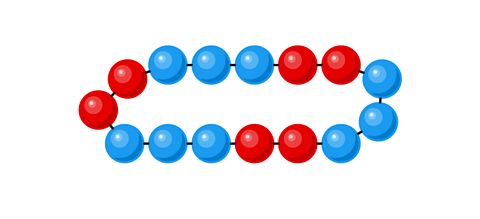
NEW: Ratio and fractions, and sharing in a ratio
Learn how to convert ratios to fractions and percentages, how to share in a given ratio, and explore ratios as fractions, with videos, quizzes and a game.
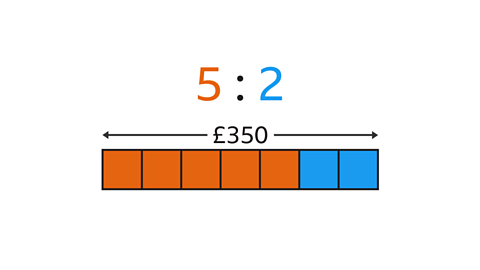
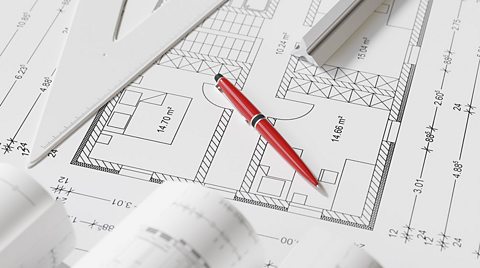
NEW: Scale drawings and maps
Learn how to work out the actual measurement of an object by using scale factors and revise how to work out distance using a map, with practice questions and a quiz.
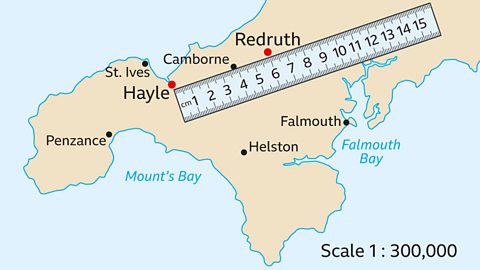
NEW: Percentages of an amount
Learn how to work out one number as a percentage of another and use the build-up method, unitary method and decimal multiplier method to find the percentages of amounts.
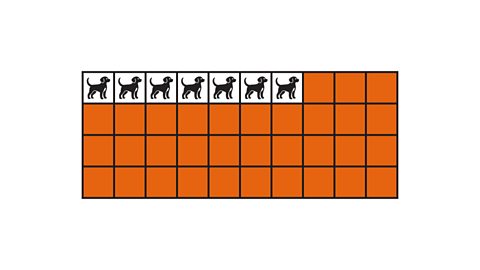
NEW: Percentage change
Learn how to calculate percentage change, and how work out a new or an original value after a percentage increase or decrease, with video, practice questions and a quiz.

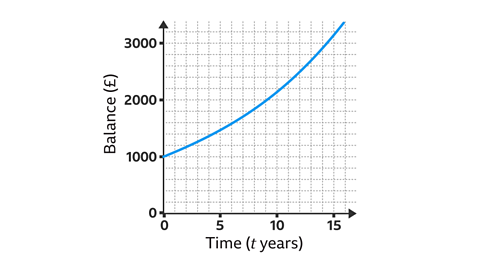
NEW: Repeated percentage change, interest and exponential change
Revise how to work out simple and compound interest, exponential growth and decay, and calculate percentages, with video and quizzes.
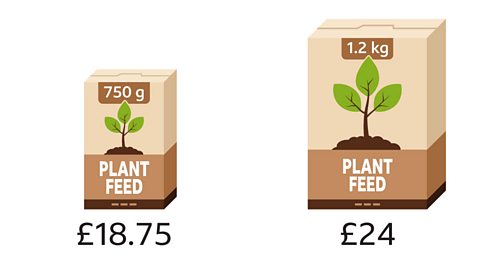
NEW: Working with proportion
Revise direct and inverse proportion, and use proportion in real-life examples such as finding the best value for money when shopping, with practice questions, a quiz and a game.
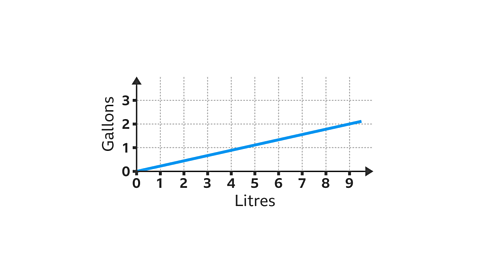
NEW: Equations of direct and inverse proportion
Learn how proportional relationships look on a graph, understand proportionality with worked examples, and revise algebraic proportion for Higher tier only. With video and quizzes.
Ratio in context - Eduqas
Ratios are seen in everyday life. They can be used when adding ingredients to make a meal, when deciding how much pocket money children get or when reading a map.
Percentages - Eduqas
Percentages are used in everyday life, for example, calculating discounts during sales and interest rates at banks. Knowing how to find and use percentages is an important skill.

Direct and inverse proportion - Eduqas
Proportion is used to show how quantities and amounts are related to each other. The amount that quantities change in relation to each other is governed by proportion rules.
Links
- External linkExternal link
- SubscriptionSubscription
- External linkExternal link
- External linkExternal link
- External linkExternal link
