Evidence of evolution - rock fossils
Fossils
A fossil is the preserved remains of a dead Living entity, eg animals, plants or microorganisms. from millions of years ago. Fossils are found in rocks and can be formed from:
- hard body parts, such as bones and shells, which do not decay easily or are replaced by minerals as they decay
- parts of organisms that have not decayed because one or more of the conditions needed for decay are absent for example, dead animals and plants can be preserved in Hardened tree resin., peat bogs, Sticky substance found in tobacco smoke, which can cause cancer. pits or in ice
- preserved traces of organisms, such as footprints, burrows and rootlet traces - these become covered by layers of Small fragments of rock and soil that form layers., which eventually become rock
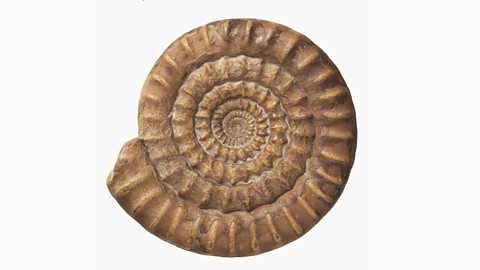
The fossil record
Fossil remains have been found in rocks of all ages. Fossils of the simplest organisms are found in the oldest rocks, and fossils of more complex organisms in the newest rocks. This supports An English naturalist (1809-1882). In 1859 Darwin published On the Origin of Species, which outlined his theory of evolution. theory of The process of change in the inherited traits of a population of organisms from one generation to the next., which states that simple life forms gradually evolved into more complex ones.
Evidence for early forms of life comes from fossils. By studying fossils, scientists can learn how much (or how little) organisms have changed as life developed on Earth.
There are gaps in the fossil record because many early forms of life were soft-bodied, which means that they have left few traces behind. What traces there were may have been destroyed by geological activity. This is why scientists cannot be certain about how life began.
