Set and Props
Set
Set means the scenery and furniture onstage. Some theatre sets are very elaborate and detailed, like Henrik Ibsen’s Hedda Gabler at The Old Vic Theatre in London in 2012.
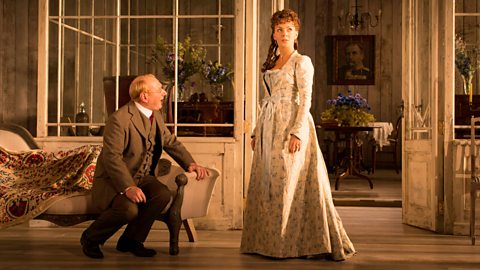
The set for Hedda Gabler consists of two rooms within a house, a living room with a working real fire leading through to a glass conservatory. The furniture and décor are authentic which is fitting for a naturalistic piece. Every detail has been considered to create a world onstage which is as believable as possible.
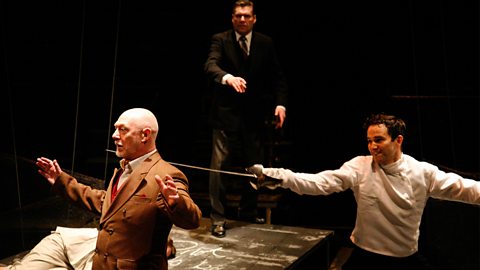
However, a simple or To minimise the use of set, props, costume etc in a production. set can be very effective and the modern trend in theatre is to have much less onstage. This set for Northern Broadsides theatre company’s Hamlet is simple, representational and an effective base for a range of locations.
Props
Props are the items held or used by actors onstage to make the action more realistic. Some naturalistic performances use many props but when staging drama you should question what is really necessary. Too many props can be difficult for the actor to use and they have to be brought onto and off the stage so can slow the action.
If you do use props in a performance, it’s important that actors work with them early on in the rehearsal process so that they can practise with them and identify any issues. Sometimes it’s perfectly acceptable to mime a prop, depending upon the style of theatre being created. Or you could be creative and choose a simple prop which can represent many things.
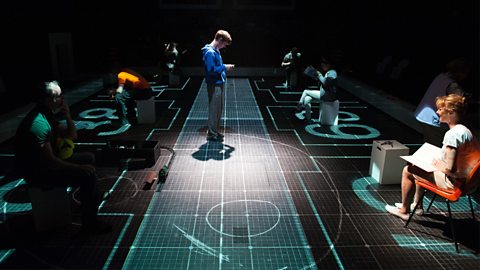
In the National Theatre production of The Curious Incident of the Dog in the Night-Time, the props play a crucial part. The white boxes on stage were multi-purpose and were used as set and seating. Some lit up to represent televisions, microwaves and fish tanks. One was a letter box and one was even lifted up to reveal a mock train toilet!