Colour palettes
Colour palettes include full colour and limited colour palettes. Through your research, development and investigations into different painting mediums and techniques you will have used colour in many ways in your preparatory studies.
How you choose to use colour will allow you to develop your own individual style.
How to use colour/colour schemes
Using a particular range of colour can create mood and emphasis.
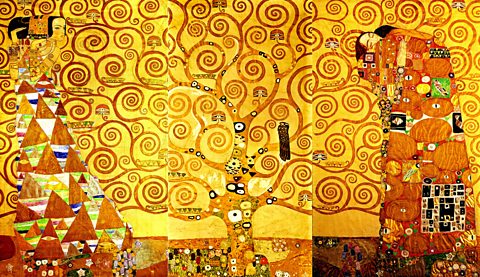
Warm colours are bright and vivid. They will appear to To move forward, in this case towards the viewer. within a painting. Warm colours include:
- red
- orange
- yellow
- brown
- tan
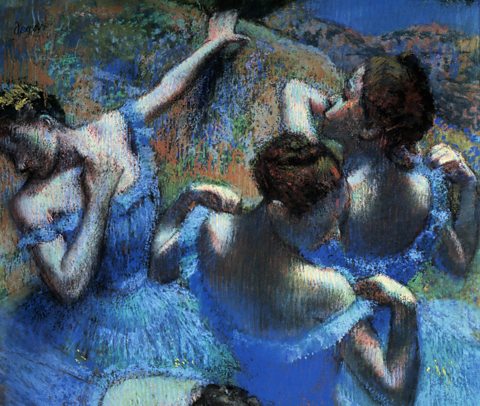
Cool colours are calm and soothing. They will appear to To move backward, in this case further away from the viewer. within a painting. Cool colours include:
- green
- blue
- purple
- most greys
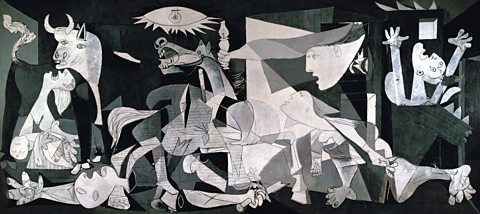
In the middle. A neutral colour is a mix of opposite hues. colours include:
- black
- white
- grey
Colour mixing
Using limited colour
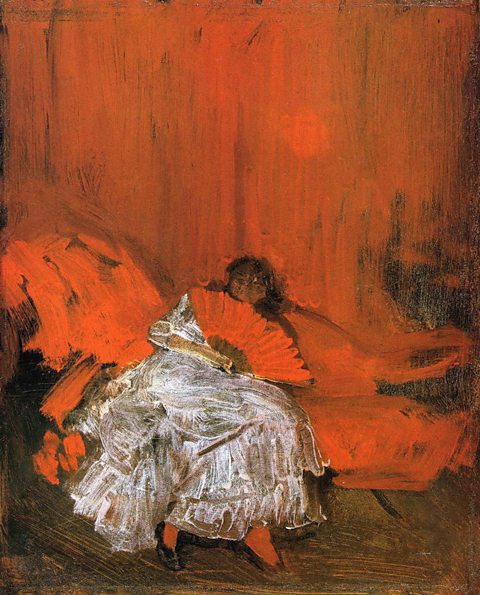
Using a limited colour palette will make you think carefully about your colour selections.
Select colours considering their tonal value. You could consider primary colours and Working together in a way that creates contrast and emphasises differences or other qualities. colours.
You could also develop and apply a mixture of Tone generally describes how dark or light something is. It can also mean a colour created by mixing a pure hue with grey. and play around with various combinations to create a range of striking images.
Working with a limited colour palette
Monochromatic colour
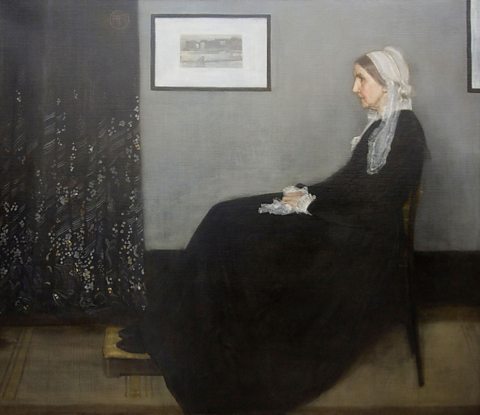
Monochrome means one colour. Through experimentation you can achieve bold and dramatic outcomes by making changes to the tone and How strong or bright something is. In art, intensity describes how vibrant a colour is. of the selected colour.
Change the tone of a colour by adding its complementary colour or by adding black or white to it. Adding white to a colour creates a tint, adding black creates a tone.
Adding more paint (creating a darker tone) or more water (creating a lighter tone) can alter the saturation.
The effect of colour
The effects of colour can be purely:
- optical - creating visual interest and drawing the viewers eye.
- emotional - cool colours like blue or green have a calming effect. Red and yellow are more stimulating to the senses.
- aesthetic eg the beauty that springs from the juxtaposition of two or more harmonious colours juxtaposit
Colour can affect the Arrangement of different elements within an artwork or design. of a painting, it can be used to:
- harmonize or contrast
- unify a scene
- set a visual path
- produce a rhythm
- create emphasis
