Other editing techniques
- Cross cutting is used to cut between two different actions happening at the same time. By cutting back and forth between these different events, the director can establish that they are somehow linked. For example, in the film Jaws (1975) the director cross-cuts between point of view shots of the killer shark moving beneath the waves and shots of swimmers splashing above the waves. By cutting back and forth between the two locations audiences soon get the impression that a shark attack is imminent.
- Freeze frame highlights an important moment by creating a pause effect in which a single frame of film is extended for several seconds.
- Slow motion effects are usually captured in camera by changing the filming speed but can also be achieved in post-production by slowing individual shots down. This can help emphasise special moments or draw out actions to generate suspense.
Genre specific editing techniques
Most films now apply a combination of continuity editing and montage techniques but some editing styles are more appropriate for certain genres than others.
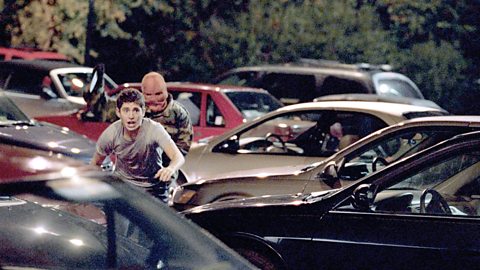
Horror movies like Cry Wolf (2005) make use of montage sequences and cross cutting to build tension and deliver scares.
- A gritty everyday drama could easily use only continuity editing. This invisible editing style could draw viewers into the story without making audiences consciously aware of the cuts.
- An action movie however, may have to use montage techniques in order to emphasise the sense of spectacle.
