Factors affecting energy availability
There are several reasons why global energy supply is not even. Places that have less energy are disadvantaged as a result.
Factors affecting energy supply
Access to energy supplies is affected by:
- Physical factors - Natural, finite fuel formed from the remains of living organisms, eg oil, coal and natural gas. were formed millions of years ago. New supplies of fossil fuels are sometimes found, but only in places that have the right The study of rocks..
- Cost of exploitation and production - The money paid to people for doing a job. count towards the overall cost of energy production. This has led to some resources being unprofitable, eg the UK has coal supplies, but it is too expensive to exploit them. When the global price of oil increases, drilling becomes profitable in many harder to reach locations
- Technology - improvements in technology can open up new opportunities for energy use. Breaking rock deep underground by injecting liquid under pressure so that many tiny cracks form. is the process of extracting shale gas. The USA now carries out fracking, which has increased their energy supplies. Wind turbines and solar panels are becoming more efficient and so these are being used in more countries.
- Political factors - war can destroy energy resources or make them difficult to exploit. Dishonest behaviour. can mean that money is spent on things other than energy projects.
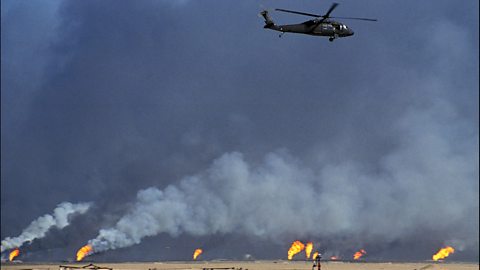
In 1991, Iraqi troops withdrew from their invasion of neighbouring Kuwait. As they left, they set fire to many of the country's oil wells
Impacts of energy insecurity
There are many different ways of defining A country that has enough energy to meet its demand.. In the UK, the government aims to ensure that consumers have access to the energy that they require, at prices that avoid volatility. Most countries that use this definition produce their own energy or import it from politically-stable countries.
When the access to energy is via other countries. is the opposite of this. There are several impacts of energy insecurity, some of which these impacts are linked.
- Exploitation of difficult and A special designation for a farming area that needs to be protected because of its landscape, wildlife or historical value. - countries like to find new sources of energy and this sometimes means that they use environmentally-sensitive areas. Fragile ecosystems can be put at risk as the desire for energy is greater than the desire for environmental protection.
- Economic and environmental costs - imported fuel is expensive. Exporting countries set the prices for fuel, leaving importing countries vulnerable. Some fuels cause a lot of pollution, eg coal causes A type of pollution that is a mixture of smoke and fog. and releases The gases responsible for global warming - carbon dioxide, methane, nitrous oxide and CFCs (chlorofluorocarbons). when burnt. Mining for the raw materials for energy can also cause environmental problems with loss of A place where plants, animals and microorganisms live., noise and When man-made waste or buildings spoil the natural beauty of an area..
- Food production - exploiting energy resources often uses valuable farmland. The growth of the A type of energy source derived from renewable plant and animal materials, eg ethanol (often made from corn in the United States and sugarcane in Brazil), biodiesel (vegetable oils and liquid animal fats) and biogas (methane from animal manure). market has also led to crops being grown as a fuel, rather than as food. This can cause food shortages and push food prices up as supply falls lower than demand.
- Industrial output - manufacturing relies on energy. When energy is in short supply, it costs more to buy. This makes manufacturing more expensive. Countries that experience energy insecurity usually have a lower industrial output.
- A fight or a war between individuals or groups. - energy insecurity can cause conflict. A structure built to slow down or stop the flow of a river. This creates a large lake or reservoir, which can be used for water supply, leisure or electricity generation. are a good example of this. Rivers often flow through more than one country. If a country upstream builds a dam to generate hydroelectric power (HEP), then a country downstream will have less water.
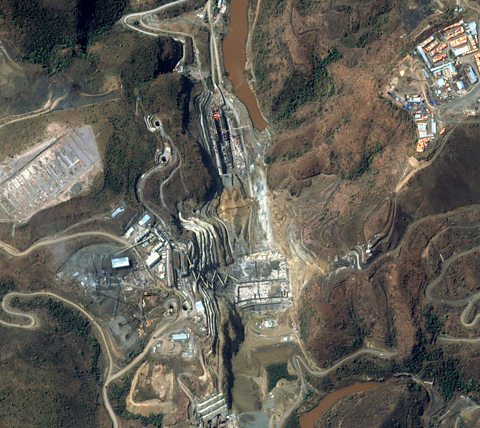
There have been tensions between Egypt, Sudan and Ethiopia over plans to build a large HEP dam on the river Nile in Ethiopia
