Scientific calculations - effect of light intensity on photosynthesis
The table shows a set of results obtained by students investigating the effect of light intensity on photosynthesis. They varied the distance of the plant from the light source.
| Distance from light source in cm | Rate of photosynthesis = Number of bubbles produced per minute |
| 10 | 120 |
| 15 | 54 |
| 20 | 30 |
| 25 | 17 |
| 30 | 13 |
| Distance from light source in cm | 10 |
|---|---|
| Rate of photosynthesis = Number of bubbles produced per minute | 120 |
| Distance from light source in cm | 15 |
|---|---|
| Rate of photosynthesis = Number of bubbles produced per minute | 54 |
| Distance from light source in cm | 20 |
|---|---|
| Rate of photosynthesis = Number of bubbles produced per minute | 30 |
| Distance from light source in cm | 25 |
|---|---|
| Rate of photosynthesis = Number of bubbles produced per minute | 17 |
| Distance from light source in cm | 30 |
|---|---|
| Rate of photosynthesis = Number of bubbles produced per minute | 13 |
If we draw a graph of this data:
Note that the graph is a curve.
Question
From the graph, suggest the rate of oxygen production after 18 minutes.
40 bubbles per minute.
Using the graph:
The effect of chlorophyll
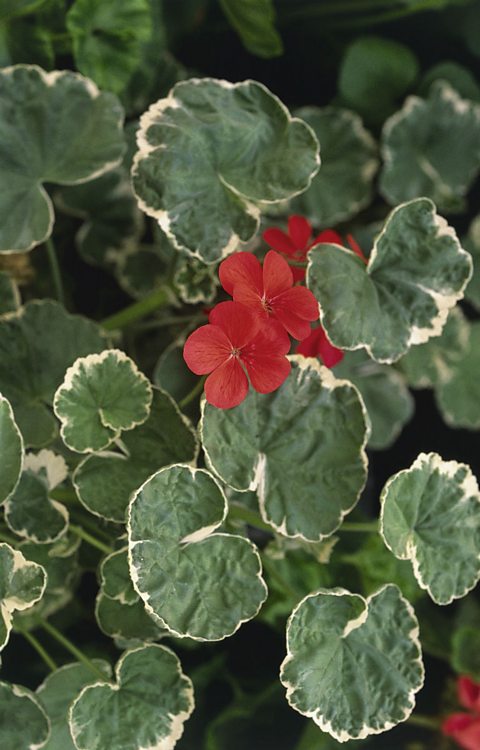
The effect of the presence or absence of chlorophyll on photosynthesis can be investigated using a variegated plant. Variegated plants have regions of their leaves with, and without, The green chemical inside the chloroplasts of plant cells. It enables photosynthesis to take place..
Only those areas of the leaf with chlorophyll photosynthesise. They will test positive for starch, which is built up from the glucose produced.
One way of testing for starch on a leaf is to remove the chlorophyll and then stain it to see where the starch had been stored.
- The leaf of a variegated Pelargonium is dropped in boiling water to kill and preserve it.
- The leaf is left for 10 minutes in hot ethanol in a boiling tube. This removes the chlorophyll.
- The leaf is dipped in boiling water to soften it.
- The leaf is spread out in a Petri dish and covered with iodine solution.
- The areas that had the chlorophyll stain blue-black. The areas that had no chlorophyll remain pale.
Risks
Care must be taken when using boiling ethanol. Make sure that no Bunsen burners are turned on as the ethanol is highly flammable.
